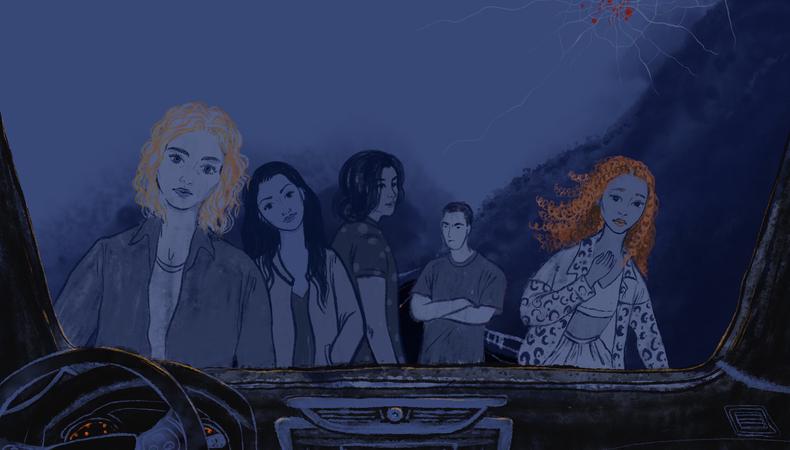
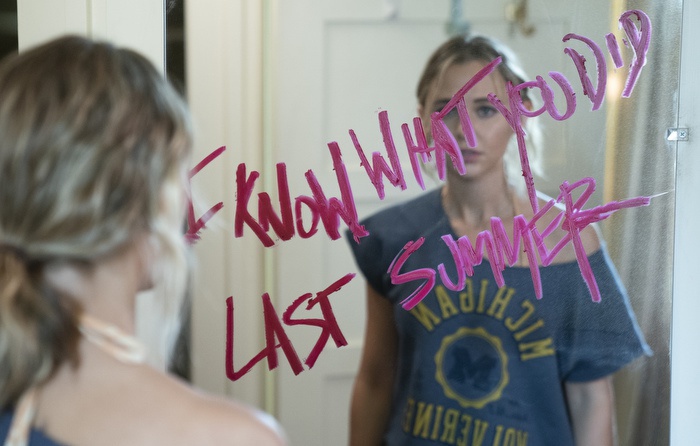
The visionaries behind “Spotlight,” “The Help,” and the “Pitch Perfect” movies, Kerry Barden and Paul Schnee have impressive résumés. For their latest, the “I Know What You Did Last Summer” series, the pandemic forced the duo to act quickly: they shifted to screening thousands of self-tapes and conducting virtual chemistry reads. Here’s the inside scoop on casting for a show where characters are often killed off, plus their thoughts on virtual showcases, and their best casting advice.
How was casting “I Know What You Did Last Summer” different from your past projects?
KB: We had a few little indies that we were working on during the pandemic, but this was the first big project. And it was straight to series, too, which was great. So the casting process was [about finding] series regulars first, of course, because that’s where you start putting the puzzle pieces together. And then it was interesting, because some of the series regulars were not really series regulars, because of the way this story is told—you know, people die! So it was a fun process with that going on—not being able to tell people who made it through the whole season.
PS: One thing that the pandemic has afforded us,since we’re not in the room where, say, I could see 50 people in New York and Kerry could see 50 people in L.A. in a day, now we can see several times that because there’s no schedule. There’s no time constraints on self-tapes. So, since Amazon said, “We’re open to discovering some people,” we looked through a lot of new talent.
What should auditioners know about casting with self-tapes?
KB: We’re getting, as Paul said, at least three times as many tapes…and we’re not able to work in the room with the people. We can’t give them immediate feedback. We have to give it and get another series of tapes with hopefully our notes being taken through to these talents by the agents and managers. It’s a longer process and not quite as efficient, but we’re making it work.
“Replicating what we do in the room is probably the best thing to do, at least in your initial self-tape.”
What are some go-to tips for creating a memorable self-tape?
PS: Replicating what we do in the room is probably the best thing to do, at least in your initial self-tape. Which is to say, [use] as plain a background as you can find; I don’t think anyone needs to go out of their way and buy one of those blue backdrops anything. But a fairly straight-on head-and-shoulders shot, make sure we can see your face…and a slate of 20 seconds of: “Hello, my name is, I live in so-and-so”—just a little something that [gives]a feel for who you are, that we’re not getting because we’re not in the room. The missing thing [in auditions today] is just picking up on the vibe of a person. So it’s nice to have a 10- or 20-second slate, just so we can see what you’re like as a human.
KB: That’s all an actor has to offer, their ideas and themselves....What we try to do in our office is get a reader that actually is an actor, so there’s something for the person audition[ing] to play off of. Some actors forget that’s an important factor in their self-tapes; sometimes it seems like they’re reading with their mother or whoever’s available.
Where else do you look for talent, outside of agent submissions?
PS: Actually, attending showcases has been a lot easier during the pandemic, because they’ve all been virtual. So I’ve been watching a lot of those, and we’ll see what happens this coming spring—if they’re going to be back in the room or not. I pick a lot of brains of directors I know in New York who do a lot of theater.
What’s one piece of advice for actors auditioning right now?
PS: One thing that actors often forget is every time you go on an audition, you’re going on a job interview. Yes, that has to do first and foremost with the performance and where you fit in.... But the other 75% is everything else you would want to put across in a job interview of any kind: what kind of person you are, that you show up on time, that you’re collegial and nice, all that sort of stuff. I think people can get a little blinded by the art and forget the sort of practicalities of filmmaking and TV-making. You’re coming in to interview to be part of a fairly massive operation.
This story originally appeared in the Oct. 7 issue of Backstage Magazine. Subscribe here.
Looking for remote work? Backstage has got you covered! Click here for auditions you can do from home!