
Before Netflix paired him opposite Kit Connor for “Heartstopper,” Joe Locke had never acted professionally onscreen. Millions of adoring fans, a Children’s & Family Emmy Award, and several notable acting gigs later, his story is proof that the right adaptation can rewrite an entire career narrative, not just translate one medium into another. Here are five recent adaptations worth studying, plus the lesson each one teaches.
1. “Shōgun” (2024)
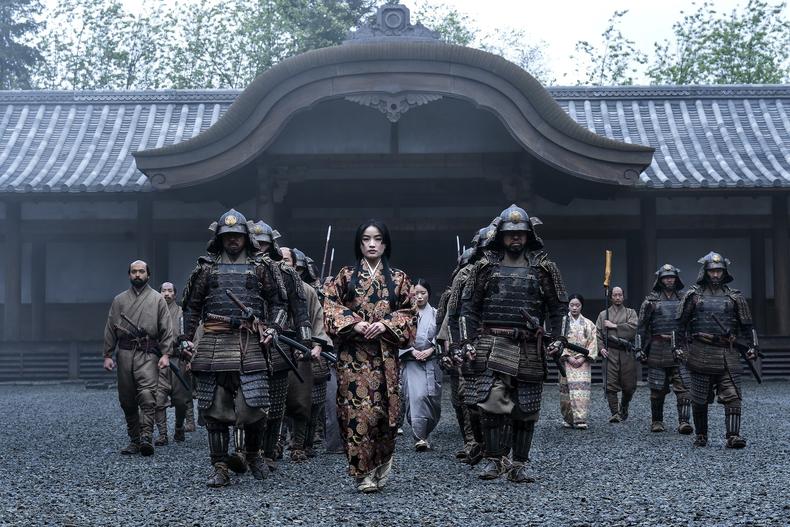
Created by Rachel Kondo and Justin Marks, FX’s version of James Clavell’s 1975 novel drops us into the year 1600, when shipwrecked English pilot John Blackthorne (Cosmo Jarvis) becomes a pawn in the survival game of warlord Lord Yoshii Toranaga (Hiroyuki Sanada). The production treated authenticity as a first principle: Most of the dialogue is in Japanese, the largely Japanese cast was coached on period-specific movement and gestures, and Sanada (who also produced) recruited crew with samurai-film experience to ensure authenticity, down to the wigs and the exact way a sword leaves its sheath. The payoff is acting that lives in the smallest of registers. Sanada suggests a strategist’s whirring mind with the barest flicker of the eyes, while Sawai, as the translator Mariko, layers grief, faith, and duty beneath a surface of near-total composure. Jarvis, for his part, sidesteps the white-savior cliche by playing Blackthorne as bewildered and porous rather than heroic.
Lesson for actors: Honor the world you’re entering. Do your homework (yes, that means reading the book) on the specifics of your character’s culture, period, and physical vocabulary—then let that research surface as quiet confidence rather than commentary.
Credit: Katie Yu/FX
2. “Ripley” (2024)
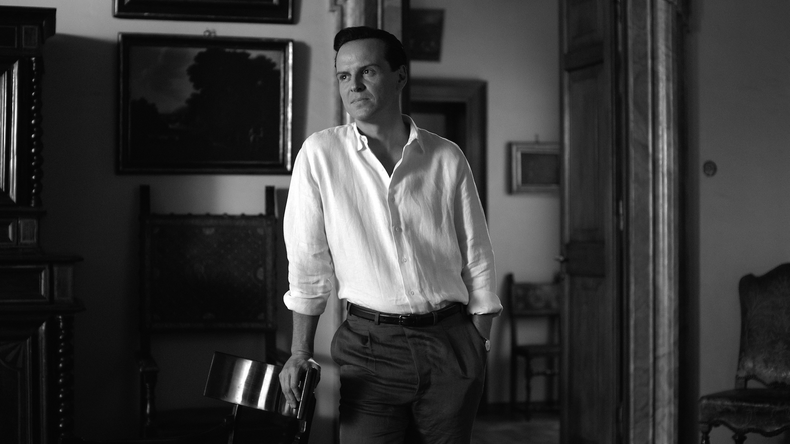
Steven Zaillian wrote and directed all eight episodes of this monochrome reimagining of “The Talented Mr. Ripley” (1955), Patricia Highsmith’s chilling study of a conman who covets a wealthier man’s life until he simply steals it. Where Anthony Minghella’s sun-soaked 1999 film glowed, Zaillian’s take broods in stark black and white, and Andrew Scott’s Tom Ripley registers less as a prodigy than as a grinder—a man doing the exhausting, unglamorous labor of getting away with it. Scott’s master stroke is opacity. In one particularly powerful shot, the camera holds on his face for nearly a full minute after a killing, refusing to tell us whether he feels relief, horror, or nothing at all, and daring us to fill the silence ourselves.
Lesson for actors: Let the camera read what you don’t spell out. The lens magnifies the faintest thought, so you rarely need to externalize everything your character feels. Build a genuine inner life, give it room to breathe, and trust the frame to catch it. Sometimes the most powerful choice is to withhold—a principle at the heart of learning to act realistically on camera.
Courtesy Netflix
3. “One Day” (2024)
Adapted by Nicole Taylor from David Nicholls’ 2009 bestseller (and previously a 2011 feature with Anne Hathaway and Jim Sturgess), Netflix’s 14-episode series revisits Emma Morley (Ambika Mod) and Dexter Mayhew (Leo Woodall) on the same calendar date once a year as their on-again, off-again bond stretches across two decades. The conceit asks both leads to play the same people at different ages and life stages without losing the thread of who they fundamentally are. In a breakout turn, Mod lets Emma’s armor of deflecting wit slowly thin into hard-won self-assurance; Woodall charts Dexter’s drift from charming wastrel to chastened adult. Their rapport does the rest, making 20 years of near misses ache exactly as intended.
Lesson for actors: Build a whole life for your character. When a role spans years, map your character’s arc in detail—what hardens, what softens, what scar tissue forms—so that each time jump reads as the same soul a little further down the road. Continuity of spirit matters far more than a change of costume.

Credit: Matt Towers
4. “We Were Liars” (2025)
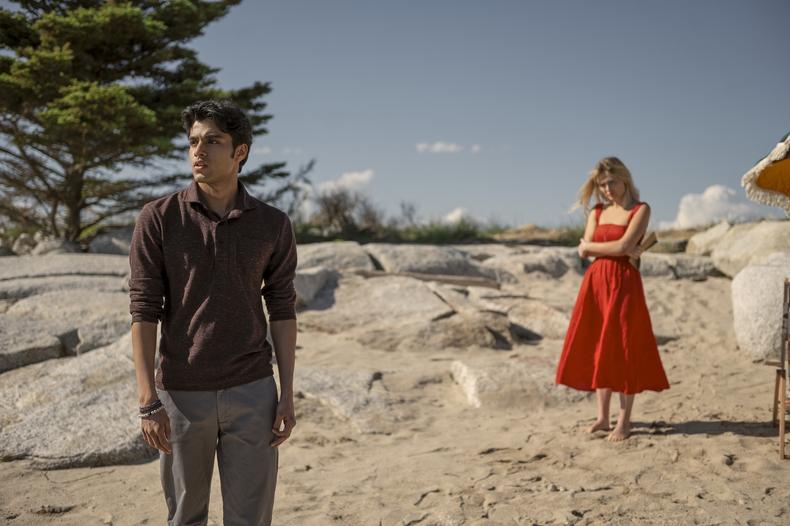
Showrunners Julie Plec and Carina Adly MacKenzie turned E. Lockhart’s 2014 YA literary phenomenon into an eight-episode Prime Video thriller about the impossibly wealthy Sinclair family, their private island, and the summer that fractured everything. At its center is Cadence (Emily Alyn Lind), who returns a year after a mysterious accident with her memory full of holes and her relatives conspicuously tight-lipped. Lind has the tricky job of narrating and embodying a story her character cannot fully remember, performing toward a truth she does not yet know. Her work lands because she commits to Cadence’s confusion instead of tipping the show’s hand, so the dawning horror arrives on her face and ours at the very same moment.
Lesson for actors: Play your character’s blind spots, not the ending you’ve already read. You will always know more than your character does: how the scene resolves, who is lying, where the twists hide. Resist letting that knowledge leak into your eyes. Mine the script for what your character believes in the moment and play that honestly.
Courtesy Prime
5. “Heartstopper” (2022–24)
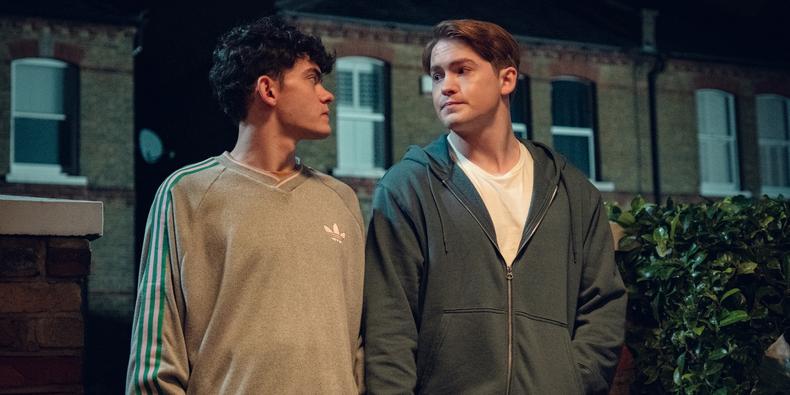
Alice Oseman adapted her own beloved graphic novels into three seasons of Netflix’s gentlest love story—soon to conclude with the feature film “Heartstopper Forever” (2026)—charting rugby player Nick Nelson (Kit Connor) and the openly gay classmate he falls for, Charlie Spring (Joe Locke). Locke earned his first professional screen role through an open casting call, and the two were paired in chemistry reads before either was locked in. That hard-won spark is the engine of the entire show. Connor and Locke specialize in the tiny, true gesture—a brush of hands rendered with literal animated sparks, a glance held a half-beat too long—proving that tenderness, played without a trace of irony, can be as gripping as any plot twist.
Lesson for actors: Build chemistry and respect small moments. Connection between scene partners is less found than cultivated through listening, vulnerability, and genuine attention to the other person. To deepen your own chemistry work, stop performing at your partner and start responding to them. And never rush the quiet beats: a wordless look, fully committed, often says more than a monologue.
Credit: Samuel Dore/Netflix
The bookshelf isn’t running low on pages anytime soon. While Sarah J. Maas’s much-anticipated “A Court of Thorns and Roses” adaptation has been scrapped by Hulu, the series may yet find its way to the small screen.
And with a fresh wave of adaptations on the horizon—among them Marissa Stapley’s “Lucky,” Laura Ingalls Wilder’s “Little House on the Prairie,” and Jane Austen’s “Pride and Prejudice”—the page-to-screen pipeline is only widening, which means a steady supply of richly drawn characters and devoted audiences ready to meet them. Just remember that those readers will be watching to see whether you got it right, so you may want to do the reading first.