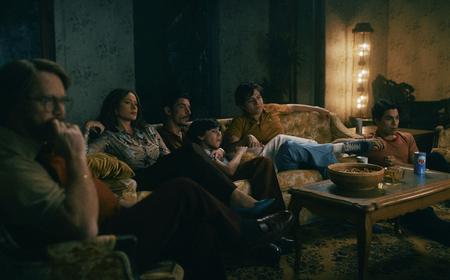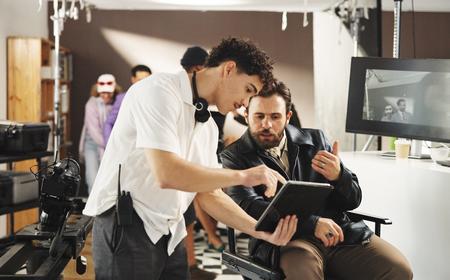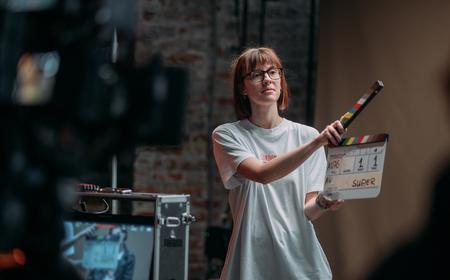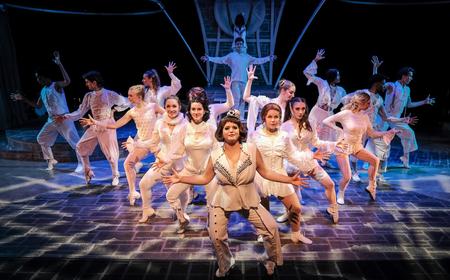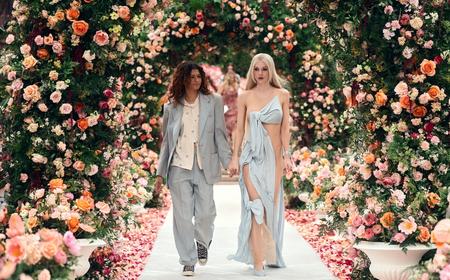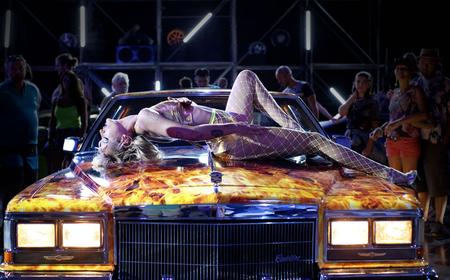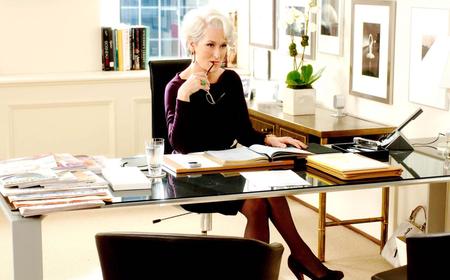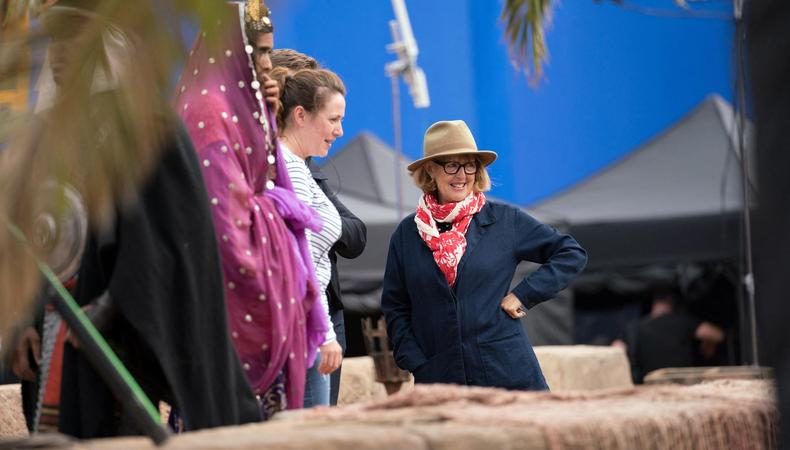
Hannah Beachler built the Afrofuturist nation of Wakanda for “Black Panther,” and Adam Stockhausen dreamed up the candy-pink confection of “The Grand Budapest Hotel.” Production designers like these are some of the most important people shaping the look of a movie, creating entire worlds out of elements as minute as props and as expansive as cities. Here’s how.
JUMP TO
A production designer (PD) heads the production design department and is responsible for establishing and overseeing the physical appearance of a story’s world.
That can mean designing sets from scratch, modifying existing locations, selecting furniture and props, determining color palettes, researching historical periods, coordinating construction and set decoration, and making sure all of those elements work together.
The PD works especially closely with the director. During preproduction, the two discuss the script and develop a visual approach for the project. The director may have specific ideas about the world and tone of the story, and the production designer translates those ideas into physical spaces.
“It’s the production designer’s job to bring [the director’s] story to life, so being able to have a clear understanding of what that looks like to them will help with the creative direction and process,” production designer Hannah Maloof explains. “They don’t always know exactly what they want, so in the preproduction phase, a lot of the ideas are still concepts. Ultimately, it’s about figuring out how to turn those ideas into reality.”
A production designer also leads a large network of other crew members. Depending on the size of the production, this can include the art director, set decorator, production illustrators, construction crews, scenic artists, prop teams, and many others.
Much of a PD’s work happens before the first day of shooting.
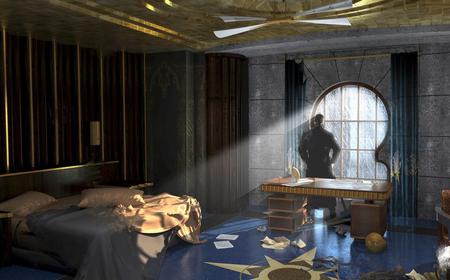
After reading the script, the designer begins breaking down what needs to be built or found for each scene. A screenplay might call for a character’s childhood bedroom, a police station, a restaurant, a 1970s office, or an abandoned warehouse—and each of those locations comes with its own design requirements.
The production designer then works with the director to determine how those environments should look. This process can involve:
- Research: collecting reference images and assembling mood boards
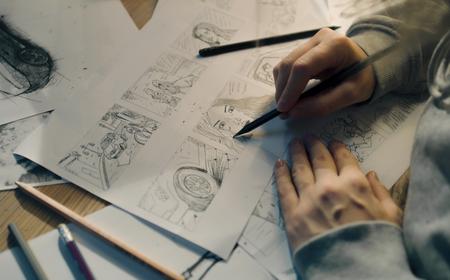
- Visual development: producing sketches, developing color palettes, and creating set designs
- Scouting: visiting and evaluating potential locations
The PD also has to consider practical filmmaking concerns. Where will the actors stand? Where can the camera go? Can the crew physically move through the space? Is there room for lighting equipment?
Budget is another major consideration. A production designer might have an ambitious vision for a location but only a limited amount of money with which to execute it. Part of the job is figuring out where to spend that money and where to find creative alternatives.
By the time filming begins, much of the designer’s work should already be in place. That doesn’t mean they’re finished, though.
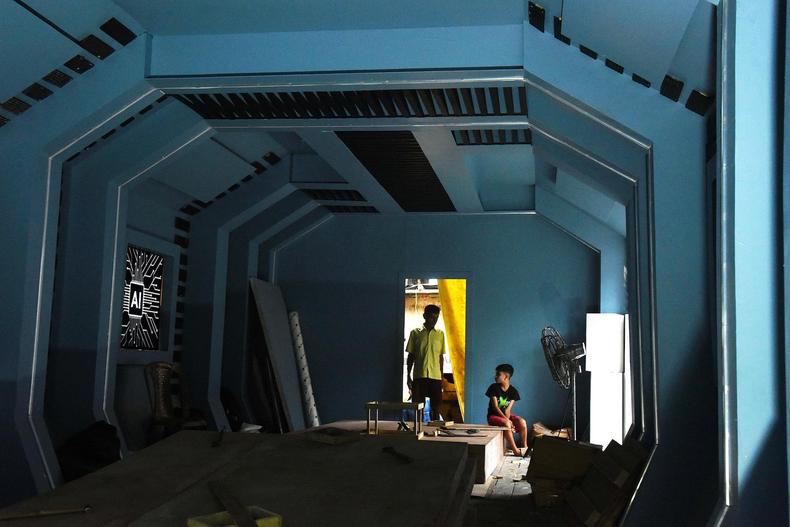
Credit: ZUMA Press, Inc./Alamy
A designer on a large studio feature will keep a very different schedule from someone on a small independent film. Some days may involve extensive set construction, while others consist largely of supervising a finished set.
Still, a typical narrative shooting day could look something like this:
6-7 a.m.: Arriving and checking the set
The production designer may arrive before shooting begins to inspect the day’s locations and sets. The first priority is making sure everything looks the way it’s supposed to: Furniture needs to be in the right place, set dressing needs to be complete, and any construction or painting scheduled overnight needs to be finished.
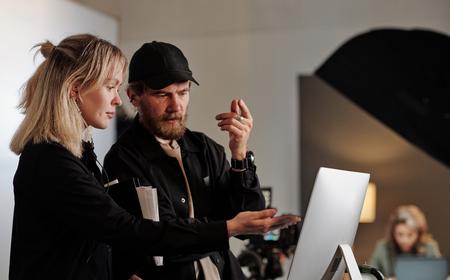
“A lot of time is spent behind the monitor checking each frame, making sure everything is exactly where you want it to be,” Maloof notes.
7-9 a.m.: Blocking and adjustments
Once the actors arrive and the director begins blocking the scene, the production designer can see exactly how the environment will be used. This matters because a set can look perfect when nobody is standing in it, then suddenly reveal problems once actors and cameras enter.
The PD works with the relevant members of the art department to make any necessary changes. They may also discuss the frame with the director and cinematographer, checking that important design elements appear where they should.
“If I had a prop that I feel moves the story, I fight for that prop to get seen as much as I can,” Maloof says. “Oftentimes the audience will pick up on visual cues even more than dialogue; these are things that can leave an impression.”
9 a.m.-noon: Shooting and monitoring
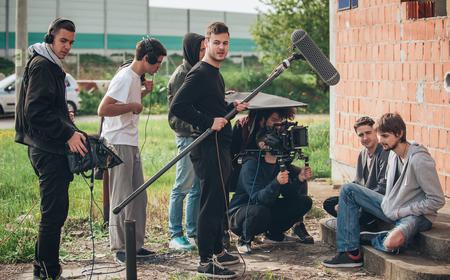
Once cameras roll, the production designer’s role becomes more observational. They generally aren’t operating the camera or directing the actors. Instead, they monitor the environment they’ve created, whether by watching takes on a monitor, observing the set in person, or moving between the set and the art department.
At the same time, the designer has to be prepared for changes. The director might decide that a room needs to feel emptier, more cluttered, more expensive, or more lived-in. Some of those adjustments can happen quickly, while others require substantial work from the art department.
Noon-1 p.m.: Lunch and planning
On a typical 12-hour shooting day, lunch is often the closest thing to a true break, although the production designer may still spend part of it working.
The job frequently requires thinking several steps ahead. While one scene is being filmed, the PD may already be considering what the next location needs.
1-5 p.m.: More shooting, problem-solving, and coordination
The afternoon often combines monitoring the current scene with preparing for what comes next.
This is where the job’s collaborative nature becomes especially apparent. Throughout the afternoon, the production designer may be in conversation with the director, cinematographer, assistant director, art director, set decorator, props and locations departments, and other crew members.
“Every day on set is extremely collaborative, which is one of my favorite parts of the process,” Maloof says. “You’re working with a lot of really talented people that love their craft, and you can feel that energy on set.”
5-7 p.m.: Final setups and preparing for tomorrow
As the day moves toward its final setups, the production designer is—you guessed it—already thinking about what’s next.
If the production is moving to another location the following day, the art department may need to prepare it. If a set needs to be redressed overnight, the designer may coordinate that work. And if construction or painting needs to happen before the next shooting day, those instructions need to be communicated.
7 p.m. and beyond: Wrap
Evem when filming wraps, the production designer’s day isn’t necessarily over. Sets may need to be restored or redressed, locations returned to their original condition, and materials stored. The art department may also need to prepare for the next shooting day.
And tomorrow may mean starting the whole process over again at a completely different location.
The biggest misconception about the job may be that production designers spend their days decorating beautiful sets.
They certainly make creative decisions, but the job is also heavily logistical. A PD is simultaneously thinking about aesthetics, storytelling, budget, scheduling, construction, safety, camera placement, actor movement, continuity…you get the point.
It’s also an extremely collaborative position. To get PD gigs, you need to work well with others. As Maloof says, so many PD jobs rely on “word of mouth and putting yourself out there. There is so much networking and relationship building that happens on set without you even knowing. If you show good work ethic and bring a positive energy to set, people will remember that about you and are more likely to recommend you for other gigs.”
Great production design makes a story’s world feel believable, whether or not anyone stops to admire it. That’s ultimately what a production designer does: They turn the world described in a script into a physical one that actors can inhabit and audiences can believe in.