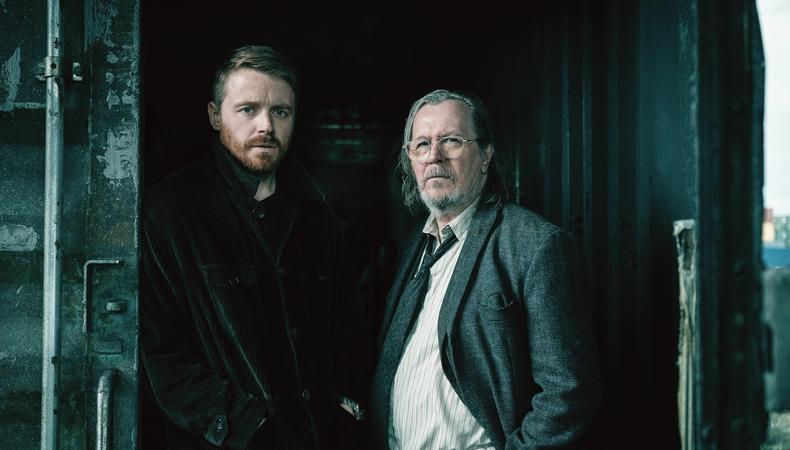
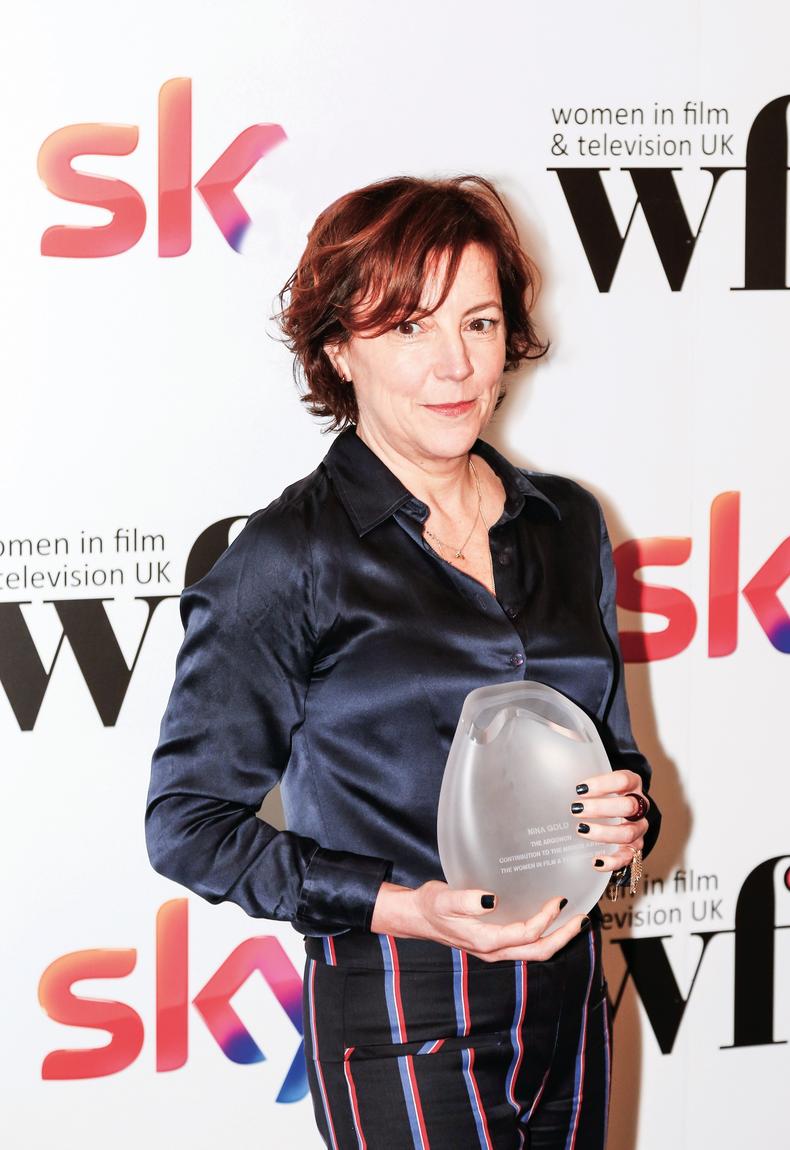
Fresh off her third Emmy nod for populating the shadowy, cynical world of Apple TV’s “Slow Horses”—pairing icons like Gary Oldman with breakout talent like Jack Lowden—Nina Gold continues to solidify her reputation as one of the industry’s most influential casting directors. Her upcoming slate is a trio of projects any working actor would kill to be a part of: Greta Gerwig’s “Narnia” adaptation, Sam Mendes’ four-film “Beatles” epic, and the next, ultra-secret James Bond film.
We spoke with Gold about her casting process for the acclaimed espionage series, based on Mick Herron’s spy novels and returning for a sixth season this fall. In our conversation, she discusses what separates good actors from great ones, how to make a self-tape memorable, and her personal audition red flag.
 “Slow Horses” is based on Mick Herron’s books, which depict these characters with so much hilarious detail. How closely do you stick to the book descriptions, or do you look for an actor who simply captures the character’s vibe?
We cast more to the script than to the book, generally. But the script still captures the essence and heart of the characters in the book.
Was there a specific actor who walked into the room and captured Mick Herron’s dialogue so perfectly that you instantly knew the role was theirs?
The one that really sticks in my mind is Nick Mohammed [who plays Zafar Jaffrey, the mayor of London, in Season 5]. He just captured the humor, drama, and seriousness, the really funny business of it all, perfectly.
Do you remember any specific choices he made in that audition?
It was just a full understanding of the tone, of how to nail it, how to navigate between the seriousness and the high stakes and the political element, and still be extremely humorous. You can’t really identify it. You can just be kind of in awe of the fact that it’s happening.
Gary Oldman’s Jackson Lamb is a force of nature in “Slow Horses.” How does his presence in the cast dictate the type of actors you look to play opposite him?
He’s so completely brilliant. Every actor’s dream is to be as good as Gary Oldman. He’s incredibly versatile [and] he’s incredibly generous with the other actors. He’s a real actor magnet, which is pretty great. And he’s both playing his own part incredibly brilliantly and bringing more and more every time, but also just enabling everybody else to be really great as well.
Do you have advice for an actor who’s playing opposite a big star like Oldman?
I think you just show up and do your best. You know, real stars and amazing actors are there for the other actors as well.
Every season introduces a new set of villains. How do you approach casting characters who might only be around for a single six-episode arc but need to leave an impression?
I [look for] people with a lot of their own imprint. People who can really bring it and have a strong flavor of their own. I like it when people really own it in a unique and original way.
With the show now moving deep into future seasons, how has your casting philosophy for the series evolved since you put together the very first episode?
Each new circumstance demands new stuff, even if the overall philosophy stays the same: Let’s try and get some really amazing actors and let’s try and make it right. But it’s very specific. Not everybody is amazing for every part. Even wonderful actors are not perfect for every single part, and it is very much driven by the exact specifics of each new context. And that’s what makes it a voyage of discovery, which is the really fun bit.
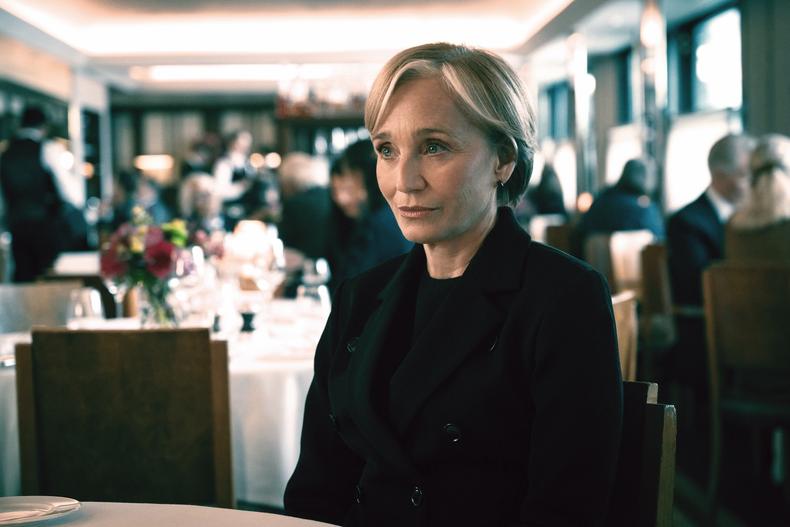
Kristin Scott Thomas on “Slow Horses” Courtesy Apple TV
You’ve built your career on finding undiscovered talent. Where do you like to look for fresh faces?
Everywhere, everywhere, everywhere. Really, I mean, because I live in London, where there is a lot of theater, I go to the theater a lot. And I go to a lot of drama. We also have a lot of really incredible drama schools, and I go to them and see all the new people. I hold a lot of auditions, which involve bringing in new people all the time from just wherever we can get them. It’s so fascinating to see new people developing.
When casting Netflix’s “Narnia,” you asked kids to tell stories rather than perform scenes. What advice do you have for actors who are so focused on the “perfect” performance that they lose some of their authenticity?
It’s really hard, but as a child actor, you just have to bring what you’ve got. It’s not necessarily about having learned all the lines in one particular way. It’s about seeing different sides of a person and seeing what sort of potential they have, and the rest of it can possibly come later.
Also, it’s meant to be fun. If you’re a child actor, it really is supposed to be fun. Otherwise, what’s the point?
What specific traits or qualities were you looking for when casting the new “Narnia”?
We were looking for kids who could occupy the center of this gigantic story and keep you wanting to watch them, which is an incredibly big ask for children to bring enough acting talent and their own personality to the whole thing.
You’ve worked with different types of actors for decades. What do you think separates those who build lasting careers?
It is really helpful [when] people start somewhere quite small and have learned more as they go and developed their acting in a gradual traditional way. You really do see people grow in talent, confidence, skills, and awareness. And you don’t necessarily know that from the get-go. The growth of an actor, not just their career, but their ability, is interesting. It is a constant learning experience for everybody, and that’s what keeps it alive and wonderful.
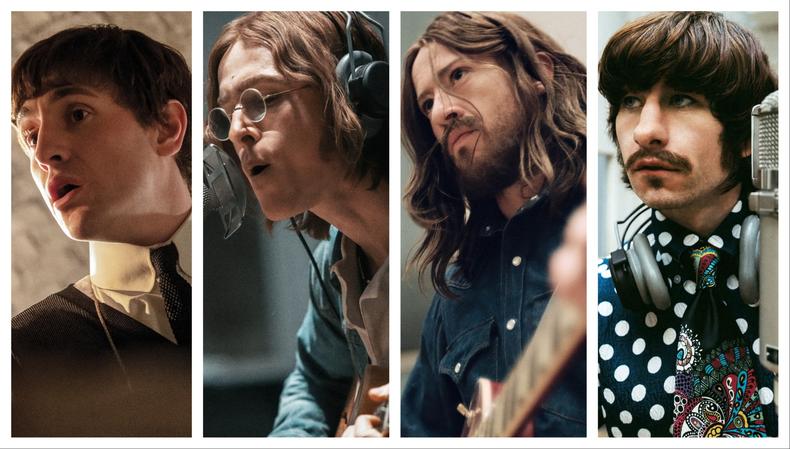
“THE BEATLES”: ©2026 CTMG, INC.
What’s your best advice for making a self-tape stand out?
Try not to overthink it because otherwise you just get lost in a mire of confusion. I think it’s good when people just keep it simple and truthful and try not to overthink it because, boy, is it tough. I really can see that.
Do you have any audition red flags you’d like an actor to avoid?
This is my own personal thing. I don’t love it when people do a lot of eating in an audition. People love to eat in an audition, but I find it really distracting. But I mean, some people might like it.
You’ve said that actors should come into your audition room both prepared and flexible. How do you know when an actor has struck that balance?
[If] they try and do it again, even if it’s just as a sort of experiment to try a different angle on the scene, or try it from a different approach, just to feel what happens and that it’s not a kind of fixed [performance]. Even if it’s not the right thing, just the feeling of being able to play with it. And again, playing is fun, because we don’t really know at this point exactly how it should be done. But trying out different ideas, even in a subtly different way, is really revealing and great. I think you can only do that if you are properly prepared. If you’re just winging it, it’s harder.
Do you think there’s ever a time when preparation can get in the way of a performance or a discovery?
If there’s homework to be done, do it. It gives you, the actor, confidence and makes you feel like you’ve got a basis to start with. But I don’t know how anybody does this; being able to retain the flexibility to throw it out when they need to is a real skill. The thing about preparing is it makes you, the actor, feel like you’ve got somewhere to start.
What’s something someone told you when you were just getting in the industry that still resonates with you?
The best advice that I was ever given is to listen.
Finally, for an actor trying to leave a lasting impression with a casting director like yourself, whether it’s through self-tapes or Zoom, what advice would you give them?
Do your homework, learn your lines, and really give it your best shot. There’s a lot of people out there, but my job is to try and actually look, take it in, and receive the impression. If I’m doing my part of the job, all the actor needs to do is prepare a bit as well as they can.
This interview has been edited for clarity and length.
This story originally appeared in the Aug. 17 issue of Backstage Magazine.