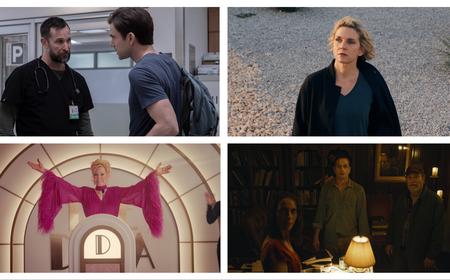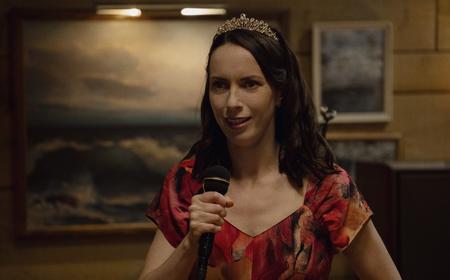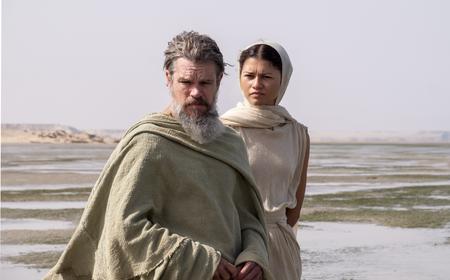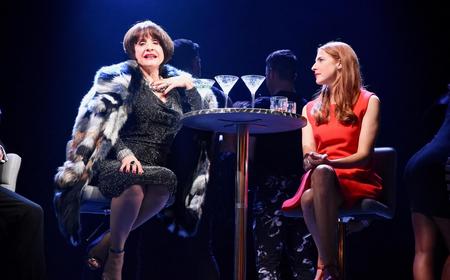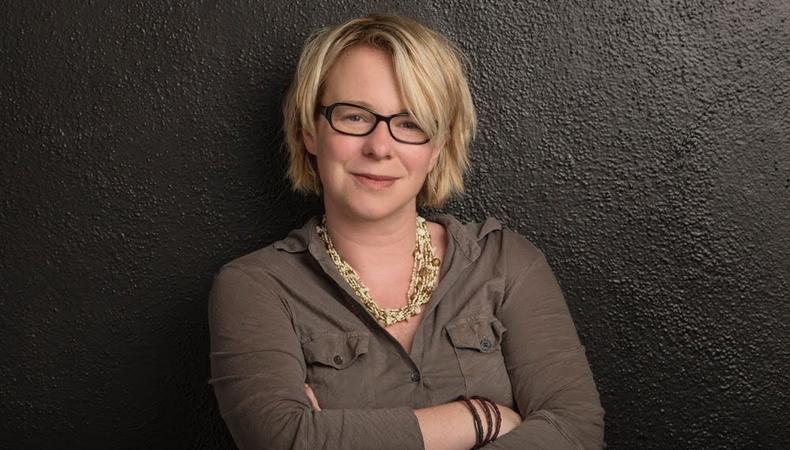
Julie Anne Robinson has spent nearly three decades directing actors across corsets, cones, and covered wagons, for shows including “Bridgerton,” “Grey’s Anatomy,” “Manhattan,” “Orange Is the New Black,” “Parks and Recreation,” “The Good Place,” “The Hunting Wives,” “Doctor Who,” and “Little House on the Prairie.” Here, Robinson talks about why she keeps monitors off her sets, how she shakes a slow ensemble loose, and what she actually wants to see in a self-tape.
Does your theater training shape the way you work with actors on set?
When I was young, I spent many years assisting the biggest theater directors of the time, including Stephen Daldry and Sam Mendes, at the most prominent theaters in the UK. I took the different techniques I was learning from them and went off to direct my own productions in smaller venues (a lot of Shakespeare). That’s what I think of as my training—there wasn’t a course or anything. I quickly realized that copying other directors was all well and good, but the very best thing I could do was to be as authentic and truthful as possible with the actors I worked with.
At that time, there were very few female directors, and I received a lot of advice from the directors I assisted, such as, “Make yourself look bigger, wear bigger clothes, and “stare at people until they feel vulnerable; you never want actors to be too relaxed or comfortable in your presence.”
I threw most of those lessons away! What I carry with me from the theater is to be relaxed and show the actors how much I love and admire them—which is 100% true. (I don’t know how they do it; it’s brave to open yourself up before an all-seeing eye.) I try to show the actors how much I believe in them and their ability to be in this moment onstage and on set. I trust them. I don’t try to impose a performance I have predetermined in my head; it’s about how the actor and the script come together in a really joyful way that creates something interesting and unique.
Obviously, I have the emotional arc of the characters across episodes and seasons in my head, and if there’s a moment where it looks as if the actor isn’t really aware of those shapes, I’ll step in and help. But for the most part, I find actors tend to be very diligent about doing their homework.
Does your directing approach and vocabulary change across genres?
I’ve done a bit of everything—I had to fight quite hard not to be pigeonholed—but I don’t go from setting to setting consciously trying to use different words. This is going to sound wanky, but it’s all about what the script, the situations, and the actors bring. I want the actors to feel as relaxed and confident as possible, so they can dig deep and bring as much as they can to the situation, whatever it is.
For example, on “Bridgerton,” I was working with Luke Newton. He had a very long, emotional speech, and we were short of time, but Luke went out there and brought his talent to the script, and everyone on set was crying.
When you’re working with comedians, it’s especially important that they feel empowered. That way they can be freed up to bring their comedy genius, which is ultimately an act of vulnerability in my opinion. When Adam Scott was doing the opening scene of “The Cones of Dunshire” [on “Parks and Recreation”] he had an insanely long monologue, and I needed him to understand that there was no way it could go wrong. If he forgot his lines or whatever, it really didn’t matter; all he had to bring was his genius. I think it’s important as a director to be nuanced, not love your own voice, and in many cases get out of the actor’s way. (And when you have it, move on.)
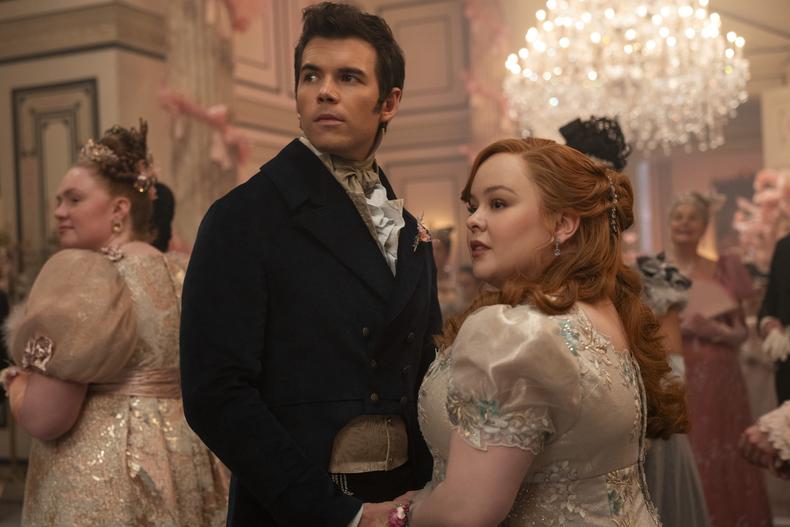
(L to R) Luke Newton and Nicola Coughlan on “Bridgerton” Cr. Liam Daniel/Netflix
How do you translate iconic texts and historical material into TV adaptations for contemporary audiences?
I love digging into different periods; I become quite obsessive. The thing I love most is not what divides us, but what binds us across the generations. For example, no matter what era we are in, people always want the best for their children, although this want might take unfamiliar forms. So I’m always looking for those little things that signal to us, watching today: These people have passions, wants, and desires just like you. However, once you’ve done your research, you don’t have to be at the mercy of it. On “Bridgerton,” we choreographed and filmed all the dances to modern songs (Ed Sheeran’s “Shape of You,” for example). I think that led to more uninhibited performances from the actors and dancers, no matter what music was used in the final edit. I find it fascinating that the shapes of the music are the same 200 years later!
I did a show called “Manhattan” back in the day, and that was very personal to me because my grandfather had worked for Kodak at that time and developed stocks to film a lot of the explosions. I was able to pay tribute to him in the shape of a background artist who played [a version of] him, filming the explosion with a movie camera. I try to find little personal ways into the material because I believe the audience values the emotional windows that it offers, even if it’s not spelled out.
Don’t be too reverential to the period or the source material. Both are like a trampoline from which to bounce off. You are making something entirely new in a different medium, with many collaborators.
Can you speak on the process of building relationships across the landscape of different studios and streamers?
If you’ve been around long enough, you usually know or have come up with people at the different places, so they just become people.
But you should always know what each platform is looking for. Apple is generally looking for a very cinematic feel, which is often family-friendly and uplifting. Last time I looked, HBO Max wants a grittier look that can be shot quickly. This is nothing new. When I was doing pilots, you always had to tailor your pilot to the different places (Fox, NBC, ABC) so it worked for the specific time slot or network.
It’s impossible to generalize, because these things change rapidly. All it takes is a change of personnel at the top, or a big hit on one network, and my observation is that everyone runs in that direction, so you’ve got to keep your ear to the ground. Have you heard the saying, “Television is the only place where everyone is running to find the spot where lightning just struck”? So true!
How do you balance giving individual actors what they need while protecting the larger rhythm of a scene?
I’m a big fan of screwball comedy, and I often think that ensemble scenes work best at pace when all the actors are flying. Some performers naturally have a slower rhythm, and talking faster doesn’t come easily to them. Sometimes I will get casts to do “speed runs” of the dialogue—and when I say speed runs, I really mean speed! I say, “Go as ridiculously fast as possible. No judgment.” Often, this process helps to shake up actors who have overly preplanned their performances and aren’t really living in the moment on set. That’s often why they’re slow. When they’re freed up and feeling brave enough to react in the moment, interesting things start to happen!
What’s something actors should know about working with directors?
The thing I wish actors understood is that they don’t need to be perfect all the time. It’s a whole team that’s working to make sure they’re great; the responsibility doesn’t only fall on them.
All that matters to me is what’s happening in front of the lens at this very moment and how it feeds into the performance we’ll shape in the edit. That’s what will last forever. I never have playback on my sets. The reason is that it helps nobody, least of all the actors looking at it. It makes them overly self-conscious, and unless they are the director themselves, they can’t know which part of the performance I’m looking for in a particular take.
Every director is different, but I take my role as an actor’s director very seriously. I care deeply about making sure the actors’ performances are powerful. When I’m on set, I’m looking toward the edit in my brain. Not every take has to be perfect all the way through.
What’s your best advice for actors trying to break into TV?
Every director is different; however, I encourage young actors to find ways to stand out on their self-tapes. We get so many. Sometimes it is as simple as reordering the scenes so your strongest one goes first. It can’t hurt.
I personally love the new trend of being inventive in self-tapes. For “The Hunting Wives,” a character was driving around in a truck, and this actor from Australia did his whole audition driving around Brisbane. We really considered him! (Although I must say, stay safe.)
After all, in this new self-tape reality, we are on camera. So why not use it? Modern technology allows us to access new advice from those we never would have met or known of previously. I wanted to inspire the next generation and share my own tips, so I started my Substack, Holding for Parrots, where I write about navigating the industry and feature some of my favorite people I’ve met in my 25-plus-year career, giving them a chance to share their stories and the lessons they have learned.
By the time you get through to a Zoom audition with producers and the director, however, confidence is king. Don’t try to be memorable or funny in a preplanned way. If I meet you (even on Zoom), I’m not interested in any of that. Are you the character, or a version of the character? Can you take notes? It’s not your fault if you don’t get the role. You just weren’t it this time, but one day you will be. Also, please be off book.
This interview has been edited for clarity and length.