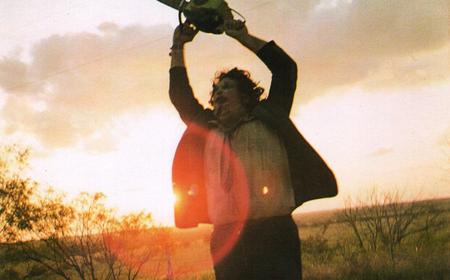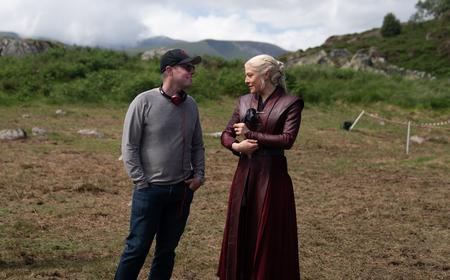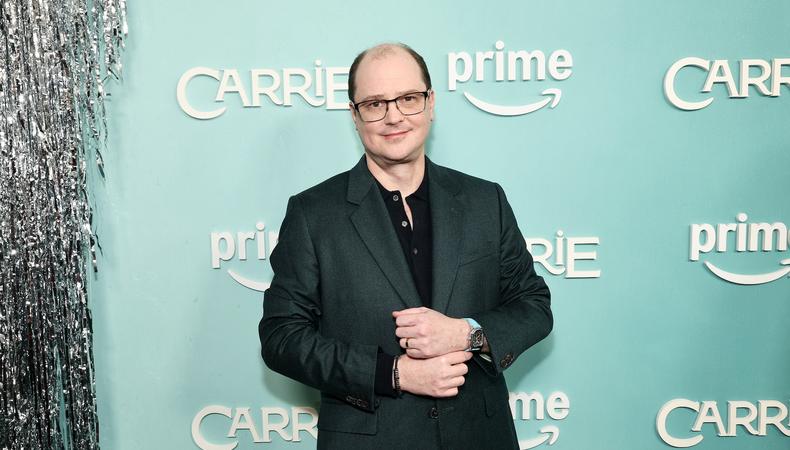
He’s a humble, amiable guy, Mike Flanagan. Which means the writer-director will likely balk at the headline of this story should he end up seeing it. Luckily for us, his modest nature doesn’t make a simple fact any less true: With “Gerald’s Game” (2017), “Doctor Sleep” (2019), “The Life of Chuck” (2025), and now a long-form version of “Carrie,” the creator has proven himself to be the king of adapting “unadaptable” Stephen King stories.
King’s works aren’t the only mountain the showrunner has scaled, though. His adaptation work extends from the heart-wrenching “The Haunting of Hill House” (2018) to the immaculate “Fall of the House of Usher” (2023). It’s for that very reason that, when we had the chance to sit down with the multi-hyphenate, we focused on how he perceives the art of adaptation, what he believes an adaptation’s job is, and how one might differ from another.
“I think there are really two types of adaptations,” Flanagan told us. “The first kind is when you're taking a book or a story or a game, whatever it is that you're adapting, and you're trying to translate it as literally as possible to the screen and protect it as much as you can. I think the closest I've come to that is ‘The Life of Chuck,’ which was really darn close.”
 Kate Siegel Gets Deep About Horror, ‘Divine Dissatisfaction,’ and How to Deliver a Mike Flanagan Monologue
The other kind focuses more heavily on reimagining, which we see not just with his take on “Carrie,” but also in how he approached “The Haunting of Hill House,” “The Haunting of Bly Manor,” and “The Fall of the House of Usher.” “That kind of adaptation is when you take something apart piece by piece, break it down into its essential elements, and think about what it is at its core, and use those pieces to build something new that somehow honors what came before,” Flanagan explains.
For the showrunner, it’s that deconstruction into something entirely new that’s the most challenging. “Carrie” marks the first time Flanagan has radically reinvented King’s work, bringing the material into the social media age to touch on modern horrors like cyberbullying, Gen Z cynicism, and the threat of violence hanging over high school hallways. A new take on the text was the only way he could see approaching Carrie’s tragic story.
“ ‘Carrie’ has already been perfectly adapted,” Flanagan says. “It was adapted iconically by [Brian] De Palma, and then adapted again, and then adapted again, and then adapted again after that. There was just no point [in a direct adaptation]. That's a nerve-wracking place to stand with when your hero can look at you and tell you that you screwed it up. He won’t be shy about it!”
King has, of course, been consistently vocal about adaptations of his work, with his most notorious frustration being with Stanley Kubrick's 1980 take on “The Shining.” But Flanagan himself is the one who brought King around—if only a little bit—with his version of “Doctor Sleep,” the follow-up to King’s original novel.
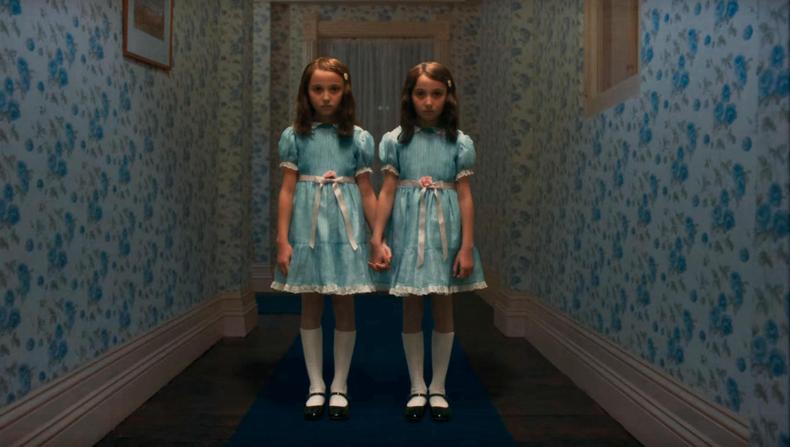
“Doctor Sleep” Credit: Collection Christophel/Alamy
“ ‘Doctor Sleep’ is such a bizarre thing because it's new—it’s untrodden territory on one hand, and on the other hand, it’s a direct sequel to a Stanley Kubrick film,” Flanagan says. “We were trying to serve the aesthetic requirements of a sequel to Kubrick's ‘The Shining,’ which King hated, and be a faithful adaptation of King's novel, ‘Doctor Sleep,’ and somehow bring them together into something that satisfies both. That was a wild high-wire act,” he says. “[King is] a relationship I’ve spent years cultivating and a trust I’ve spent years building. And so it’s very nerve-wracking to put that at risk,” he says.
One might think that “Carrie,” which is streaming on Prime Video, would be beholden to what came before it in the same way as “Doctor Sleep.” After all, Flanagan reveres De Palma’s visual take on the story (and even gives the director an Easter egg on Main Street by way of a theater marquee). But because the showrunner was never trying to emulate the original adaptation’s style, he got to play his way. In the case of “Carrie,” that meant tweaking many aspects of the story and flipping two iconic characters on their heads entirely.
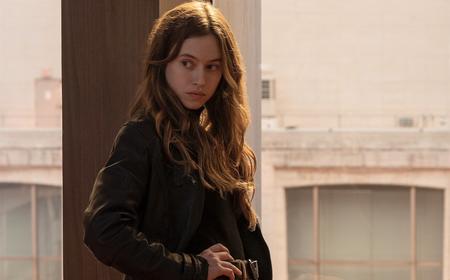
“Carrie White has historically always been a traumatized, terrified, kind of clenched character who had already been exposed to the world and beaten down by it,” Flanagan says. “[Our] Carrie White [played by Summer H. Howell] is the opposite. She’s never been part of the world. She’s open, she’s eager, she’s curious, she’s kind, she’s earnest.”
Carrie isn’t the only character Flanagan has radically reimagined. “Margaret White [played by Samantha Sloyan], in every other iteration, is defined by her fear of and hatred of her own daughter, and that makes her this monstrous abuser. Ours is the opposite,” he explains. “Our Margaret White is defined by her passionate love for her daughter, her intense desire to keep her safe, and how she doesn’t know how to quite do that as a parent. It keeps it tragic, but it changes everything.”
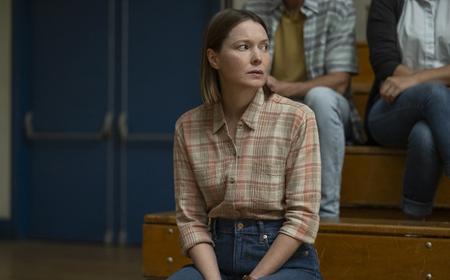 Samantha Sloyan Talks ‘Carrie,’ Her Monologue Process + Why ‘The Exorcist: Martyrs’ Might Be the ‘Scariest Thing’ Mike Flanagan Has Ever Done
 What doesn’t change is Flanagan’s reliance on his stable of frequent collaborators. Sloyan has worked with the writer-director for a decade now, since the 2016 home-invasion thriller “Hush.” In a just world where awards bodies gave genre television the attention it deserved, Sloyan would have multiple Emmys by now. Each collaboration with Flanagan leaves you thinking, “That was her best performance yet,” and the same remains true for her turn as Margaret in “Carrie.” She and Flanagan have a partnership in which he writes the most emotionally devastating character known to man and knows Sloyan is the only performer who can share that pain correctly with the audience.
It’s partnerships like the one he has with Sloyan—and his wife, actor Kate Siegel; actor Rahul Kohli; director Axelle Carolyn; cinematographer Michael Fimognari; and composers the Newton Brothers (we can keep going)—that gave Flanagan his name. It’s also the reason he has no interest in being called an auteur. He would rather gush about his collaborators. “The single greatest thing about what I get to do for a living is collaborate with these remarkable artists,” he says. “Many of whom are friends, of course, but literally family as well.”
All three of Flanagan’s children are in “Carrie.” Theo Flanagan plays younger Margaret, Cody plays Jeremy, and Rigby plays Trent. Siegel doesn’t just have a role in the series as Adelaide; she also directs Episode 3, “Social Studies.”
The Flanagan stable has long been referenced as the “Flanafam” among fans, but “Carrie” is literally a family affair. In fact, the entire concept of the show was inspired by parental worries. “When I was first considering whether or not to do this project, it was just as my oldest son was about to enter high school,” Flanagan says. “I have an enormous amount of anxiety about it. And imagining the world he inhabits that I never had to contemplate in the ’90s, and Stephen King certainly never had to contemplate in the ’70s when he was writing about this,” he says.
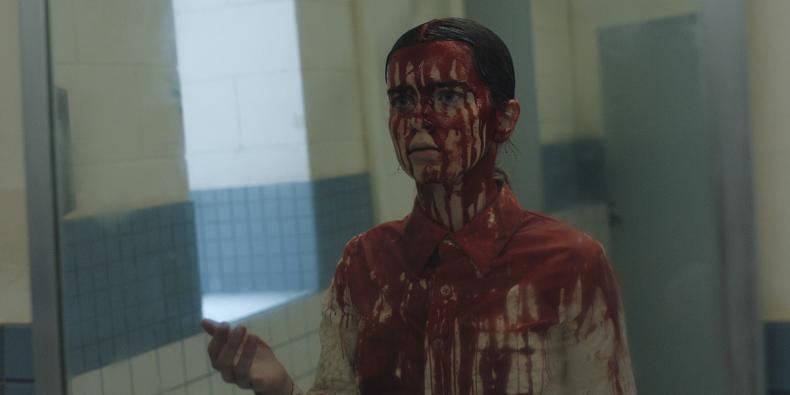
“Carrie” Courtesy Prime Video
“It's a different world these kids inhabit. And Carrie is the story of school violence at the end. That's what it is,” he continues. “That isn't something that we're going to shy away from. It's impossible to talk about contemporary high school in America without acknowledging this normalization of the expectation of school violence. One of the first images that popped into my head as I thought about whether or not we wanted to do this show was Carrie White walking through a metal detector. Carrie enduring the insanity of an active shooter drill.”
This different world is why, “more than any other project” in his career, Flanagan wants the spotlight on the people around him. “I spent so much time on ‘Carrie’ stepping back and listening,” he says. “This is a story about the teenage experience, which I’m too old to know anything about, and about the female experience, which I’ll never truly know about. We were surrounded by phenomenal artists, with brilliant women who were shaping the show from the writer’s room through production and postproduction.”
In short, it’s very important to the showrunner that audiences know the troupe he’s built over the years extends far beyond the faces we see on screen. “I learned long ago, rather than try to know it all, rather than try to make the decisions about things I don't know about, it's about surrounding myself with the people who do know and trying to arm them to do their best work,” Flanagan says. “That has just made these more and more rewarding at every turn.”
This interview has been edited for clarity and length.