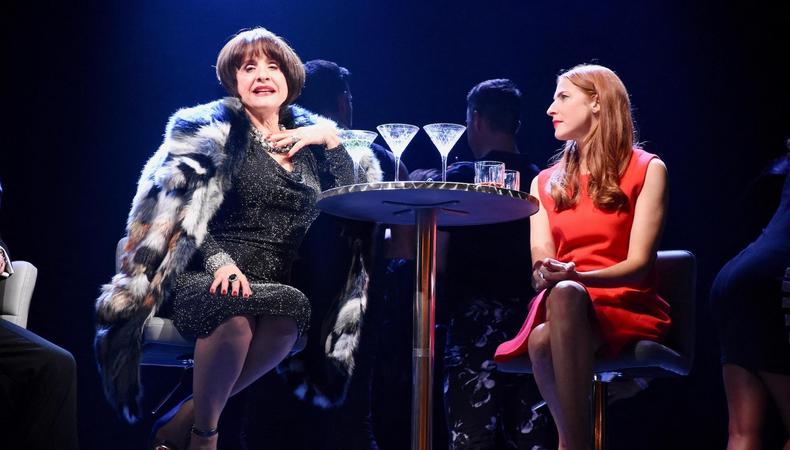
If it weren’t for gender bending, we wouldn’t have theater—and I’m not just talking about “Oh, Mary!” Playing with gender norms and constructs may feel like a modern idea on stage and screen, but it is anything but. In Shakespeare’s England, women weren’t allowed to act on public stages, leaving boys and men to play all the roles.
But what does it mean to gender bend or gender reverse a character? What should you consider before swapping a character’s gender or casting? What are the pros and cons of mixing things up when adapting or staging a known story? Keep reading to find out more, and hear from a pair of writer-actors who understand firsthand what it takes to create and embody gender-bending characters.
JUMP TO
First, it’s helpful to understand the terminology.
- Gender bending: To take a character written to be one gender and cast someone of a different gender in that role. For example, having a woman play Romeo in “Romeo and Juliet.”
- Gender reversing: To reimagine a character completely—and, by extension, the story around them—by casting an actor of a different gender. For example, having a woman play Romea in an updated queer romance “Romea and Juliet.”
- Gender-neutral casting: To cast a role in which the character’s gender has no real bearing on the casting choice or the story. For example, when I landed the role of the caterpillar in a childhood production of “Alice in Wonderland,” my gender did not come into play, nor did it require any alterations or rewrites.
Originally, writer-actors Valen Shore and Alison Zatta wrote their satirical musical “Chriskirkpatrickmas” with male actors in mind to play the boy band members at the heart of the show. The musical tells the story of *NSYNC’s 2002 hiatus from Chris Kirkpatrick’s point of view. Dealing with very real celebrities meant “we knew people were coming in with preconceptions about them and that we might hit a wall there,” explains Zatta, who also plays Mark “Marky Mark” Wahlberg.
Instead, the creative team filled out the show with female actors. “We found that by casting someone unexpected in the part, we get to tunnel under that wall. They’re seeing the character in a fresh way,” Zatta says.
It is vital that any actor, writer, or director consider the many shades and angles of possibility and handle the creative process with care. For Zatta, casting the show with women “allowed everyone to come in with a fresh perspective and surprise you.”
Adds Shore, “*NSYNC belonged to the girls at the slumber parties who learned the dances and did them at the talent shows and recorded them off the TV on VHS. Giving it to the girls to embody these men, who they knew really, really well, allowed the audience to access the more vulnerable side of these men. It added another layer to it.”
Important questions to consider include:
- How might changing a character’s gender affect the way the audience receives their actions and dialogue?
- What are the implications to the story, thematically or otherwise, if a character is gender reversed or gender bent?
- How does it change the characters’ dynamics?
- What new themes or ideas will be evoked by subverting gender in this way?
Sometimes it can even add a meta layer to the equation. “We get to see the character learn how to be that guy while the actor is trying to figure out how to be that guy, and it helps us tell the story,” says Zatta. “A lot of the intention we had with the show [didn’t] have to be written explicitly because [by casting women] it’s happening before your very eyes.”
Playing with gender can also help a show’s tone. “Being able to cast a woman in the role of [the band’s manager] Lou Pearlman was a way to deal with the darker parts of the story while still being digestible,” says Shore.
Thoughtfulness, consideration, and intention are hugely important to the process. It cannot and should not be done hastily or simply as a gimmick. Just look at the 2021 gender-bent revival of “Company,” starring Katrina Lenk and Patti LuPone, which worked because those choices had clearly been thought through.
Another technical, but no less crucial, component to consider, particularly when dealing with theatrical rights, is whether you are, legally speaking, allowed to change the character’s gender. Some licensing agreements are contingent on certain rules laid forth by the writer, and you may need to get consent before making sweeping changes.
Changing a character’s gender can illuminate new themes and ideas. It can subvert expectations in a way that is exciting for both the audience and the actor. “There are always going to be implications,” says Zatta, who encourages actors and writers to think through those implications to “as far down the road as your brain will allow.”
Playing with gender is “going to make your show play differently, and you need to be aware of that,” she says. It also creates fun cameo opportunities that allow for longevity and repeat viewings from audience members. Recent examples from musicals include “Moulin Rouge,” in which Megan Thee Stallion played club owner Harold Zidler, and a production of “Jesus Christ Superstar” that saw Cynthia Erivo take on the title role. Explains Shore, “What’s more progressive than everyone having the opportunity to bring their interpretation to the role?”
The most important thing to consider when subverting gender expectations is the role gender plays in the story overall. In some narratives, especially those rooted in specific gendered or marginalized experiences, gender is the point and should be handled with care. Of course, those sorts of rules are always changing. They evolve as culture, and our understanding of gender evolves too.
In the end, be mindful and thoughtful about the implications of playing with gender in your casting and acting choices, knowing that they could add new layers to the story you’re telling.