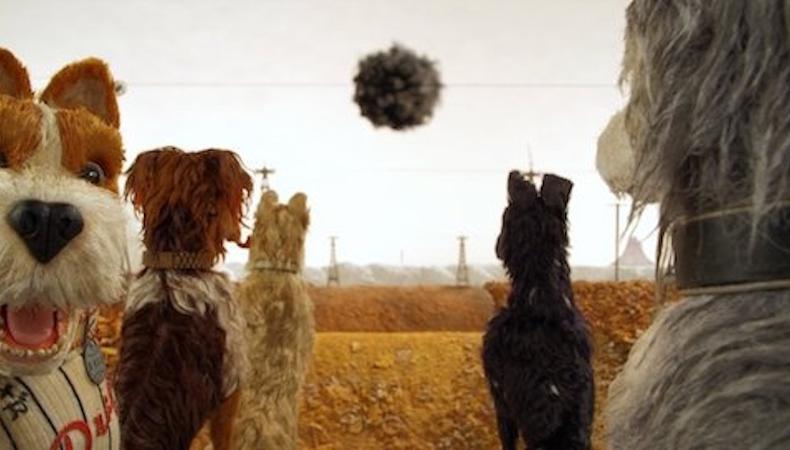
Stop motion animator extraordinaire Mark Waring, who reunites with the singular mind of Wes Anderson for his new canine-centric feature “Isle of Dogs,” is Anderson’s “eyes and ears” on the animation floor and helps ensure his directorial vision is properly executed. Waring speaks with Backstage about what his role as animation director actually entails, how actors’ voice performances crucially inform his work, and why Anderson’s naturalistic approach to voice recording is optimal.
What does the role of animation director entail?
The animation director is sort of the director’s right-hand man. Wes wasn’t there every day, so I am his eyes and ears on the animation floor. I’m constantly trying to work with the animators themselves, make sure everything done from an animation point of view is exactly what Wes wants, and also ask him questions and gauge what he wants from the animation.
How do voice performances inform your work as an animator?
The voice performances give me the character as an animator. You can get an idea from the script, but it’s the actual voice performance that leads the animation. Especially for ‘Isle of Dogs,’ there are a couple characters who change through the film. We shoot out of sequence, so you might be doing something from the end of the film, where the character is in a completely different place emotionally than they were at the start and you have to be able to understand that. It’s the same for actors and animators: You have to know where the character is emotionally to be able to impart that into the character when you’re animating it.
What is the actual process for animating a project?
The voices are done up front. Obviously, a script is written and then from there the design can be worked on, the characters and the sets. From an animation point of view, there’s a process called the animatic stage, which is basically a visual interpretation of the script, like a moving storyboard. That gives you a very rough idea of the whole film and what you’re trying to do. There’s a rigid process. When you’re animating, you need to know exactly how long a shot is and what the dialogue is, because you have to animate that, too. Obviously, the spoken word is animated and you need to know the mouth shapes that need to be made by the characters.
READ: Voiceover Training 101
You previously worked with Anderson on “Fantastic Mr. Fox” as an animation supervisor; what’s the difference?
Animation supervisor sits right under the animation director role. The animation director will be leading that work and saying, “OK, well, Wes needs this from this shot,” and the animation supervisor then gives you the ins and outs and tells you the problems we might have. It’s a little chain of command.
What is unique about animating for a Wes Anderson film?
“Isle of Dogs” is an ensemble piece, so they tried to get as many of the key characters in the same room at the same time to record, and they bounce off each other. There’s a natural feel to the voices; they can interrupt each other, lines overlap, and you get a much more natural voice record. A lot of animation has amazing voices, but they’re very stylized, they’re very contrived and polished. You know they’ve done it 20 times to get that exact inflection. Wes doesn’t do that. He goes with a naturalistic flow that’s almost like first take, he’s got it. It’s interesting because all those natural imperfections in voices are kept in. Humming or coughing or they stumble over a line, Wes loves that. And that really works when you’re doing the animation as well, because when someone coughs or stumbles over a line or whatever it is, you can animate that and it creates a natural performance.
What advice can you offer someone who wants to get into animation?
Sometimes you stumble upon somebody straight out of college and you just go, “Yeah, they’ve got it.” They might have done a little character and they just captured something: a little look or a wink or some little shift of weight and you can see they’ve actually observed, they’ve actually looked at somebody or have seen something and thought, “That would be really good to put into a performance.” Study people. Get those little nuances. Bring them out in your animation. That’s where the magic is and where you can see the real craft of it.
Want to book a gig? Check out Backstage’s voiceover audition listings!