Adam Shankman knows exactly what he wants from actors, because he started his career as one, appearing onstage in a 1980s Michigan Opera Theatre production of “West Side Story.” Then fate stepped in and he found his way to Hollywood, first as a choreographer for Paula Abdul and Janet Jackson, then as a director. His creative process begins with joy—the joy he brings to set every day, and the joy he looks for in the actors he works with.
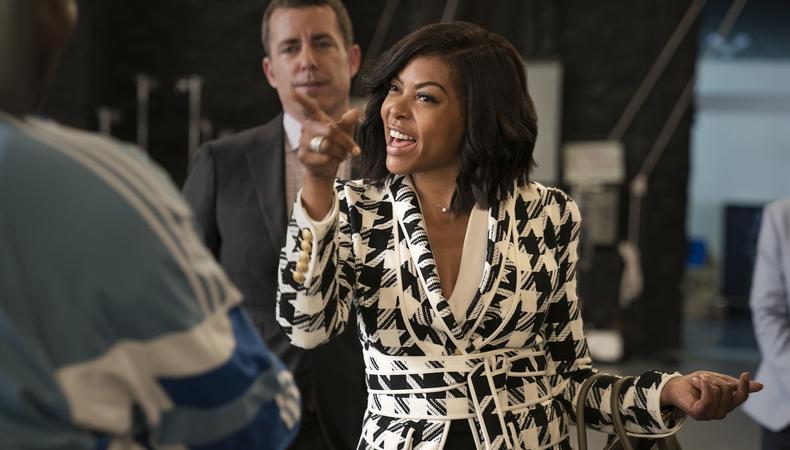
“It really starts with having fun with the script [and] the writers and then building the casting. When you’re auditioning people, it’s not just their performances that I’m looking at, it’s the kind of joy that they bring to the project,” says Shankman, whose feature film credits include 2001’s “The Wedding Planner,” 2007’s “Hairspray,” and his latest, “What Men Want,” a gender-flipped remake-with-a-twist of 2000’s “What Women Want,” this time starring Taraji P. Henson.
“I was looking to do something more dramatic,” Shankman admits. “But when this opportunity came, I looked at the landscape and thought, Right now what we need is to laugh and experience positivity.” Though the film has an obvious message—listen to your heart and not the (in this case, quite literal) voices in your head—Shankman says he tried to avoid any soapboxing. But compared to the original film, where the central male character’s greatest obstacle was himself, the obstacle here for our heroine is today’s culture.
“It’s really about saying, ‘I don’t have to participate in a culture that isn’t interested in supporting me.’ Really, it’s about the fact that there’s room for everyone at the table.”
It’s a pertinent take, especially considering that Shankman is one of only a handful of openly gay directors working in Hollywood today. Does he think there’s enough room at the table for LGBTQ voices behind the camera? “Right now, as a gay director in Hollywood, I would say that there are plenty of opportunities for us,” he says, with the caveat that more trans creators need to be given opportunities to be represented in the director’s chair. “For instance, I hired a trans director on my TV show, ‘Step Up: High Water.’ ”
When it comes to his actors, Shankman looks for five key traits: They need to be smart, thoughtful, collaborative, intuitive, and optimistic. “I don’t think you can play any character good or bad without [being] a basic optimist about the person you are playing. I think every person on the planet, even in their darkest moments, is doing the best that they can.”
He extends that generosity of human spirit to the actors embodying the roles, as well, explaining he thinks actors put too much pressure on themselves when auditioning. “I think too many actors think that every audition is personal. When a person walks into the room, they can be brilliant, but they might not be right for the bigger picture. It’s simply not personal. They have to go in, do the best that they can, and hope they are what everybody’s looking for.”
And for the times you’re not? One word of advice: write. “Always write,” Shankman says. “I’m not suggesting write screenplays. Journal, write poetry. [You] need to be able to express and to get [your] feelings and thoughts out. Our minds lie to us; writing honestly is the most valuable tool that an actor can have, whether it’s writing up a character profile or just bitching about your day. And read what you wrote so that you know yourself—[then you can] tap into it honestly.”
Shankman also emphasizes the need for a life outside of the work, and tending to that life. “Don’t pursue the idea of being an actor when you can be an actor. Get in classes, work with other people, be a part of a community. You cannot get hit by the train if you’re not standing on the tracks.” ∞
Ready to get to work? Check out Backstage’s film audition listings!