Want the inside scoop on all things awards? Welcome to Letter From the Awards Editor, our series in which Backstage’s Jack Smart takes a look at the latest film and television news, industry trends, and awards projections that matter to today’s working actor.
Dear Backstage reader,
What, to you, is a true supporting screen or stage performance? It’s a question we at Backstage ask ourselves especially when assessing the Screen Actors Guild Awards and other such contenders, and we end up at our usual cheesy-inspirational conclusion, that acting is a group activity and any great performer’s contribution is made in support of the story.
But the nature of most awards shows’ acting category breakdown—lead and supporting, male and female, or even comedy versus drama—can invite confusion, tomfoolery, and in some cases, outrage. What determines the size or impact of a film or TV performance, and who determines it? The Oscars, and most of their precursor awards, can be counted on for at least a couple category head-scratchers each year, the 2021 slate being no exception.
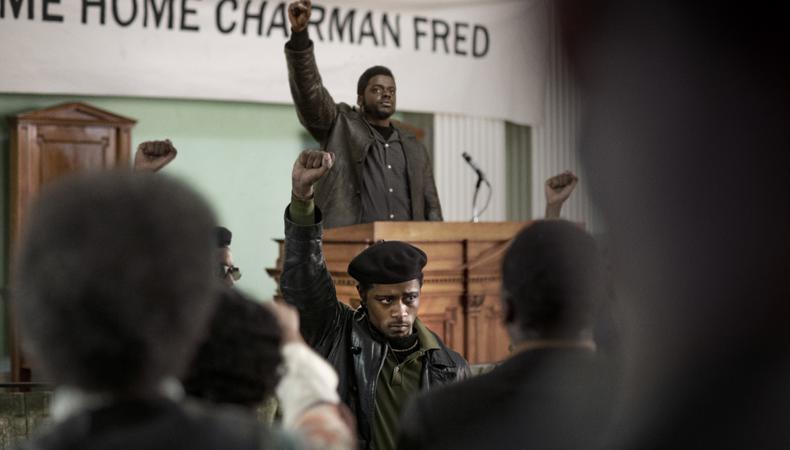
Although I’m the first to celebrate out-of-nowhere surprises in awards results, there was one particular Oscar nod this year that brought up all these questions anew. No one outside the Academy of Motion Picture Arts and Sciences could have foreseen “Judas and the Black Messiah” star Lakeith Stanfield would be in contention for supporting actor; or, if Warner Bros. and the film’s PR teams were to be ignored, then co-star Daniel Kaluuya would have been considered lead. However, there they both are in the supporting race, making film Twitter all aflutter (and causing Stanfield himself to post, “I’m confused too but fuck it lmao”).
If neither Stanfield nor Kaluuya, as the titular “Judas and the Black Messiah” William O’Neal and Fred Hampton respectively, are the film’s leading actors...then who is? The “and”?
While the Hollywood Foreign Press Association requires distributors to submit Golden Globe category placements which may then be denied, and the SAG Awards accept whatever placement actors choose, Academy nominators can go their own way, and clearly do. A system like the Tonys’ criteria—does the actor’s name appear above or below the show title on official billing?—has been suggested to streamline what some see as a persistent problem: distributors, or artists themselves, campaigning in categories that might better guarantee a little gold man. When co-leads split into different categories, as Leonardo DiCaprio and Brad Pitt in “Once Upon a Time in Hollywood,” Viggo Mortensen and Mahershala Ali in “Green Book,” or Olivia Colman, Emma Stone, and Rachel Weisz in “The Favourite” all successfully indicate, it’s seen as unfairly gaming the system.
Should something quantifiable like the amount of time an actor appears in a project be the determining factor? Matthew Stewart, creator of a website tracking the screen time of every Oscar winner and nominee in history, certainly thinks so. Another 2021 case in point: “Ma Rainey’s Black Bottom” lead contender Viola Davis stands to win an Academy Award for appearing in a smaller percentage of the film than her winning supporting actress work in 2016’s “Fences.” (By the way, that actress race has heated up further since my last letter, with Frances McDormand of “Nomadland” winning the British Academy Film Award!)
I’ve officially compiled a list of every Oscar-nominated performance that I believe to be a case of category fraud.
— Matthew Stewart (@MatthewAStewart) August 23, 2020
As it stands, there are 122 (out of the 1661 performances nominated since the introduction of the supporting categories). I’ll be posting 1 per day in this thread. pic.twitter.com/kqOYmJyrE3
Frankly, I’m not crazy about such a strict metric; shouldn’t assessing acting be more about story and emotion than tallying minutes and seconds? Davis isn’t her film’s lead because she’s the more prominent of only two female stars alongside Taylour Paige, but because her Ma Rainey is the character around whom all the action shifts. Look at current nominee Anthony Hopkins, whose leading Oscar win came from a record-low 16 minutes of screen time in “The Silence of the Lambs.” Sure, you could argue he supported rather than led the story with those brief appearances, but his unforgettable presence left audiences feeling he dominated the action. The same goes for Davis: she imbued that Coca-Cola bottle with such power, it became one of her supporting performers!
Then there’s the project’s title to consider. Like Davis as Ma Rainey, Cate Blanchett in the titular role of 2015’s “Carol” justified her lead actress placement, despite having less screen time than her (allegedly supporting...) co-star Rooney Mara. Marlon Brando’s work in “The Godfather” practically amounts to a cameo, but no one would deny him his Oscar for embodying the title role.
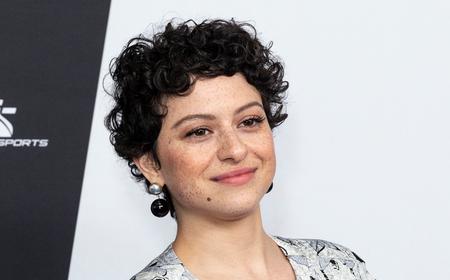
And while we’re pulling at threads threatening to unravel, and that I think will continue to unravel for years to come, another fundamental design flaw in acting accolades is worth considering: gender. An ongoing conversation, led vocally by non-binary “Billions” star Asia Kate Dillon, throws into question whether gendered awards verge on discrimination. I’ve been wondering if insisting performances are inherently male or female means we could do the same with other categories. Is acting any more gendered than directing, design, or cinematography? (Hey, a Best Screenplay by a Female Writer prize might allow voting bodies the much-needed option of championing female filmmakers!)
is it so funny to me that acting awards are separated by gender. yeah nice oscar.... for a GIRL
— anna (@anna__online) February 2, 2021
The reason I’ve asked so many questions in this letter, dear reader, is to prove there are no easy answers. I’m not proposing we abolish category distinctions entirely and just start handing out trophies labeled Best Thing. But I’d love to know what fellow awards show enthusiasts think: Are the current category structures the ideal way to celebrate the best examples of this ephemeral craft we call acting?
Sincerely,
Jack
Some More Smart Stuff:
- To catch up on the season’s final results ahead of this weekend’s Oscars finale, read up on the Casting Society of America Artios Awards for casting, the Annie Awards for animation, the BAFTA Film Awards, and yesterday’s Film Independent Spirit Awards!
- If you’ve ever wondered where your favorite actors got their start on camera, our annual feature on the Oscar-nominated stars’ first credits was made just for you.
- And believe it or not, this bizarre year already has Backstage readying for the 2021 Emmys. Check out features on contenders who could be in the nomination mix: “9-1-1” star Angela Bassett, “Mare of Easttown” lead Kate Winslet, “The Amber Ruffin Show” host Amber Ruffin, and “Made for Love” and “The Undoing” scene stealer Noma Dumezweni.
Looking for remote work? Backstage has got you covered! Click here for auditions you can do from home!