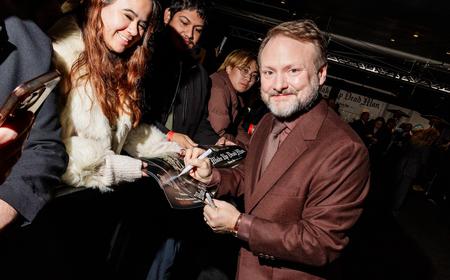
When filmmaker Evan Goldberg (“This Is The End,” “Knocked Up”) was growing up in Vancouver, he was so close to the city’s film scene that it was almost inevitable he would one day work in it. In fact, Goldberg began his professional film career at the young age of 21, collaborating with his good friend Seth Rogen (“Pineapple Express,” “The Lion King”) on what would eventually become “Superbad.”
In college, Goldberg met educator Adrienne Slover and as the two bonded over giving back and social service, it dawned on them that they might have a way to work together to do just that in a bigger way. Thanks to Goldberg’s proximity to the Vancouver film industry, he'd been around and in it for years by the time he graduated college—an experience he admits is unique. And for Slover, who worked with children, the idea of being able to provide a jumpstart for students in any regard was always on her mind.
“It just kind of dawned on me and Adrienne that maybe we should try to create something that gives kids—like the ones that she taught—an opportunity like I had,” said Goldberg.
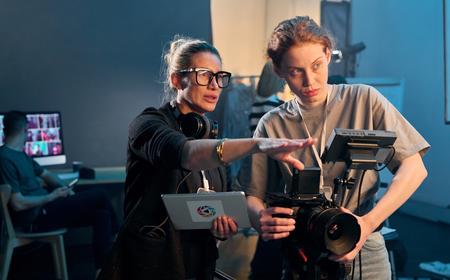
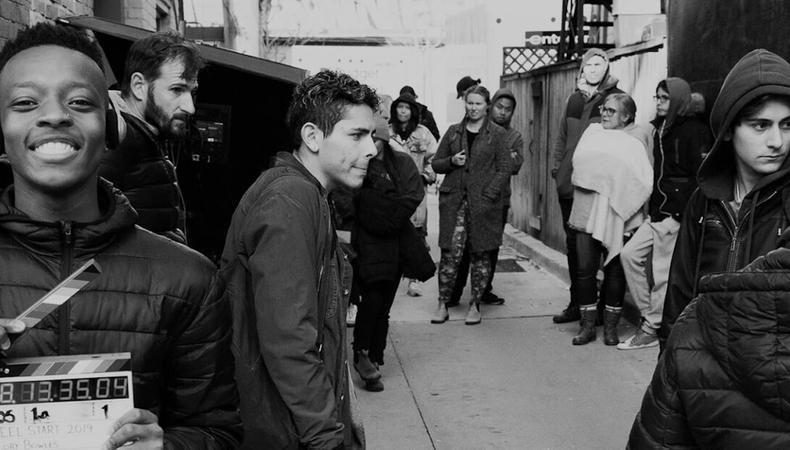
 In 2016, the pair launched Reel Start, a program that works with schools in Toronto and L.A. to help students from underrepresented communities get hands-on experience making a film and sets them on a path to careers in the film industry. Participants work together to draft a short film, workshop the idea with industry professionals, and shoot the project. Not only do the students get the chance to create, but they also shadow whoever they want on set, from actors to crew members.
It’s a system that Reel Start has honed over the last few years, according to Goldberg, but one that had to shift online this year due to COVID-19. Although Goldberg says leadership was worried about how the film would be completed, he knew the script couldn’t be left unfilmed considering it was complete. Enter an interesting opportunity: animation.
“At first, we were like, ‘Oh, we're screwed; everything's over,’” said Goldberg. “We were just like, ‘This doesn't happen.’ We have to figure out how to make this and [decided] on animation.”
The pivot from live-action was strange at first, says Goldberg, considering the program had never used the technique before. Luckily, it ended up impacting the program in a major, positive way. Because the young filmmakers were forced to think of the story in a different way, their education veered in a new, interesting direction. Plus, it was easy to accomplish via online video services. Now, thanks to the experience, Reel Start can offer students the opportunity to work with live-action or animation as it prepares for its fifth year.
The shift to an online-only format also presented the possibility of a more accessible program in the coming years. While in the past, you could have a class of maybe 10 students, now sessions can broadcast virtually and/or recorded to repost on a free instructional library, reaching far more eyes than the standard.
“We have this system that we think works now, and now we just want to replicate it in more schools, give the opportunity to more kids, and then make sure that those kids have a direct line [to] what can be a real job,” said Goldberg.
While that expansion will take time, Goldberg is more than happy to share advice with young filmmakers now. In fact, it’s something he stresses: Don’t be afraid to talk to people in the film industry—they’re more willing to help than you would think.
Goldberg also mentions creating projects around whatever you’re passionate about. The filmmaking process takes much longer than most people assume, says Goldberg, as you have to write and shoot the project. Then it goes to editing, sound and color mixing, and more post-production processes. Considering you’ll have to spend a lot of time with a film, it’s in both your professional and personal interest to choose a topic you care deeply about.
“If your favorite thing is soccer and that's what you do it about, you’ll never get bored thinking about soccer,” Goldberg said. “Just make sure you’re doing something that you are passionate about enough that you’d be willing to spend years on it.”
The most important thing Goldberg highlights, though, is just to finish a project. When he and Rogen wrote “Superbad,” they “finished it, and it was terrible.” It took the script a decade of revisions before it was big-screen ready, but the fact that they had a script finished for a decade meant they could call themselves writers. In fact, it’s what drove Reel Start to find a solution to the digital pivot instead of giving up. And that idea’s applicable for whatever part of the industry you’re interested in: if you want to be a director, all you need to do is direct something, says Goldberg, even if it’s bad.
“There [are] so many people who are ‘almost directors’ or ‘almost writers,’” said Goldberg. “But you’re not one until you’ve finished at least one thing.”
For more on how to get work on a film crew, visit Backstage’s crew hub!