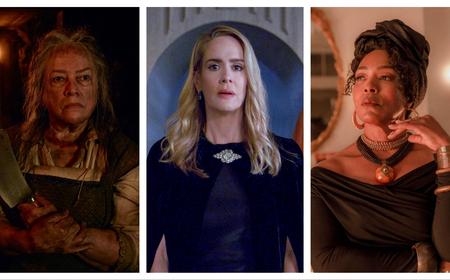
Long before “The Sopranos,” Edie Falco spent four years training at SUNY Purchase; Taye Diggs honed his craft at Syracuse University before originating the role of Benny in Broadway’s “Rent.” If you’re a young actor hoping to follow a similar path, a strong undergraduate program gives you that same foundation: an education in theory, performance, and technique, stages and screens to test it on, and a direct line to the agents and casting directors who launch careers.
To help you get started, we took a fresh look at the undergraduate acting programs across the U.S., assessing what each one offers in terms of training, experience, and exposure. Our newly updated list features 29 programs. Consider this your callback list: distinguished schools worth a spot on your audition calendar.
JUMP TO
- Boston University (Boston, MA)
- Brown University (Providence, RI)
- California Institute of the Arts (Santa Clarita, CA)
- Carnegie Mellon University (Pittsburgh, PA)
- Chapman University (Orange, CA)
- DePaul University (Chicago, IL)
- Elon University (Elon, NC)
- Emerson College (Boston, MA)
- Fordham University (New York, NY)
- Howard University (Washington, D.C.)
- Ithaca College (Ithaca, NY)
- Juilliard (New York, NY)
- New York University (New York, NY)
- Northwestern University (Evanston, IL)
- Pace University (New York, NY)
- Rutgers University (New Brunswick, NJ)
- Savannah College of Art and Design (Savannah, GA)
- SUNY Purchase (Purchase, NY)
- Syracuse University (Syracuse, NY)
- Texas State University (San Marcos, TX)
- University of California, Los Angeles (Los Angeles, CA)
- University of Hartford (West Hartford, CT)
- University of Michigan (Ann Arbor, MI)
- University of Minnesota (Minneapolis, MN)
- University of North Carolina School of the Arts (Winston-Salem, NC)
- University of Southern California (Los Angeles, CA)
- University of Texas at Austin (Austin, TX)
- University of Washington (Seattle, WA)
- Vassar College (Poughkeepsie, NY)
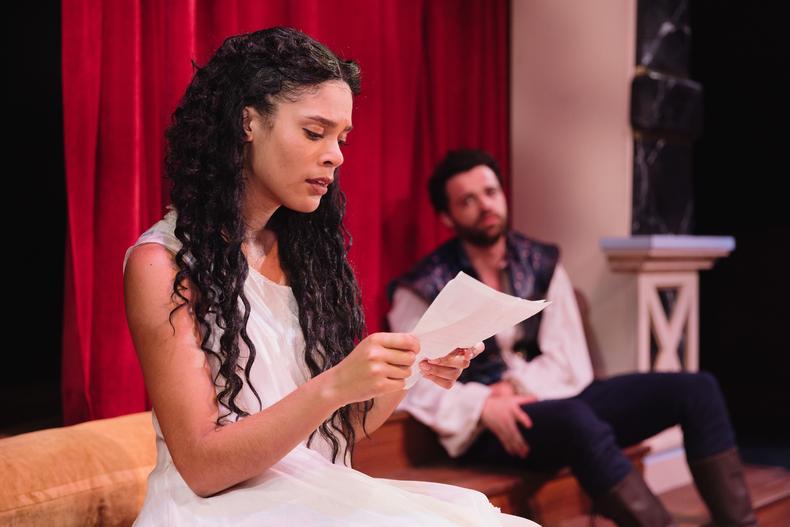
“Shakespeare in Love” Courtesy Boston University
Boston University’s School of Theatre gives aspiring performers a year to figure out how narrowly they want to specialize. It offers two BFA options for performers: acting, which focuses on the development of imagination, intellect, and technique to prepare students for professional stage and screen careers; and theater arts, which is a more flexible model for those interested in multiple disciplines. Classes are the same for everyone freshman year; after that, students choose their specific track.
The program: The curriculum immerses students in the study of voice, acting, scene study, dramatic literature, and somatic practice, with small classes (the school says the average is 14 students) and regular feedback from professors and artists in residence. Their study spans both classic and contemporary works, and classes on audition techniques, acting for the camera, and professional life skills help them transition to becoming a working actor. During their senior year, students also prepare material for a capstone thesis.
Getting in: Admission is based on both your audition and academic record. While students don’t choose their preferred track until the end of freshman year, intended acting majors are asked to submit two one-minute monologues that vary in tone and style. Those interested in theater arts are asked to also submit a third video or written piece detailing their interest in other theater aspects beyond acting. Prescreens are due Dec. 1; those selected to audition will do so in January and February.
Graduate outcomes: Alumni of the College of Fine Arts include Uzo Aduba, Jason Alexander, Sara Chase, Geena Davis, Julianne Moore, and Alfre Woodard. Veteran TV writer and showrunner Krista Vernoff (“Grey’s Anatomy,” “Shameless”) also got her start as a BU acting grad.
Professional opportunities and faculty: Students profit from guest lecturers, visiting artists, and acting alumni who return to host master classes and workshops. They also have the benefit of Boston’s arts scene, allowing them access to opportunities with local professional theaters. Seniors participate in an annual showcase held in Boston or New York City, introducing them to the wider professional community.
Brown’s Department of Theatre Arts & Performance Studies aims to give its students a well-rounded understanding of drama as a discipline. Undergrads learn about performance theory and history as they pursue one of three concentrations—theater arts, performance studies, or dance. The Ivy League setting offers TAPS students the chance to participate in a wide variety of extracurricular activities, from taking part in main-stage plays and student-run productions to catching world premieres at Providence’s Trinity Rep.
The program: Students who pursue their B.A. in theater arts at Brown study acting and performance and theater history, and they can choose electives that deepen their knowledge in areas like directing, playwriting, design, or technical production. Cohorts are small—around 7 to 12 TAPS students per graduating class—and the school wants them not to just hone their craft but also gain a deeper understanding of performance arts in culture. Each concentration culminates in a capstone project that incorporates students’ hands-on experience in on-campus productions (acting, directing, dramaturgy, stage management, etc.) and reflections on what they’ve learned in their studies.
Getting in: Brown doesn’t use auditions as part of its admissions process: Anyone accepted to the university can access the department’s activities and academic offerings. (The deadline to apply for fall 2027 is Jan. 5.) And any Brown student can audition for the school’s performance opportunities—including the Sock & Buskin main-stage shows and student groups like the dance-centric Body & Sole and Shakespeare on the Green.
Graduate outcomes: Notable Brown alumni (not all of whom studied at TAPS) include Julie Bowen, John Krasinski, Laura Linney, Tim Blake Nelson, Tracee Ellis Ross, and Emma Watson. Acclaimed playwrights Stephen Karam, Lynn Nottage, and Sarah Ruhl also went to Brown.
Professional opportunities and faculty: The school’s visiting faculty includes Brown alum and veteran stage and TV actor Kate Burton, who is known for her roles on “Grey’s Anatomy” and “Scandal” and has a lengthy stage résumé that includes three Tony nominations.
Often called the Juilliard of the West, CalArts is considered to be one of the most prestigious acting schools in the country. Its School of Theater’s BFA acting track blends study, performance, and faculty mentorship to “nurture and inspire visionary actors who aspire to work on stage, film, television, voiceover, and across all media platforms.” The curriculum is steeped in classical training while also encouraging students to find their artistic individuality.
The program: First-year students spend their time studying and performing texts from across the American canon, with emphasis on developing an actor’s process and technique. The second year incorporates the classics. The third and fourth years let students engage with modern dramatic works, film, television, camera technique, and advanced scene study. Students can also choose from varied electives, such as stage fighting, audition practice, and theater management. All actors must pass a mid-residence and graduation review to get their degree.
Getting in: The application requirements for CalArts include a self-tape with two monologues that vary in tone and style, an artistic statement, and a live or virtual audition. Other materials, like scripts or voiceover work, can also be shared as part of your portfolio. For fall 2027, the deadline is Jan. 5, though the school will continue to review applications on a rolling basis until the program closes.
Graduate outcomes: The deep bench of CalArts alums in the industry includes Alison Brie, Don Cheadle, Ed Harris, actor-playwright Bill Irwin, Condola Rashad, Katey Sagal, and Cecily Strong.
Professional opportunities and faculty: CalArts students have easy access to Hollywood, which is less than 30 miles away. And the school regularly brings in visiting artists and guest faculty to help students hone their craft. Graduating BFA actors get to take part in the annual Actors Showcase, performing before agents, managers, casting directors, and other industry professionals in New York and Los Angeles.
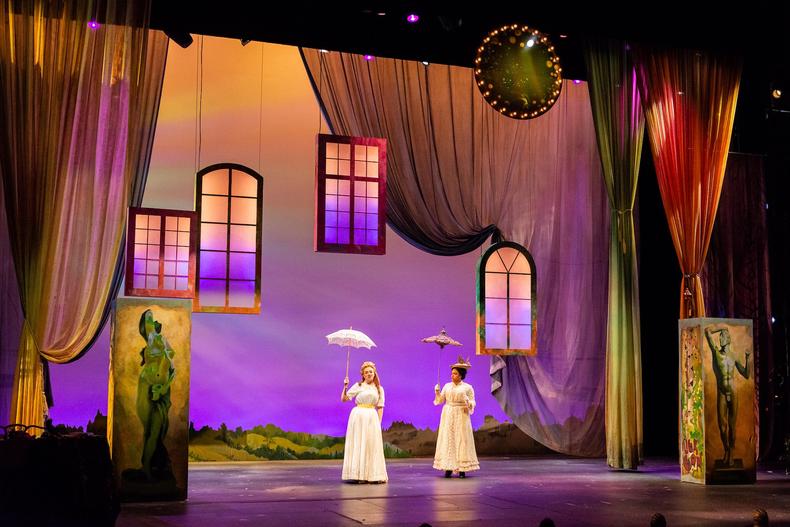
“A Little Night Music,” CMU Drama Credit: Dave Rubin
One of the oldest acting conservatories in the U.S., Carnegie Mellon’s School of Drama focuses on deep analysis of text and character so students can truly understand and embody their roles. The BFA in drama, with concentrations in acting and music theater, offers small classes, highly individualized attention, and a faculty of working professionals. Students perform in main-stage productions during their junior and senior years and have the opportunity to study abroad.
The program: Acting and music theater students take the same first-year core classes, giving them all a strong foundation in acting, voice, speech, and movement. From there, sophomores and juniors build on those fundamentals with more advanced courses, plus study of auditioning for TV/film and stage. Seniors prepare for the transition to their professional careers with classes like Acting for the Camera and the Business of Acting, which drill down on the audition and interview process for casting directors, talent agents, and managers.
Getting in: Students hoping to study at the School of Drama must go through a prescreen process—the deadline to apply for fall 2027 is Dec. 1. The prescreen requires a résumé detailing your academic and artistic experience, a headshot, and two 60- to 90-second monologues that vary in tone and style. Live auditions are invitation-only and held in person or virtually in January and February.
Graduate outcomes: Acting/music theater alumni include Will Brill, Ted Danson, Josh Gad, Renée Elise Goldsberry, Leslie Odom Jr., Sarah Pidgeon, Billy Porter, Ming-Na Wen, and Patrick Wilson.
Professional opportunities and faculty: CMU regularly brings in guest lecturers and alumni working in the industry to share insights with students. And graduating seniors take part in the annual showcase, where they perform for casting directors, agents, and managers in Pittsburgh, New York, and L.A.
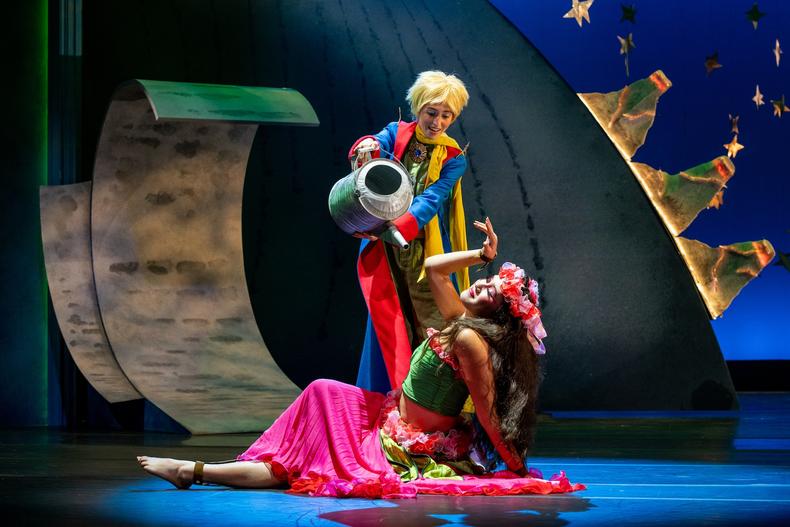
Credit: Cameron Kish
Within three weeks of their May 2025 industry showcase, nine graduating seniors from Chapman’s screen acting class had signed with professional representation. The Department of Theatre runs the screen-acting degree jointly with the university’s Dodge College of Film and Media Arts, so acting majors spend four years working on actual soundstages.
The program: There are three undergraduate degrees: a B.A. in theater with tracks in theater studies or theater technology, a BFA in theater performance, and an interdisciplinary BFA in screen acting. The BFAs require 78 credits and at least three years on campus; the B.A. requires 47 credits. Theater performance students spend the spring of their sophomore years at the Theatre Academy of London. Both BFAs close with a senior course on the business of acting that covers how to prepare a résumé, website, and reel.
Getting in: Every theater applicant submits a Creative Supplement after the Common Application. BFA candidates audition; the B.A. requires no live audition, though some programs request a prescreen video. Select screen acting and theater performance applicants are invited to an on-campus callback; invitations go out on a rolling basis. One hard limit worth knowing: Enrolled students can transfer into the B.A. program but not into either of the BFA programs.
Graduate outcomes: Chapman’s alumni roster includes small-screen actors Sabrina Bryan and Zack Schor. Students can begin auditioning in their first year for lead roles in the four or five main-season productions mounted annually, as well as for roles in Dodge undergraduate and graduate films. Such opportunities can help students build performance experience and assemble a reel from actual productions before graduation.
Professional opportunities and faculty: The spring BFA Actor Showcase puts screen acting and theater performance seniors in front of casting directors, managers, agents, and producers, who are free to contact actors directly afterward. Students train in Marion Knott Studios, a 76,000-square-foot working production facility, and perform at Musco Center for the Arts, an 88,000-square-foot venue with three levels and more than 1,000 seats.

Credit: Hugo Hentoff
You’d be hard-pressed to find a more intimate BFA experience than the one offered by The Theatre School at DePaul University, with its 1-to-6 faculty-to-student ratio. The specialized program takes a learn-by-doing approach to acting, encouraging students to balance their required courses with hands-on experience outside the classroom, in campus productions, and in the vibrant Chicago theater scene.
The program: First-year students take foundational classes in acting, voice and speech, movement, and theater history. They also complete three crew assignments. By year two, they’re adding classes in auditioning and stage combat and are cast in three intro black-box plays directed by faculty and guest directors. Courses get more career-oriented during the third and fourth years, and students perform in a minimum of three productions for DePaul’s public season. They can also be cast in additional shows, student productions, and collaborations between the school and Chicago theaters. Students also have the option to do a summer acting intensive in Greece, typically following year three.
Getting in: DePaul admits just 36 students into its acting program each year. To make the cut, hopefuls must complete the school’s undergrad application and a video prescreen with two monologues and a brief personal statement; for fall 2027, everything must be submitted by Dec. 1. Those who pass the prescreen will be invited to callbacks in January and February that include a monologue, a sample class, and scene work with other prospective students.
Graduate outcomes: DePaul alumni include actors Gillian Anderson, Ann Dowd, Judy Greer, Sean Gunn, Joe Keery, Kiki Layne, and Elizabeth Perkins, as well as director Scott Ellis and playwright Tarell Alvin McCraney.
Professional opportunities and faculty: DePaul’s faculty are active professionals working on the stage and screen, and they bring that expertise into the classroom. Students have Chicago’s theater and improv scene at close reach, and seniors prep for live and digital showcases that put them in front of casting directors, agents, directors, and DePaul alumni.

“Merrily We Roll Along” Credit: Tony Spielberg
Nestled within a historic campus, Elon’s Department of Performing Arts offers “conservatory-style training in a liberal arts setting,” giving students an education that goes beyond stage performance. And there are numerous opportunities for performance experience since only 16 students are accepted into the BFA acting program each year.
The program: Elon’s acting curriculum covers everything from vocal control and character development to script analysis and scene work, while also building skills needed to work in the industry postgraduation (think: preparing résumés, mastering auditions, and making professional contacts). The program offers options for studying abroad, including opportunities in London and Greece. Starting freshman year, students get the chance to perform in a variety of productions, including main-stage shows, student-directed plays, ensembles, and workshops.
Getting in: Performing arts students must apply to Elon and go through the school’s audition process. The prescreen requires a résumé, a headshot, a recorded personal statement, and two monologues varying in tone and style. Those who pass the prescreen are invited to a callback. The fall 2027 deadline for submitting prescreen materials is Dec. 1; the deadline for applying to Elon is Jan. 10.
Graduate outcomes: Elon grads are on Broadway, national tours, regional companies, film, TV, and commercials. Attendees of Elon’s acting and music theater programs include Nicole Brydon Bloom (“The Gilded Age”), Grant Gustin (“The Flash”), and Taylor Trensch (“Floyd Collins”).
Professional opportunities and faculty: The Department of Performing Arts hosts guest artists for workshops and presentations, among them casting directors, managers, actors, and playwrights. On-campus auditions with professional theater companies help students secure work, and Elon says many students graduate with professional credits already on their résumés. There’s also a Senior Showcase where the graduating class shows off their skills.
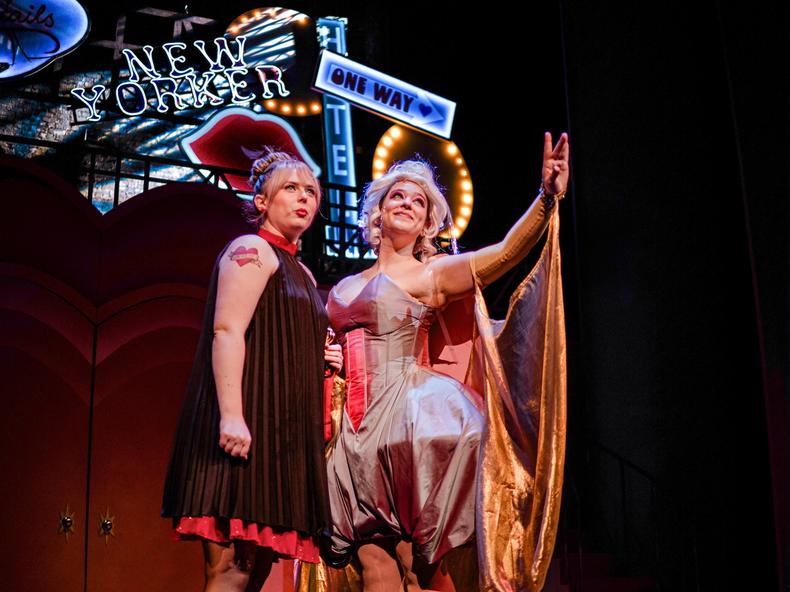
“Sweet Charity” Courtesy Emerson College
At Emerson, aspiring actors spend four years training as both performers and collaborators. The school’s acting program combines courses in acting, voice, movement, and scene study within a robust production environment: Students can perform in Emerson Stage’s nine-show season, act in student films, and collaborate across the school’s theater and film programs. All of that happens in downtown Boston, where the school’s location puts students in the middle of a major theater and arts hub.
The program: Emerson says students in its BFA acting program graduate “not as replicas of a system, but as distinct, self-possessed artists.” The curriculum ranges from Shakespeare to on-camera work, and the program treats these areas of study not as rigid disciplines but as adaptable skills actors can make their own. At the end of sophomore year, students can audition for the Ensemble Studio; if accepted, they spend their last two years working and learning as part of an exclusive cohort. In addition to Emerson Stage, which offers hundreds of performance and production roles for students, undergrads have opportunities to perform with more than 30 different student organizations.
Getting in: Prospective students must apply to Emerson, submit a headshot and résumé, and then schedule an interview and audition. For the auditions, which can be in person or virtual, actors are expected to prepare two monologues, varying in tone and style, from contemporary plays (1950–present). Unlike many of the schools on this list, there is no prescreen. The deadline for fall 2027 admissions is Jan. 15.
Graduate outcomes: Emerson graduates work as actors, screenwriters, producers, intimacy coordinators, playwrights, and more, according to the school. Notable Performing Arts alumni include Jennifer Coolidge, Andrea Martin, and Henry Winkler.
Professional opportunities and faculty: Graduating seniors in the Ensemble Studio perform for industry reps, casting directors, and notable alumni at showcases in Boston and New York. Students can also build connections via internships with Boston theaters and casting companies, or intern while studying in the heart of the entertainment industry at Emerson Los Angeles.
Denzel Washington first played Othello on a Fordham stage. When he took the role to Broadway in 2025, he brought Fordham-trained actors with him as guests at a special showing that included a private talk afterward. The theatre program is based at 60th Street and Columbus Avenue, across the street from Lincoln Center and within walking distance of Broadway and Off-Broadway theaters.
The program: Students choose one of four concentrations: performance, design and production, directing, or playwriting. The performance track is built on Stanislavsky’s late work with physical actions, with voice training in techniques developed by Kristin Linklater and Catherine Fitzmaurice. Body movement courses include study of the Alexander Technique, the Feldenkrais Method, and Butoh, a Japanese dance-theater movement. Electives run from Acting Shakespeare and Acting for the Camera to Clown and Improvisation, Flying Solo, and Russian Theatre Workshop. The program puts on four main-stage productions and up to 20 student-driven studio productions a year, with the main-stage productions directed and designed by faculty and working New York professionals.
Getting in: Admission runs through Fordham’s undergraduate application, with a departmental audition or interview by concentration. Cohorts are small by design; the program describes itself as offering the intimacy of a conservatory inside a liberal arts university.
Graduate outcomes: Fordham earned an honorable mention on Playbill’s count of schools with the most alumni performing in the 2024–25 Broadway season, with 27 graduates onstage. Among them were Tommy Dorfman, Betty Gilpin, Tony Macht, Tom Pecinka, Ephraim Sykes, and Washington. The department reports that 89% of theater graduates over the past five years were employed, in further study, or in public service within six months.
Professional opportunities and faculty: Seniors take a Senior Audition course taught by a working New York casting director, then present a showcase of scene work for agents and casting directors. Designers and stage managers get a separate Design Showcase each spring. Several performers have held the program’s Denzel Washington Endowed Chair in Theatre, including Tonya Pinkins in 2013, Kenny Leon in 2014, and LaTanya Richardson Jackson in 2019.
Howard’s Department of Theatre Arts sits inside the Chadwick A. Boseman College of Fine Arts. Named for the late A-list actor alum, who majored in directing rather than acting, the department title is a fitting emblem for the multihyphenate artists the department turns out. This HBCU’s acting curriculum treats African diasporic performance as foundational, with a focus on promoting and celebrating Black theater.
The program: The department’s BFA program offers concentrations in acting, dance arts, musical theater, theater arts administration, and theater technology. The 120-credit acting track runs from technique and play analysis to character scene study, on-camera work, and a senior performance practicum.
Getting in: Admission is by audition only, and applicants must clear university admissions separately. Prescreens entail two monologues from published plays, two minutes each and varying in tone and style, plus 16 bars sung a cappella, a headshot, and a résumé. Callbacks are by invitation, in person or virtual, with an interview and mock classes. These take place in November for early applicants and February for regular decision.
Graduate outcomes: Notable alumni include Debbie Allen, Anthony Anderson (who returned to finish his BFA in 2022), Taraji P. Henson, Phylicia Rashad, and Tracie Thoms. Allen and Henson later converged on Broadway, where Allen directed Henson’s stage debut in the spring 2026 revival of August Wilson’s “Joe Turner’s Come and Gone.”
Professional opportunities and faculty: Seniors perform an annual BFA showcase in both New York and Washington, and the program’s yearlong Business Show series brings in Actors’ Equity, the SAG-AFTRA Foundation, and working casting directors and agents. Esteemed performers Rashad, Al Freeman Jr., and Nikkole Salter have all served as faculty.
Ithaca’s BFA in acting for stage and screen combines an individualized and rigorous training program with a broad liberal arts education. The major, which lives within the Department of Theatre and Dance Performance, is for candidates “eager to explore multiple forms of performance.” Students train in acting technique, voice, and movement and can also collaborate with filmmakers and digital media creators in Ithaca’s Roy H. Park School of Communications, allowing them to hone their skills across stage, film, television, and digital performance.
The program: First-year acting students dive straight into foundational classes. Audition experience comes early and often: All freshmen are required to try out for the school’s season of shows and must continue to do so every semester they’re on campus. Second-year students deepen their skills and by year three are taking advanced courses and being encouraged to study abroad at the school’s London outpost. Seniors are primed for postgrad life with courses on the business of acting, audition techniques, and acting for the camera, all aimed at making them proficient in multiple mediums.
Getting in: Students apply to both Ithaca College and the School of Music, Theatre, and Dance. Acting applicants must submit a prescreen with a résumé, a headshot, a slate video, and two filmed monologues, one contemporary and one classical. Students can add an optional “wildcard” submission highlighting another talent, skill, or something they’re passionate about. For fall 2027 admission, the application deadline is Dec. 1, with audition opportunities in New York, Chicago, Ithaca, Anaheim, CA, and virtually.
Graduate outcomes: Famous faces who studied acting at Ithaca include Jharrel Jerome—who left school to kick-start his career—and TV stars CCH Pounder and Ben Feldman. Musical theater alumni include Ali Louis Bourzgui, Kerry Butler, Jeremy Jordan, and Aaron Tveit.
Professional opportunities and faculty: All fourth-year students in the Center for Theatre and Dance participate in Field Studies in New York City, a week of networking with alumni working throughout the industry. Acting and musical theater grads also perform a showcase for industry professionals.
Possibly the most well-known school on this list, Juilliard offers an intensive four-year BFA program in actor training. Through courses in voice, movement (including the Alexander Technique), and other core aspects of the craft, students learn to interpret a wide range of dramatic repertoire in an intimate setting; only 8 to 10 undergraduates are accepted each year, and they work and learn together throughout the full four-year curriculum. Located in Lincoln Center, Juilliard has some of the city’s finest performing arts institutions right in its backyard.
The program: In what the school calls the “Discovery Year,” first-year students develop foundational tools in scene study, voice, and movement. The following year, they apply these skills to American drama, Shakespeare, and Chekhov. Third-year students expand on those learnings as they begin public performance and film work; fourth years prepare for the profession through workshops, readings, audition training, and main-stage productions. Notably, students do not audition for productions once they are enrolled—faculty cast them based on both the needs of the student and the ensemble.
Getting in: For the audition, students are asked to prepare four monologues—two with heightened text and two from contemporary pieces—plus sing 16 bars of a song a cappella. For fall 2027, the application deadline is Dec. 1; auditions take place in New York, San Francisco, and Chicago in January and February, with callbacks in March.
Graduate outcomes: Juilliard has produced too many famous alumni to list, but notable grads include Christine Baranski, Danielle Brooks, Jessica Chastain, Viola Davis, Oscar Isaac, Laura Linney, Anthony Mackie, Wendell Pierce, Corey Hawkins, and Finn Wittrock.
Professional opportunities and faculty: Students perform in Juilliard’s fully staged drama productions, which are open to the public and attract casting agents and directors. Fourth-year students also appear in short films written by Juilliard’s playwright alumni and take part in a showcase for members of the professional community.
NYU Tisch’s drama school features a studio system that lets students explore different approaches to the craft. For their first two years, students are immersed in one of eight primary professional training studios, each with a distinct approach. Actors don’t apply to a particular studio—after students commit to attend Tisch, the department places them in one of eight primary studios, such as the Stella Adler Studio of Acting, the Meisner Studio, or the Lee Strasberg Theatre and Film Institute. After four semesters of primary training, students move into advanced work and can continue with their assigned studio or explore others, get experience in classical and on-camera acting, or participate in study abroad and internship opportunities.
The program: Tisch Drama’s BFA requires 48 credits of professional training and 28 credits of theater studies, plus general education courses and electives. The first two years provide foundational training within the student’s primary studio; the final two offer greater flexibility and professional specialization. The department’s professional training studios give students access to very different approaches to the craft, from technical to experimental and across stage and screen. Actors can perform in studio productions, workshops, and student-generated work, in addition to the department’s full production season.
Getting in: Prospective students must complete an artistic review in addition to their NYU application. Acting students submit a video with a monologue from a published play and a personal response to a prompt. Those who pass the first phase are invited to audition in New York, L.A., Chicago, or virtually, for which they’ll prepare two contemporary monologues and have a conversation with their evaluator. For fall 2027, the deadline to apply is Jan. 5, and artistic review materials must be submitted by Jan. 18.
Graduate outcomes: Tisch Drama has produced actors such as Kristen Bell, Philip Seymour Hoffman, Bryce Dallas Howard, Idina Menzel, Elizabeth Olsen, Adam Sandler, Molly Shannon, Ali Stroker, Miles Teller, and Chandra Wilson, as well as multihyphenate artists like actor-composer Shaina Taub. Its numerous alumni in the industry include actors, directors, writers, producers, designers, and other creatives. Per Playbill, NYU is the most represented college on Broadway for the 2025–26 season.
Professional opportunities and faculty: The Office of Career Development & Alumni Relations offers workshops, panels, and seminars to help students transition from school to their professional careers—programs have covered self-tape strategies, financial literacy, and class visits from casting agents. Graduating students also take part in a digital showcase seen by national and international talent representatives.
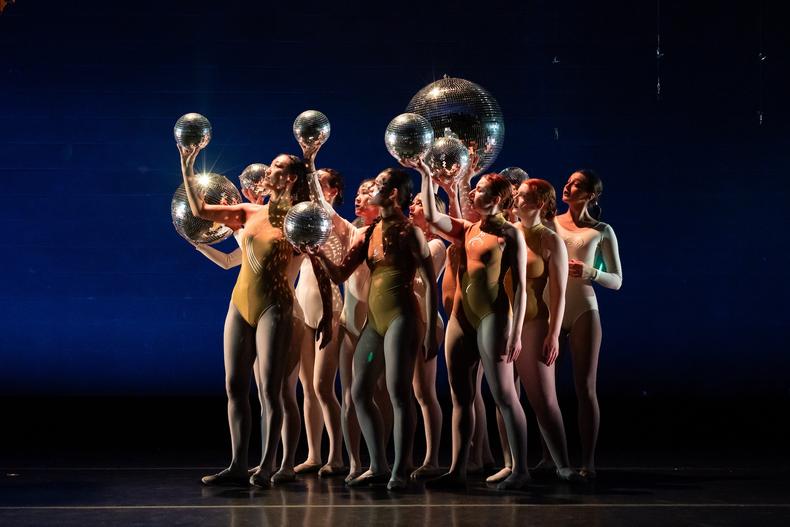
Courtesy Northwestern University
If flexibility is what you crave, Northwestern’s theater program is as versatile as they come. Students can take a broad range of classes covering performance, movement, voice and dialects, storytelling, and scene study. Along the way, they develop nuanced performance skills and gain a deep knowledge of theater history and theory. The campus’ proximity to Chicago also gives students access to that city’s thriving arts scene.
The program: Northwestern doesn’t offer a standalone B.A. in acting; instead, theater majors can focus on acting with an optional two-year developmental sequence that begins sophomore year. Using a cohort model, the program aims to develop fundamentals like ensemble building, improvisation, text analysis, and character creation before moving into performance. Theater majors can also take classes on topics such as playwriting, musical theater, and theatrical design.
Getting in: Admission to Northwestern’s theater program is handled through the school’s general undergraduate application—no audition required—but those interested in the music theater certificate are encouraged to submit an optional portfolio. For fall 2027, the deadline is Jan. 4.
Graduate outcomes: Northwestern Theatre and School of Communication graduates and former students include Zach Braff, Stephen Colbert, Billy Eichner, Ziwe Fumudoh, Ana Gasteyer, Kathryn Hahn, Brian d’Arcy James, Julia Louis-Dreyfus (who left after her junior year to join “Saturday Night Live”), and David Schwimmer.
Professional opportunities and faculty: All Northwestern students are able to audition for the school’s performance opportunities, which include productions at the Wirtz Centers in Evanston and Chicago, plus student theater groups, workshops, and more. Grads take part in the NU Faces Senior Showcase for casting directors, agents, and other guests; select acting and music theater students perform in a New York City showcase.
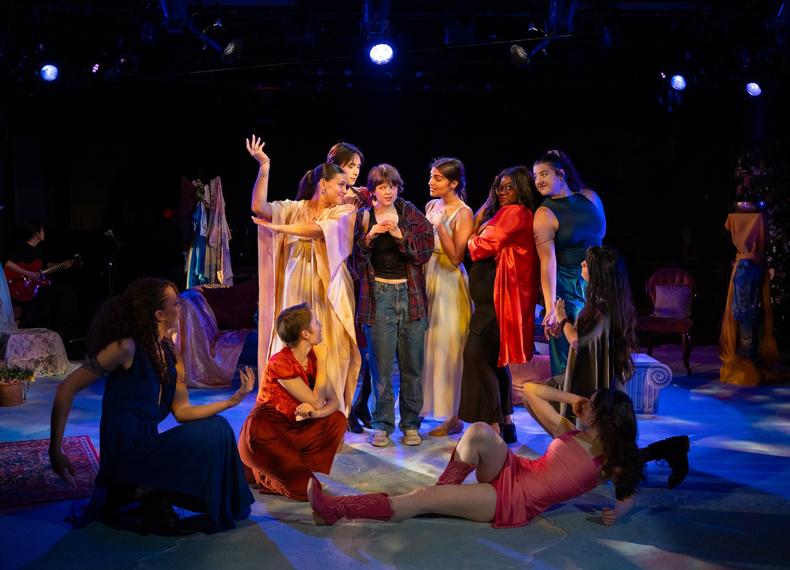
“Spiral Bound” Credit: Jonathan Morrey
Pace University’s Sands College of Performing Arts offers students a bicoastal education: Actors hone their craft in New York’s bustling arts scene, and seniors spend a semester in L.A. learning the ropes of the film and TV world. Its BFA in acting is a conservatory-style program focusing on both “fundamental training and cutting-edge industry experience.” BFA students are required to audition for campus productions beginning in their freshman year; by sophomore year, with faculty approval, they can seek out professional opportunities as well. In fall 2026, Sands moved to its new home at the newly renovated 185,000-square-foot One Pace Plaza East, which boasts updated classrooms, collaboration spaces, and a three-venue performing arts center.
The program: The curriculum kicks off with courses in acting, movement, and script analysis; a performance lab; and a Foundations of the Artist class, in which students “explore their authentic artistic voices through collaborative projects.” These groundwork courses progress to more advanced classes, including acting for film and TV, stage combat, and heightened verse and language. Seniors delve into preparing a portfolio, acting in the digital age, and the logistics of living and working in L.A., a class in which they learn directly from professionals in the business.
Getting in: Applicants first apply to Pace, then send in a separate artistic application. BFA acting hopefuls submit a headshot, a résumé, and two contemporary monologues that vary in tone and style, each under 90 seconds and from published full-length plays. They can also send in an optional reel or a “wild card” video showcasing more about them. Applicants who pass the prescreen are invited to a callback. For fall 2027, the application deadline is Dec. 1, with prescreens due Jan. 3.
Graduate outcomes: Pace’s performing arts alumni include Christopher Briney (“The Summer I Turned Pretty”), who studied acting for film and media. Other BFA acting grads work across film, TV, and stage—per Playbill, Pace is consistently one of the top five most represented colleges on Broadway.
Professional opportunities and faculty: Seniors perform in an annual industry showcase held in New York; students who take advantage of the L.A. program are also seen by West Coast industry pros. Acting majors also learn from faculty working in the industry, a group that includes directors, casting agents, and dialect coaches.
With an industry showcase in New York City and training opportunities abroad at Shakespeare’s Globe in London, Rutgers’ Mason Gross School of the Arts offers BFA students a clear path from conservatory training to a professional acting career. The four-year program combines intensive studio work with a university education, and New Brunswick’s location puts students in close reach of NYC’s theater and screen industries.
The program: Rutgers’ BFA in theater, with a concentration in acting, calls year one the “process year,” which consists of Meisner training, on-camera work, theater history, and voice and speech. Students then progress to more advanced scene study, script/text analysis, and acting techniques. Students can be cast in school productions starting sophomore year. In their final two years, they deepen their craft in areas like TV, film, and classical and modern theater. They can look toward the future by learning about auditioning and the “business of the business.”
Getting in: Mason Gross requires a talent assessment that consists of an acting questionnaire, a résumé, a headshot, and an audition. For the audition, students prepare two monologues, varying in tone and style, from published plays, followed by a short interview. For fall 2027, Rutgers applications are due Dec. 1, and talent assessments must be scheduled by Jan. 1. Auditions happen in person or virtually in January and February.
Graduate outcomes: Rutgers alumni span Broadway, TV, and film and include Roger Bart, Kristin Davis, Jane Krakowski, Tom Pelphrey, and Sebastian Stan.
Professional opportunities and faculty: Acting students are eligible for departmental productions—7 to 10 each season—beginning sophomore year, and senior training culminates in a New York City showcase where they present their work to industry professionals.
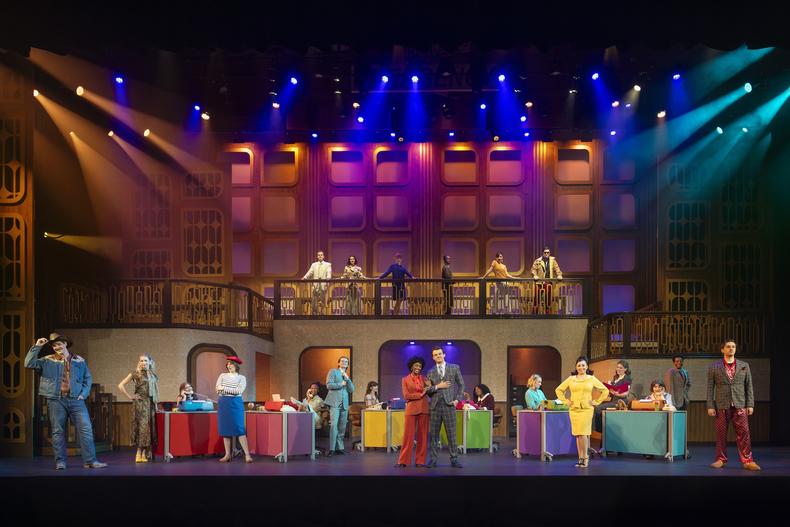
“9 to 5: The Musical” Courtesy SCAD
SCAD students can audition for professional film and TV work without leaving campus, through what the school calls the only on-site, professionally run casting office in higher education. Notably, the program also mounts fully produced onstage and on-camera seasons, so acting majors might tape a sitcom in front of a live studio audience one quarter and rehearse a devised theater piece the next.
The program: The BFA in acting, offered at both the Savannah and Atlanta campuses, requires 85 hours to the major. Coursework includes improvisation, vocal training, period acting, advanced film and TV drama, commercials, voice acting, and comedy. The on-camera season covers drama series, single-camera comedy, commercials, variety shows, and movies shot on location; the stage season includes contemporary plays, musicals, and improv. The production venues include a black box theater, the historic Lucas Theatre for the Arts, and Savannah Film Studios. Students can also spend a quarter at SCAD Lacoste in France.
Getting in: SCAD doesn’t require an audition for admission. Instead, applicants can submit an optional four-minute taped audition for scholarship consideration. It can include two monologues varying in tone and style or a monologue paired with a song or dance performance, plus a résumé and an optional headshot.
Graduate outcomes: Alumni include Kayli Carter, DeRon Horton, Kiandra Richardson, and Burke Swanson. Multiple SCAD students have won the Kennedy Center’s Irene Ryan Acting Scholarship.
Professional opportunities and faculty: Led by Andra Reeve-Rabb, dean of the School of Film and Acting and former director of CBS Primetime Casting in New York, the SCAD Casting Office has connected actors with film and TV productions for AMC, Apple TV, BET, CBS, and Netflix. Students can also network at the fall SCAD Savannah Film Festival and at SCAD TVfest each February. Master classes at these events have featured Kathryn Hahn, Lupita Nyong’o, and Sebastian Stan.
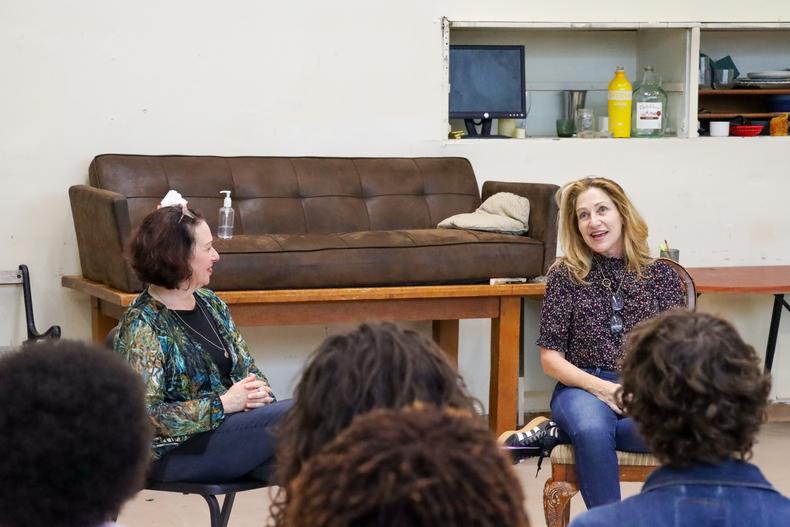
Edie Falco speaking to students at SUNY Purchase Credit: AshLeigh Addarich
Purchase’s Conservatory of Theatre Arts, a member of the Consortium of Conservatory Theater Training Programs, asks for a level of commitment few undergraduate programs can match. In a typical week, an acting student works directly with faculty for 27 to 40 hours and spends roughly as many in preparation. Outside acting jobs are off the table during the academic year, and so are fall and spring semesters abroad.
The program: The acting BFA is a four-year sequential course of study in acting, voice, speech, movement, dramatic structure, and theater history, supplemented by stage combat, mask work, improvisation, makeup, acting for the camera, and audition technique. The first two years build the actor’s imagination and inner resources; the third and fourth apply that work in Purchase Repertory Theatre productions, directed by visiting professionals and faculty.
Getting in: Every applicant submits a video prescreen with one contemporary monologue and one classical monologue. (Shakespeare is preferred, though the faculty also recommends Restoration-era English poet and playwright Aphra Behn, as well as three writers from the Spanish Golden Age: Pedro Calderón de la Barca, Sor Juana Inés de la Cruz, and Lope de Vega.) Each element should last 90 seconds to two minutes, plus a three-minute “artist’s story” video or essay, a photo, and a résumé. Callbacks are by invitation—off campus in late January, on campus in February—and run about 15 minutes as a working session.
Graduate outcomes: Alumni include Edie Falco, Melissa Leo, Parker Posey, Ving Rhames, Wesley Snipes, Sherry Stringfield, and Stanley Tucci. More recent graduates have kept the pipeline visible: Nicco Annan plays Uncle Clifford on Starz’s “P-Valley,” Chris Perfetti plays Jacob Hill on ABC’s “Abbott Elementary,” and Zoë Winters appeared as Kerry Castellabate on HBO’s “Succession.”
Professional opportunities and faculty: At the close of their final semester, seniors perform a showcase for NYC and L.A. industry professionals. Liam Joynt, co-chair of the acting BFA program, walked applicants through the audition process on an episode of the podcast “Mapping the College Audition.”
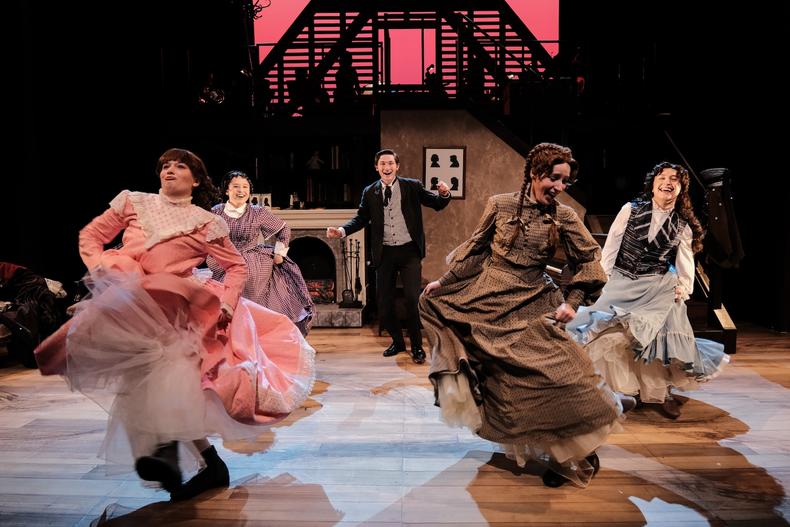
Syracuse University Department of Drama presents “Little Women: The Broadway Musical” Credit: Mike Davis
First-year acting majors at Syracuse are barred from performing publicly, which sounds punitive until you see the schedule: as many as 18 hours a week of class time, plus crew and front-of-house assignments on main-stage shows. The Department of Drama shares a building—and a casting pool—with Syracuse Stage, the professional company in residence, an arrangement that sets this undergraduate program apart.
The program: The 124-credit acting BFA combines conservatory training with dramatic literature, theater history, and academic electives. From sophomore year on, students audition for department productions, Syracuse Stage co-productions, student films, and faculty- and student-directed work. A limited actor-singer track offers a concentration in musical performance for strong singers who aren’t dancers. Acting majors can also spend a fall semester studying in London.
Getting in: Prescreen auditions should consist of two monologues from modern or contemporary plays—preferably written after 2000, with characters close to the applicant’s own age—each under 90 seconds and varying in tone and style. Early submitters get their prescreen results first, as well as first pick of callback slots. Final auditions run in January and early February, in person or online.
Graduate outcomes: The department counts among its alumni Taye Diggs, Vera Farmiga, Frank Langella, Jessie Mueller, Patti Murin, Reid Scott, Aaron Sorkin, producer Arielle Tepper, and Vanessa Williams. Recent graduates have turned up in Broadway’s “Jaja’s African Hair Braiding” and national tours of “The Book of Mormon” and “Wicked.”
Professional opportunities and faculty: Seniors perform in the Lewis Hecker Drama Showcase for agents, managers, and casting directors. The Tepper Semester sends advanced students to New York for a full term at the university’s Fisher Center, with master classes and the chance to attend up to 30 Broadway and Off-Broadway productions; the Sorkin in LA Learning Practicum gives a select group of seniors a week inside the film and television industry. Department of Drama faculty include Ralph Zito, Celia Madeoy, Katherine McGerr, and Holly Thuma.
Most acting programs sell the senior showcase. Texas State has publicly argued the opposite: that the industry’s shift toward remote and virtual auditions has made a onetime in-person showcase negligible as a career move. The Division of Theatre has restructured around self-tape readiness instead—a bet worth understanding before you apply anywhere.
The program: The BFA in Acting for Stage and Screen is a four-year, conservatory-style sequence at a campus positioned between Austin and San Antonio. Students meet twice monthly in Actors’ Lab, a gathering of the entire BFA acting company and its faculty. The division also grants BFAs in musical theater, performance and production, teacher certification, and technical production, plus a B.A. in theater studies. Double majors and minors are permitted and actively encouraged despite the load.
Getting in: Admission is two-pronged: Applicants apply to the university and to the program separately, and a prescreen audition is required before a callback invitation. The acting faculty takes 14 to 16 students a year and asks for two letters of recommendation, plus a written introduction that the faculty weighs heavily. The musical theater program accepts 12 to 14 students each year. Transfers and current students audition with the incoming cohort and complete the full four-year sequence.
Graduate outcomes: The musical theater program is the higher-profile pipeline: Each cohort travels to New York days after graduation for a 45-minute showcase where casting directors, managers, and agents schedule follow-ups. Acting graduates instead leave with self-tape material and virtual audition training, which the faculty argues will serve them better.
Professional opportunities and faculty: BFA acting students are on continuous probation by design—faculty formally evaluate progress every year, and students must hold at least a 2.5 GPA. Texas State is a Hispanic-Serving Institution and a national leader in social mobility, which shapes who is in the room. Musical theater majors can audition for all plays and musicals starting the spring of freshman year.
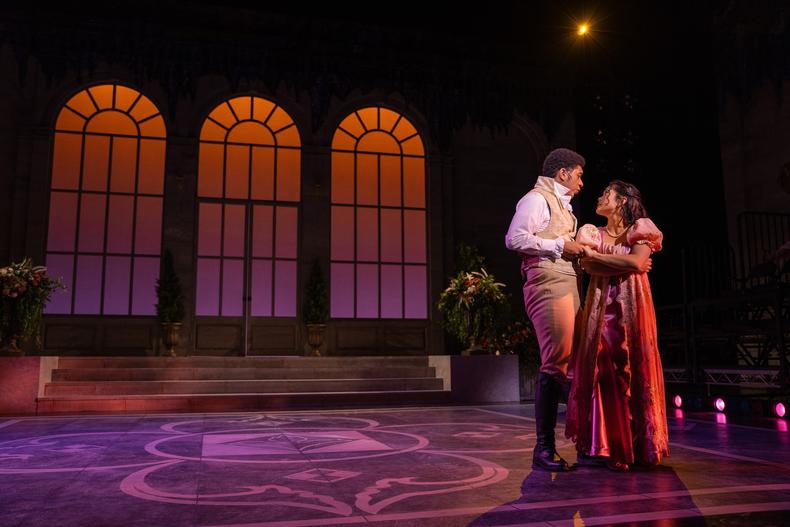
Credit: Makela Yepez
Applicants to UCLA’s School of Theater, Film & Television pick an emphasis before they ever set foot on campus, and most never audition at all; the theater B.A. program admits students on the strength of their supplemental application. Founded in 1947 and one of the first programs to house theater, film, and television under one academic umbrella, the school is about a 20-minute drive from most of the studios that its graduates end up working for.
The program: The theater B.A. offers tracks in acting, design/production, directing, integrated studies, musical theater, and playwriting. All majors take a common core—including Approaches to Interpretation of Theater and Performance: Global Perspectives—plus four units of production practicum, then move into upper-division elective units and a capstone seminar. Emphasis classes require instructor consent to enroll, and faculty can move a student out of an emphasis; the student still graduates with the theater degree. The department mounts roughly a dozen productions a year, open by audition to any theater undergraduate.
Getting in: Beyond the university application, prospective students must complete a supplemental application that names an area of interest and includes two essays, a résumé, area-of-interest materials, and copies of transcripts. Applicants are contacted only if more information is needed. Transfer students need a minimum 3.2 GPA and junior standing, and they cannot switch into the theater major after admission.
Graduate outcomes: Alumni include Beth Behrs, Mariska Hargitay, Tim Robbins, and George Takei. James Dean and Jack Black both studied at UCLA without finishing degrees there.
Professional opportunities and faculty: Each spring the acting and musical theater seniors mount two separate showcases for managers, agents, and casting directors; the showcases are student funded and faculty advised. Internships are open to juniors, seniors, and graduate students across the university, and the department supports study abroad within the four-year plan.
The Hartt School gives actor training applicants one minute per monologue to make their case, a tight window that suits a program built on discipline. The conservatory sits inside a suburban university roughly two hours from both New York City and Boston, in a city with a deep bench of regional theaters.
The program: The BFA in actor training opens with rigorous classical work in acting, movement, voice, and speech, then widens into contemporary practice, including acting for the camera and voiceover. Courses in devised theater and project development train students to create original work as well as interpret existing scripts. Electives cover directing and playwriting, and honors program students can conceive and lead their own senior-year project. In the third year, actors travel to England for an intensive Shakespeare residency with Drama Studio London.
Getting in: Applicants submit a prescreen of their two one-minute monologues, from published sources and varying in tone and style, along with a headshot, a résumé, and an essay. Those who advance are invited to a callback that includes two monologues (one can repeat from the prescreen), an interview, and a movement session. Every admitted student is considered for scholarships that cover up to full tuition.
Graduate outcomes: Actor training alumni include Phillip Boykin, Patrick Dunn, Jamaal Fields-Green, Marin Ireland, and Shawn-Caulin Young.
Professional opportunities and faculty: The fourth year serves as a bridge to the profession. Seniors work with New York–based agents and casting directors to build audition and showcase material, and they take on professional engagements with regional companies including Hartford Stage, Playhouse on Park, and TheaterWorks Hartford. Broadway veteran Kevin Ramsey directs the theater division.
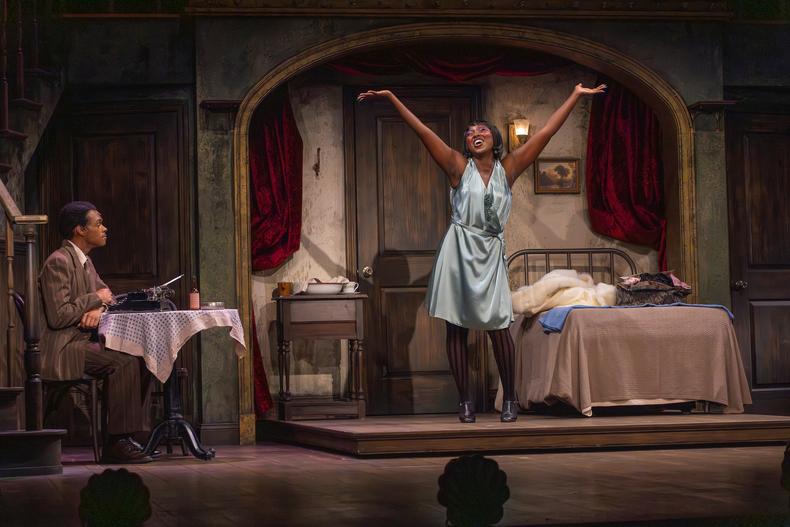
“Cabaret” Credit: Robert Coelius
Michigan casts its main-stage season entirely from its acting majors in four or five fully mounted productions a year. The Department of Theatre & Drama sits inside the School of Music, Theatre & Dance and pairs conservatory-style training with a liberal arts education.
The program: The BFA in theater performance: acting trains students for the physical and mental demands of stage work, with a core of acting, voice and speech, dialect, movement, and stage combat inside a liberal arts education at a major research university. Separate BFA tracks cover directing, design, and production; a Bachelor of theater arts serves students headed for production management, dramaturgy, arts administration, or teaching. Faculty are working actors, directors, designers, technicians, and published scholars.
Getting in: Applications close Dec. 1. Acting applicants must submit a prescreen consisting of two monologues from published plays—one contemporary, one classical, each 60 to 90 seconds and varying in tone and style—and selected candidates are invited to audition in mid- or late January, in person or on Zoom.
Graduate outcomes: Notable alumni include Arthur Miller, James Earl Jones, Christine Lahti, Margo Martindale, Darren Criss, Gilda Radner, Celia Keenan-Bolger, Gavin Creel, David Alan Grier, and Lucy Liu.
Professional opportunities and faculty: All graduating seniors perform in an industry showcase each spring—once in Ann Arbor for family and friends, then in New York and L.A. for agents, casting directors, managers, and directors. The department also runs a schedule of guest teachers and artistic residencies, and students perform in the Walgreen Drama Center’s Arthur Miller Theatre and Stamps Auditorium.
The University of Minnesota’s acting faculty looks for hard workers with an adventurous spirit, putting raw talent, a sense of humor, a love of literature and history, and a willingness to take risks (and fail) on its wish list for applicants.
The program: The theater program offers a B.A. in theater arts and a BFA in acting—but it’s renowned for the latter owing to its partnership with the Guthrie Theater, where students can perform in professional productions and take studio classes integrating voice, movement, and acting across a wide range of styles. Juniors on the BFA track spend their fall semester in London, taking workshops with the Royal Shakespeare Company, Synergy Theater, and the CEA CAPA Center.
Getting in: Prospective students apply to the College of Liberal Arts and separately to the acting track, for which they submit a headshot, résumé, and self-tape. The self-tape consists of two monologues from produced plays, three minutes combined, with one drawn from heightened text by writers such as Molière, Shakespeare, the late American poet and playwright Ntozake Shange, Sophocles, or the Nigerian Nobel laureate Wole Soyinka—no film, TV, or self-written material. Live and virtual auditions take place throughout January.
Graduate outcomes: Alumni include Aya Cash, Santino Fontana, John Skelley, and Namir Smallwood. Fontana has credited the late BFA instructor Kenneth Washington with changing the course of his life.
Professional opportunities and faculty: The Twin Cities’ 60-plus theater companies offer a variety of stages for graduates, who can also meet members of the industry through an online showcase of monologues, scenes, and a class sizzle reel. Program director Aaron Todd Douglas, a Chicago stage veteran and founding ensemble member of Congo Square Theatre Company, leads the program alongside core acting faculty Steve Cardamone, Lucinda Holshue, Joe Krienke, and Bruce Roach.
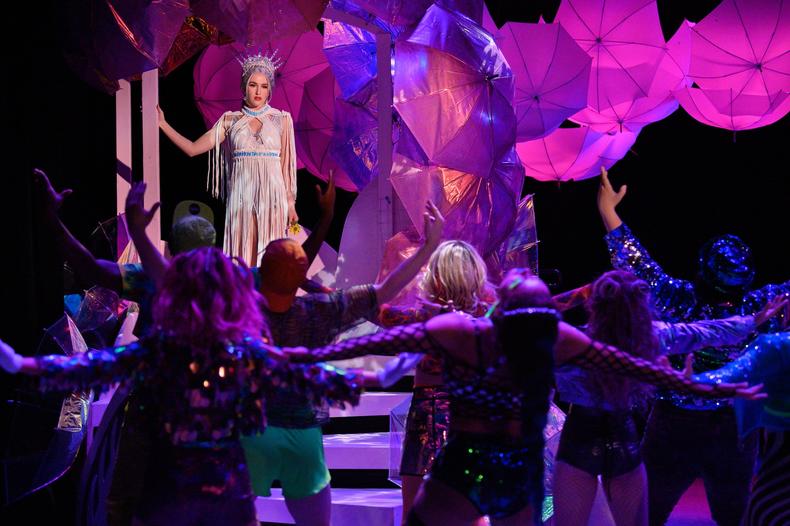
“A Midsummer Night's Dream” Credit: Peter J. Mueller
Roughly 800 people audition each year for 30 places—28 actors and two directors. The School of Drama at UNCSA has held the No. 3 spot on the Hollywood Reporter’s list of the world’s best drama schools for four consecutive years and is the highest-ranked public institution on the 2026 list, with out-of-state tuition well below its peers in the top five.
The program: The BFA carries concentrations in acting and directing. Required coursework covers voice, movement, and acting, with specialized classes in mask work, stage combat, Shakespeare, accents and dialects, devised theater, singing, and theater dance. Students are cast in a main-stage production every semester of their third and fourth years. Dean John Langs, an alumnus and the former artistic director of ACT Contemporary Theatre in Seattle, has organized the curriculum around on-camera training, new work, and classical repertoire. Juniors and seniors perform classical work in repertory each spring, leaving the rest of the year for contemporary plays.
Getting in: Audition applicants prepare three monologues—one classical, preferably Shakespeare or a contemporary of his, and two contrasting contemporary pieces. They must also sing 16 bars a cappella from the standard musical theater repertory. In-person auditions are strongly encouraged; scheduling opens in November on a first-come basis, and every applicant attends a faculty-hosted information session on audition day. Decisions are released only after all candidates have auditioned. UNCSA also runs a one-year high school acting program.
Graduate outcomes: Alumni include Anna Camp, Dane DeHaan, Brett Gelman, Stephen McKinley Henderson, Elizabeth Lail, Billy Magnussen, Joe Mantello, Krys Marshall, Mary-Louise Parker, Chris Parnell, Isaac Powell, and Missi Pyle.
Professional opportunities and faculty: Seniors take master classes in audition technique, camera work, cold reading, and résumé preparation, then present in New York and L.A. to agents, casting directors, artistic directors, and management. A yearlong project called Keys to the Kingdom sees each senior class produce a season of independent work alongside the main-stage productions. A $1 million gift from acclaimed director Mantello funds original student work.
Taylor Dearden finished a USC drama B.A. in 2015 and earned her first Emmy nomination a decade later for Dr. Mel King on “The Pitt,” a role she built around her own experience with ADHD. She credits USC teachers for preparing her to direct herself when a production gives her little information about where her character is headed. The School of Dramatic Arts says it was the first drama school to build a dedicated professional development center for students and recent graduates.
The program: Students choose between a B.A. in dramatic arts—liberal arts breadth plus intensive craft study—and a conservatory-style BFA in acting for stage and screen, which pairs classical foundations with on-camera technique, voiceover, and professional development. A separate BFA in musical theater runs alongside it. BFA cohorts get second-stage performance opportunities; main-stage casting is by open audition.
Getting in: The BFA acting cohort target is 18 students; musical theater takes about 14. Materials for applicants include a résumé of performance activity and a 90-second “Who are you?” video that is not a monologue or a cover song. Applicants must also provide two 90-second monologues, one contemporary and one classic. Applicants cannot apply to both the acting and musical theater BFA programs.
Graduate outcomes: Alumni include Patrick J. Adams, Troian Bellisario, Beck Bennett, LeVar Burton, Swoosie Kurtz, John Ritter, Kyra Sedgwick, Ally Sheedy, Forest Whitaker, and Deborah Ann Woll. Whitaker drew a 2025 Emmy nomination for “Andor” the same year Dearden’s “The Pitt” won outstanding drama series.
Professional opportunities and faculty: Graduating BFA students participate in a spring showcase their senior years, presented in L.A. and New York and shared digitally with industry veterans. Faculty are working professionals from theater, film, and television—the point of putting the school in the middle of Hollywood.
UT Austin sends its acting seniors to L.A. for their last semester. The Department of Theatre and Dance runs a residential program at the university’s Southern California campus, where students take courses in acting, acting for the camera, and the business of acting from the local faculty—then film a digital showcase that is released to the industry before they graduate.
The program: The BFA in acting combines conservatory studio work with practical production experience, and the department mounts six to eight main-stage shows a year, with any student on campus free to audition. Additional work comes through the Studio Series and the biennial Cohen New Works Festival, a weeklong showcase of student-created multidisciplinary pieces. A separate B.A. in theater and dance offers tracks in production; acting, directing, and playwriting; or performance studies, with an honors research option.
Getting in: The program aims for an incoming class of 16 to 18. Applicants submit a Common Application and department prescreen materials (including two monologues varying in style and tone); selected candidates are invited to an in-person or virtual callback. One hard limit: The BFA admits incoming freshmen only, and anyone who has taken college coursework after high school is ineligible.
Graduate outcomes: The department publishes an annual BFA Actor Showcase cast list, making year-over-year placement easy to track. Graduates typically enter the L.A. market with representation meetings already scheduled based on their performances in the showcase.
Professional opportunities and faculty: The UT Semester in Los Angeles carries four courses and 12 credit hours of advanced studio training built specifically for the transition from university to a professional career. UT’s Department of Theatre and Dance fields more than 50 faculty and offers 150 courses each semester—unusually deep resources for a program that keeps its acting cohort under 20 students.
Joel McHale came back to Hutchinson Hall in December 2025 and told a packed room of drama students that his UW degree was one of the most important decisions of his life. The School of Drama has fed Seattle’s theater ecosystem for generations—faculty and alumni founded or currently lead a good share of the city’s companies—and its undergraduate degree is deliberately built to be paired with another major.
The program: The B.A. in drama is a liberal arts degree that pushes students through every part of theater-making and dramatic scholarship rather than having them specialize early. Roughly half of drama undergraduates elect to double major—the school calls it a double-friendly program—in subjects ranging from dance to business to biology. Minors are available in performance studies, design for performance, and acting.
Getting in: Students are admitted to the university first, then declare the major by completing Drama 201 with at least a 2.0 GPA and meeting with the drama adviser. No audition is required to declare. Note that the Professional Actor Training Program, the school’s conservatory track, is graduate-only—it is an MFA, not a route open to undergraduates.
Graduate outcomes: Drama alumni include Kyle MacLachlan, who took a BFA through the actor training program in 1982; McHale; Pamela Reed; Jean Smart; and Rainn Wilson. Anna Faris and Bruce Lee both studied at UW without completing their degrees.
Professional opportunities and faculty: Undergrad students perform alongside MFA candidates at the Meany Hall Studio Theatre, the historic Glenn Hughes Penthouse Theatre, and the Floyd and Delores Jones Playhouse. The school’s ties to Seattle run through ACT Contemporary Theatre, Azeotrope, Jet City Improv, Seattle Children’s Theatre, Seattle Repertory Theatre, Washington Ensemble Theatre, and the Oregon Shakespeare Festival in nearby Ashland. Faculty include Geoffrey Alm, Valerie Curtis-Newton, Scott Hafso, and Cathy Madden.
The rehearsal room where Vassar drama majors work is called Streep Studio, after a certain alum who graduated in 1971 with a degree in drama and costume design. The Department of Drama is chaired by Shona Tucker, the first African American woman to hold the post, and it describes itself as two departments in one: a rigorous academic program in theater history, dramatic literature, and performance studies, and a working production house.
The program: The major starts with Drama 102 and 103, which cover the art of collaboration, theatrical communication, design and technical elements, and stagecraft, then opens into Drama 200, a production course available to majors and non-majors alike. Sophomores complete a full-year course on the sources of world drama; most seniors take on a capstone project in dramatic literature, theater history, performance studies, acting, directing, design, or playwriting, each requiring a substantial companion research paper alongside the practical work.
Getting in: No audition is required to major in drama—admission runs entirely through Vassar’s general application, which is highly selective. Auditions are required to act in department productions.
Graduate outcomes: Alumni include Jason Blum, Lilli Cooper, Ethan Slater, and the aforementioned Meryl Streep. Accepting the Alumnae/i Association of Vassar College Distinguished Achievement Award in October 2022, Streep told a crowd of 1,500 that “one value of a Vassar education is that it kind of dooms you to a life of awareness.”
Professional opportunities and faculty: The Vassar Experimental Theater presents six to eight productions a year in the Vogelstein Center for Drama and Film and the Powerhouse Theater, roughly half of them student directed. The Powerhouse Theater Program has incubated work that went on to Broadway and beyond, including “Hamilton” and “The Humans,” and it hosted the first public reading of “Doubt.”
This article was updated with additional reporting and writing from Suzy Woltmann and Jessica Derschowitz.
This story originally appeared in the Oct. 19 issue of Backstage Magazine.