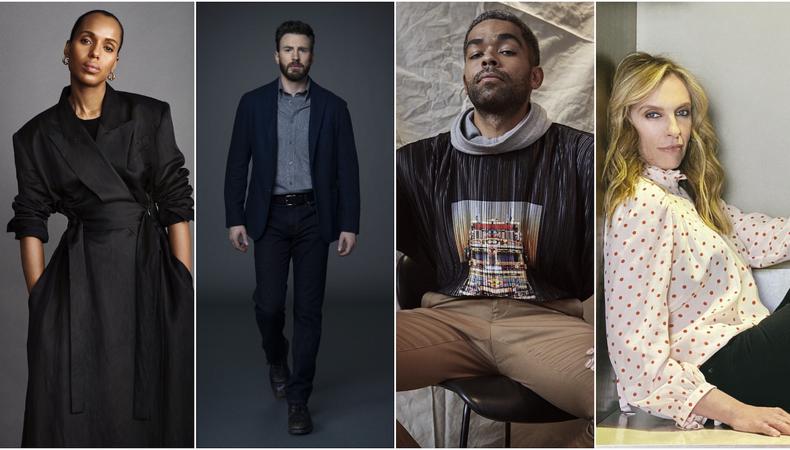
Though 2020 has been a tough year, it didn’t stop creators from finding innovative ways to make work. It didn’t stop some of the industry’s most prolific actors from finding opportunities to shine, either—and we talked to a whole lot of them! Our cover stories this year highlighted showrunners, filmmakers, and of course, actors. From Rose Byrne to Issa Rae, Anna Kendrick, to Kerry Washington, Chris Evans to Toni Collette, Mark Rylance to Janelle Monáe, and so many more, these were your 2020 Backstage cover stars.
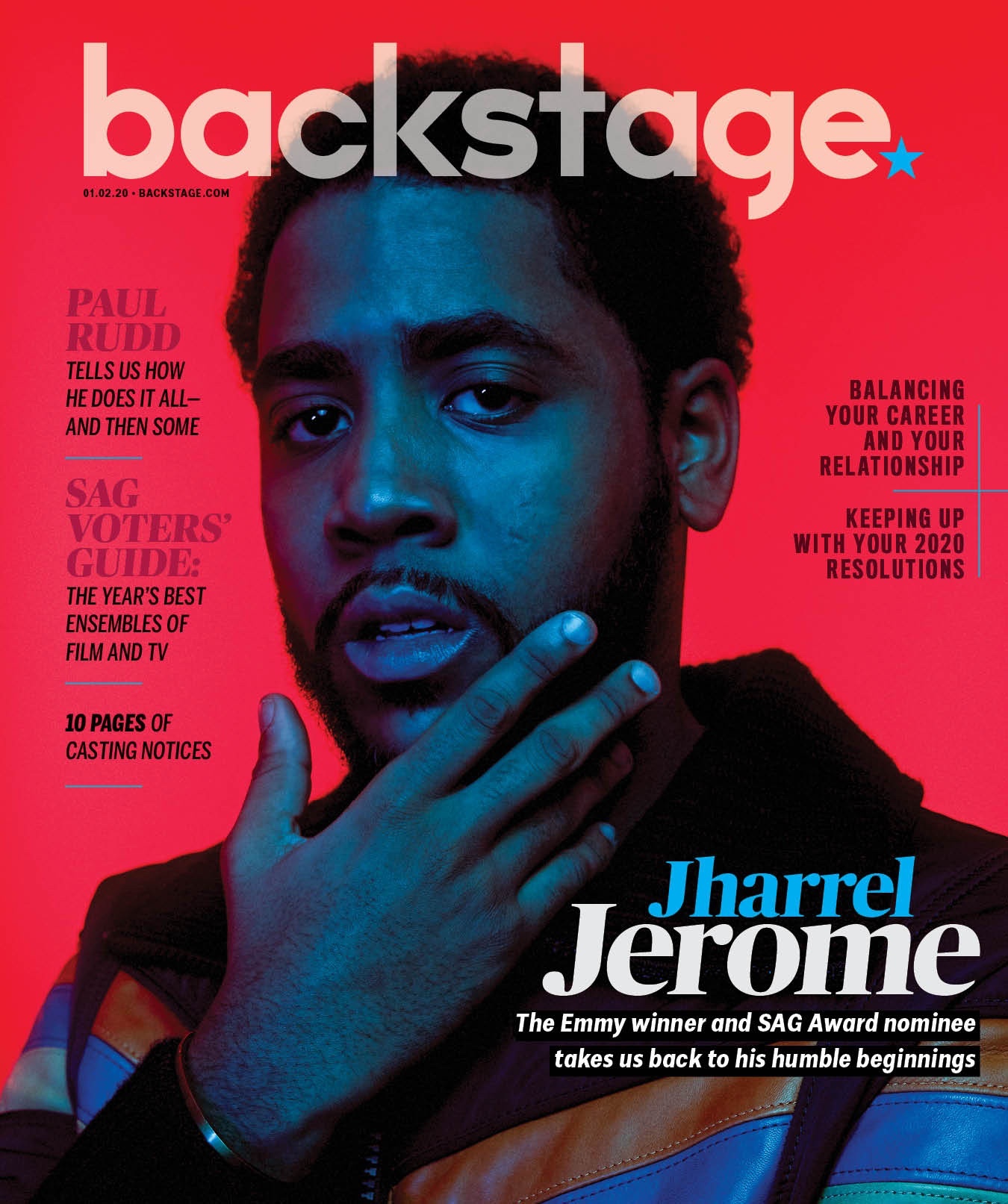 Jharrel Jerome (Jan. 1)
To begin the year, Jerome discussed growing up inspired by the likes of Morgan Freeman, Denzel Washington, and Jamie Foxx. But now that “Moonlight” and “When They See Us” have garnered the actor his own fame (and an Emmy Award!), he’s still sticking to his neighborhood-kid roots: “Just being who we are and where we’re from, you see ugly things, unfortunately. And I think acting is just translating that ugly onto the screen.” Read the full story here.
Lauren Ambrose (Jan. 8)
After a Tony-nominated run in “My Fair Lady” on Broadway, Ambrose’s career took a sharp turn into M. Night Shyamalan’s Apple TV+ series “Servant,” her first foray into the thriller genre. “I really believe that—not in, like, a hocus-pocus way, but more that there’s something I need to learn from each story I tell, and I try to figure out what it is. It’s a great story that I get to be a part of telling, and it’s my job to figure out what that is.” Read the full story here.
Rose Byrne (Jan. 15)
Byrne insists: You should only be an actor if you are certain you cannot do anything else with your life. “Acting has helped me navigate being alive, because it’s not easy being a person all the time. But acting is strange. You have to have a thick skin to take the ‘noes’ you get 90% of the time, yet you have to remain very vulnerable and open to receive every piece for building characters ... I just don’t think you can have much ambivalence about it if you want to do it.” Read the full story here.
Sam Mendes and George MacKay (Jan. 22)
Director Mendes and actor MacKay sat down to take a deep dive into their Oscar-winning film “1917,” a massive technological and cinematic feat in more ways than one. “How can I find a way to push either the form or the storytelling? In this case, it was writing for the first time, and the technical aspect was thrilling; it robbed me of a few hours of sleep at night,” Mendes says. “The number of ways in which we could’ve failed actually only becomes evident to you after you finish, often. But I feel very proud of this one.” Read the full story here.
Matt Bomer (Feb. 12)
Perhaps contrary to the common advice for actors to “get out of your head,” Bomer dives deep into his with dream work. “You keep a journal near your bed at night, and you ask your psyche—your higher power, whatever—to reveal certain aspects of the character’s experience in a dream … from that, you can find gesture, physical aspects of your character, emotions that they might be going through, how the piece parlays to your life and your experience and where you are right now. Often, things from my past will become suddenly relevant to the story.” Read the full story here.
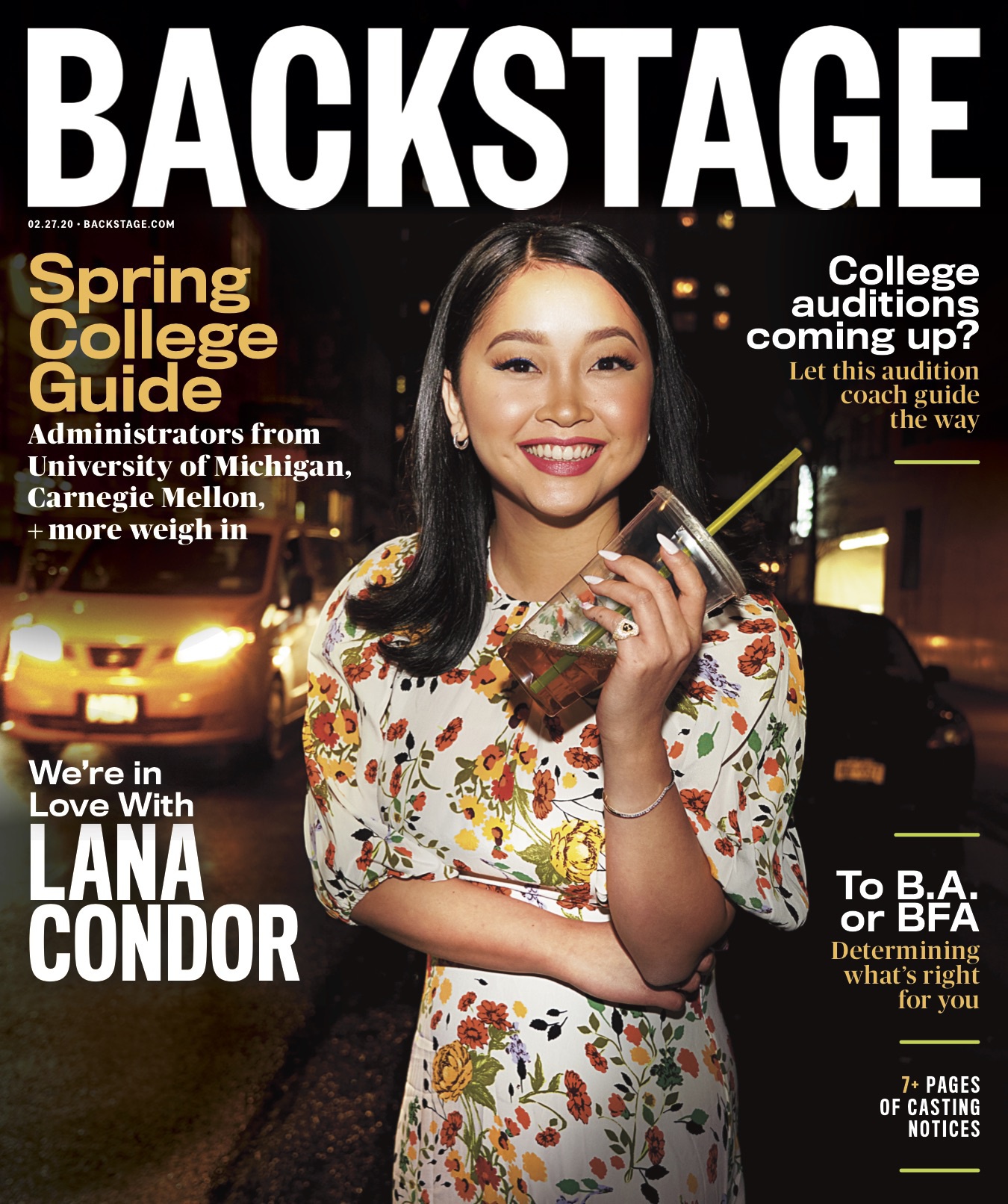 Lana Condor (Feb. 26)
“To All the Boys I’ve Loved Before” has skyrocketed Condor to stardom in the past few years. But having begun the franchise at 20, she found herself growing up right alongside her character, Lara Jean. Condor reminisces on “watching [Lara Jean] blossom as a young woman.” Read the full story here.
Jessie Mueller (March 18)
Before the pandemic, Mueller was about to open her first straight play on Broadway, having built her Tony-winning career in musicals. No matter the genre, Mueller admitted she struggles just like so many other actors with self-worth. “I think actors are fighting between ‘What is my worth?’ and ‘I know 150 people want my job. I’m expendable but I’m not.’ And where does that leave you? I don’t know, I’m still trying to figure it out. You don’t want to walk around thinking you’re hot shit. But you also have to say, ‘I have a right to be here and my point of view is unique.’ ” Read the full story here.
Issa Rae (April 1)
The multihyphenate discussed her calling, spurred by engaging with plays by Black writers in high school. Now that she’s had immense success with “Insecure,” among other projects, she continues to look for new perspectives, too. “What excites me are people’s own perspectives that either clash with mine or make me think about things in a way that I’ve never thought about them before. I feel like we’re just scratching the surface of so many stories that we haven’t heard.” Read the full story here.
Jeremy Pope (May 13)
There are some career milestones that only Pope can boast—namely, headlining a Ryan Murphy Netflix miniseries right after appearing in two Broadway shows in one season and getting Tony-nominated for both. In his cover story, in which he was interviewed by fellow powerhouse Cynthia Erivo, Pope discussed how making his own mark was the goal from early on. “Instead of trying to make myself become, let’s say, the next Norm Lewis, it was like: What do I have to offer? What tools do I have in my toolbox?” Read the full story here.
Anna Kendrick (May 20)
Ahead of the premiere of her HBO Max series “Love Live,” Kendrick chatted with Backstage about how acting is a psychological practice: “Why does that person behave that way? Why do some people see the world in a different way?” She also realized the only way to build a unique character is by recognizing she herself is one. “I just had to realize,” she said, “the only times I got a job were when there was something I could do that nobody else could do.” Read the full story here.
Miranda July (June 10)
July has become synonymous with indie film, boasting the titles of director, writer, actor, and more under her belt. She tells Backstage why she’ll always keep an eye out for the small stuff. “There’s something about the spontaneity that’s possible with a really, really tiny project” she says. “That’s interesting to me because I think it just brings forth different energies and emotions and kinds of performances. It’s a different kind of art. There’s no amount of money that will buy that kind of intimacy and spontaneity. That’s within people, and if they feel comfortable and safe.” Read the full story here.
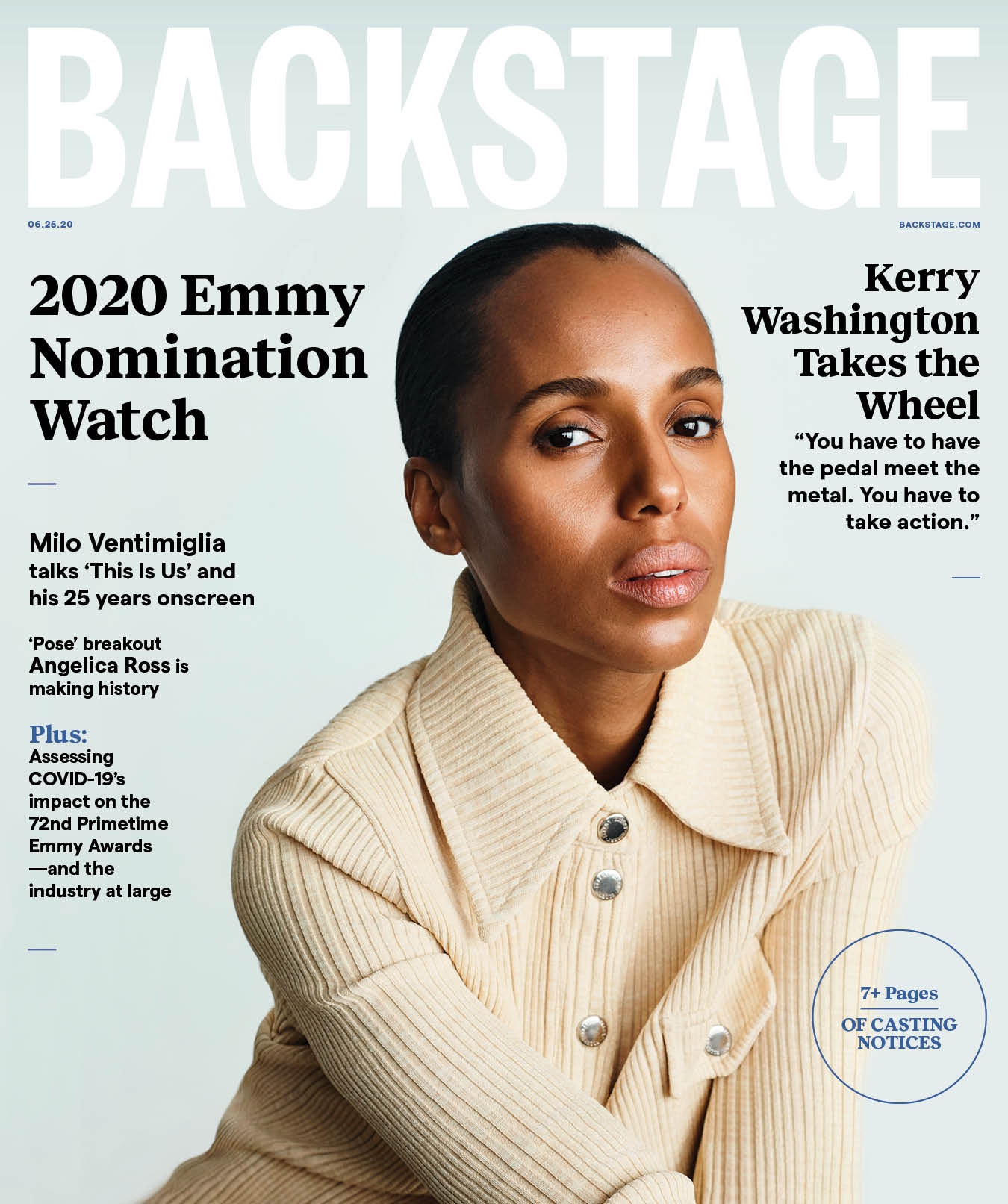 Kerry Washington (June 24)
Washington didn’t take the expected path to an acting career, per se, forgoing a degree in the performing arts to study anthropology and sociology. Even now that performance has (massively) worked out for her, she sees the career as an opportunity to keep learning: “I think characters come into my life when they have something to teach me. Each character is a gift in that way, because they allow me to explore my own belief systems or values or mood or ideas. They meet me where I need to grow.” Read the full story here.
Chris Evans (July 1)
We had Captain America on the cover. Need we say more? “There is nothing more eye-opening that you can possibly do as an actor than to watch the way an actor you respect dissects a scene and makes their choices,” Evans says. “To stretch your acting muscle, go compare your choices to some other actors’ choices. If nothing else, you’ll be reminded of the dizziness of choice that’s available on any page of dialogue.” Read the full story here.
Christina Applegate (July 8)
Coming off the emotionally taxing, career-defining work on “Dead to Me,” her interview with Backstage caught her in a moment of repose. Paradoxically, though, Applegate spoke lengthily in her story about how, career-wise, an actor should never be comfortable. “If it gets too complacent or easy, then you’re not doing it right,” she says. “You can’t be stagnant. You’ve got to push. You’ve got to expand.” Read the full story here.
Adrienne Warren (July 22)
If not for the pandemic’s shutdown of Broadway, Warren would have likely been a Tony winner for her star performance as Tina Turner by the time she spoke with Backstage in July. But the show has been a success, she’s put in years of hard work, and she’s got plenty of other places to put her energy, including the Broadway Advocacy Coalition that tackles racism in theater—so she’s not letting this little bump in the road discourage her. “This show is around the world. There are now jobs for Black women, women who look like me, all over the world. If you are lucky enough to do work that you care about—and you should try to do work that you care about—then your focus on the work is what’s important. Not the accolades that may come from it.” Read the full story here.
Ramy Youssef (Aug. 5)
In his cover story, actor-comedian Youssef reflects on how he spent his early career trying to fit into a mold of what he thought comedy should be—but of course, he ultimately found success by bucking that mold completely, and leaning into his own heritage for his semi-autobiographical Hulu series “Ramy.” “The right spot to dig into for writing is the thing you’re really afraid of and you think is too weird or unrelatable,” he says. “If it’s something that genuinely scares you and has been rattling around in your head for years, it’s probably the right spot to dig into. People will get it more than you think.” Read the full story here.
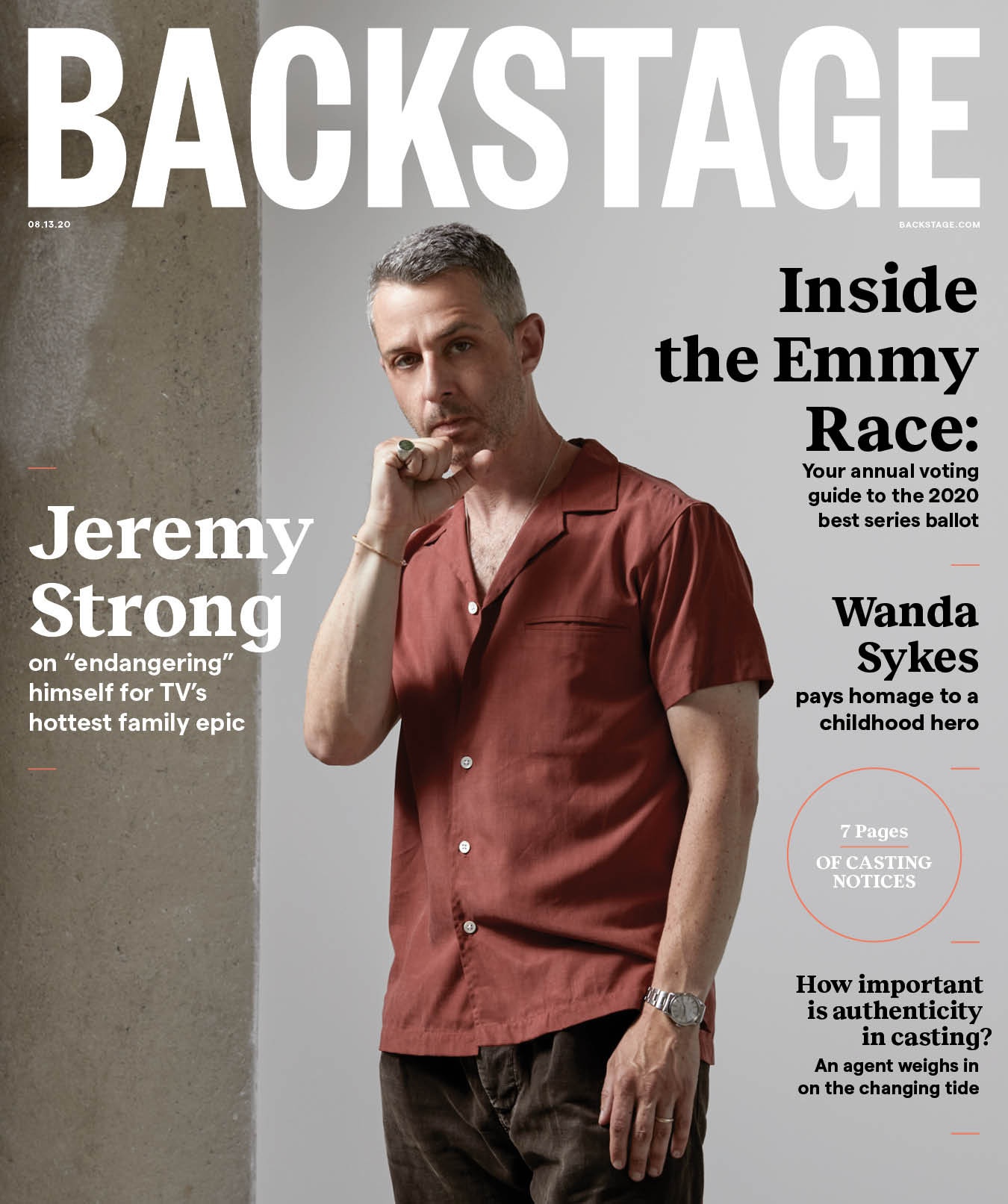 Jeremy Strong (Aug. 12)
Just before winning his first Emmy Award for “Succession,” Strong explained that his career mantra is to always “have a beginner’s mind,” approaching every new scene and script without holding fast to worn practices. But his cover story is also evidence of how far he’s really come: “There were so many years where I’d be in the subway, on the F train, and I’d see someone on the cover of Backstage and I would think, Fuck, man, am I ever going to get a chance to work?” Read the full story here.
Samantha Bee (Aug. 19)
The “Full Frontal” host got real about the hard work that landed her a talk show—and the continued hard work of producing a show during the Trump administration. “It isn’t easy for anyone to process the world, but I think it’s been helpful for us to have a point of focus. And, of course, it’s a gift to have this platform. With every show, we’re trying to make the most of it while we can. It’s nice, with each episode, to just make a statement about where you are, like you’re planting a flag on the right side of history.” Read the full story here.
Eugene Levy (Aug. 26)
Although Levy has spent 50 years in the business, “Schitt’s Creek” marked his first time playing the “straight” comedy character who keeps the rest of the show grounded. “I’ve spent my career, certainly, having no confidence in myself, so I would try anything I could to not be myself. Changing my appearance was important to me in terms of being a character and trying to get laughs through that character … So, Johnny Rose, it was a big step for me, but a very exciting step.” Read the full story here.
Toni Collette (Sept. 2)
Though known for her expressive face, the beloved actor insists that she is never conscious of her expressions; rather, that acting is an intuitive process. “I’m aware of the context of the story and what a scene is about and what needs to be expressed at a certain moment, but I don’t consciously think about presenting in that way. If you’re talking about facial expressions, I don’t think, Oh, my face should be like this. If I think about showing a certain thing or highlighting a certain idea or feeling, it’s more internal. Everything else just happens naturally.” Read the full story here.
Suzan-Lori Parks (Sept. 9)
With a Pulitzer Prize, a stellar body of plays, and now a showrunning credit for the upcoming Aretha Franklin edition of National Geographic’s “Genius” series, it’s clear that Parks herself has more than earned the “genius” title, too. That’s especially true going by her definition: “Because genius is not only a singular quality; it’s also the ability to bring different peoples together. The mindset and the spirit you have to have to unite different peoples is amazing.” Read the full story here.
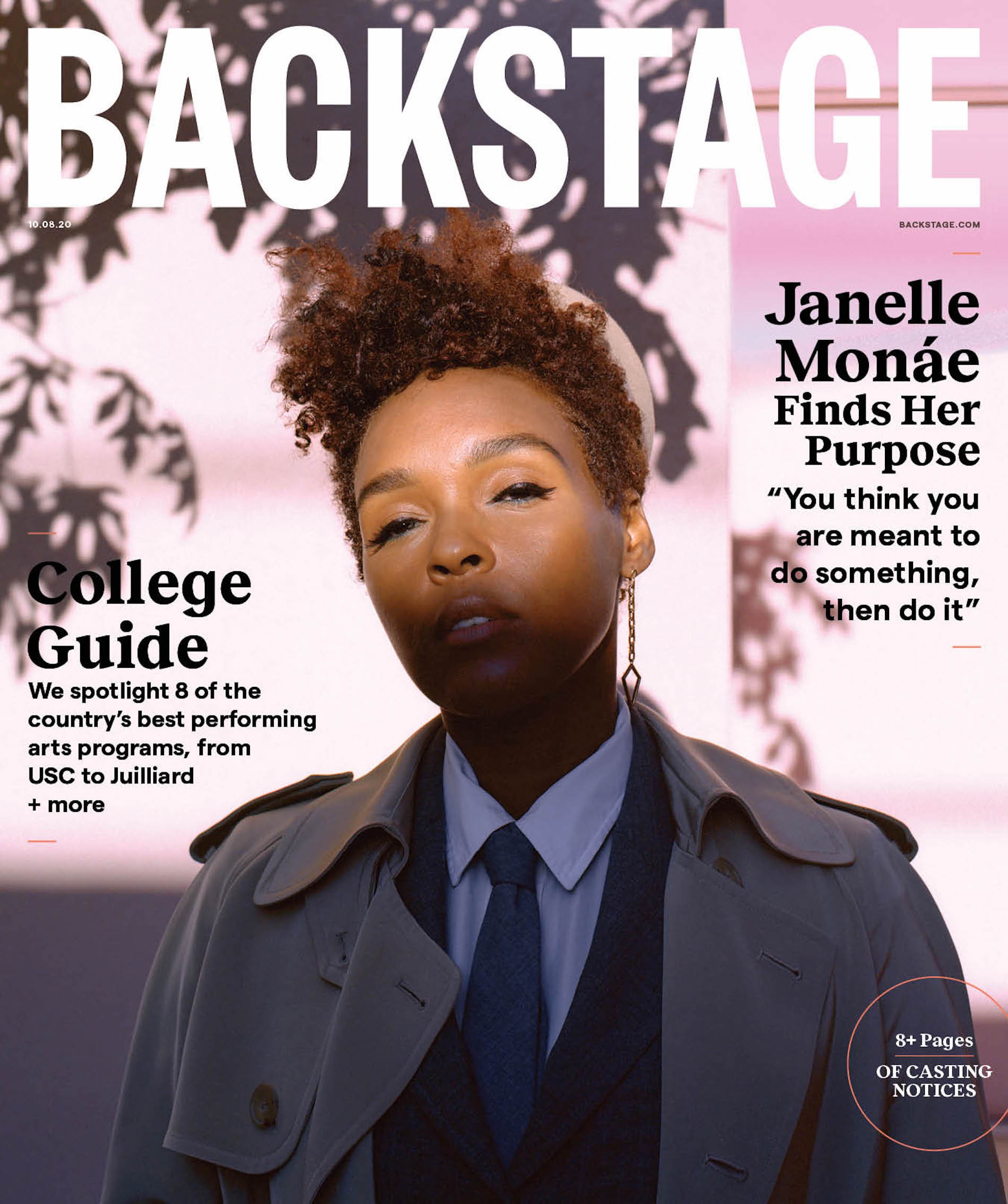 Janelle Monáe (Oct. 7)
In her cover story, Monáe explores what stood out to her about each of her high-profile movie roles, repeatedly coming back to the importance of uplifting diverse stories in her work. “Once I got those roles that started representing marginalized voices, that’s when I said yes to doing film. These were stories that were important in our representation, and globally, it helped people understand our spectrum,” the actor-musician says. “We’re not monolithic, and we have so much to offer and we are important parts of our communities, big and small. That was what made me say yes to [doing] film, but it was always in my music.” Read the full story here.
Mark Rylance (Oct. 21)
Rylance’s prolific - and award-winning - body of work on stage and screen has solidified him as one of the greatest living actors today. Even so, he still deals with insecurity. “When I was younger, my own critical thoughts were, at times, completely overwhelming and made the process very painful, so that many times, I really thought I should quit, that I couldn’t cope with it,” he says. “And they obviously can stop you from being present with the whole of yourself. The great moments are when you feel completely present with your whole body and your mind and your emotions, and even your soul and spirit. You just feel, in a way, more alive than you do when you’re not acting, and that’s the drug for me.” Read the full story here.
Hilary Weisman Graham (Nov. 4)
For our special issue spotlighting the creativity that’s taken place during the pandemic, Graham takes a deep dive into the creation of her fully remote Netflix series “Social Distance.” “It’s always the collaborative problem-solving that continues throughout the pre-production process,” she says. “The thing that was daunting about it was everybody was working in a way we hadn’t ever had to work before. That was difficult, but it also forced us to be more creative. When you take away some of the tools you normally have in your toolbox, it forces you to do stuff you didn’t ever imagine you could pull off.” Read the full story here.
Lily Collins (Nov. 18)
Collins’ two most recent projects could not be more different (save for the fact they’re both Netflix originals): the bubbly series “Emily in Paris” and the Oscar-baity feature “Mank.” Yet she worked on both roles around the same time, and talked about moving seamlessly between genres and disciplines. “I just love all facets of storytelling, so producing was a no-brainer,” she says. “I would love to direct one day. I’ve written a book, but maybe I’d write a screenplay one day. There’s no part of this industry that I don’t find fascinating. I’m constantly talking to all the heads of departments and wanting to learn and understand.” Read the full story here.
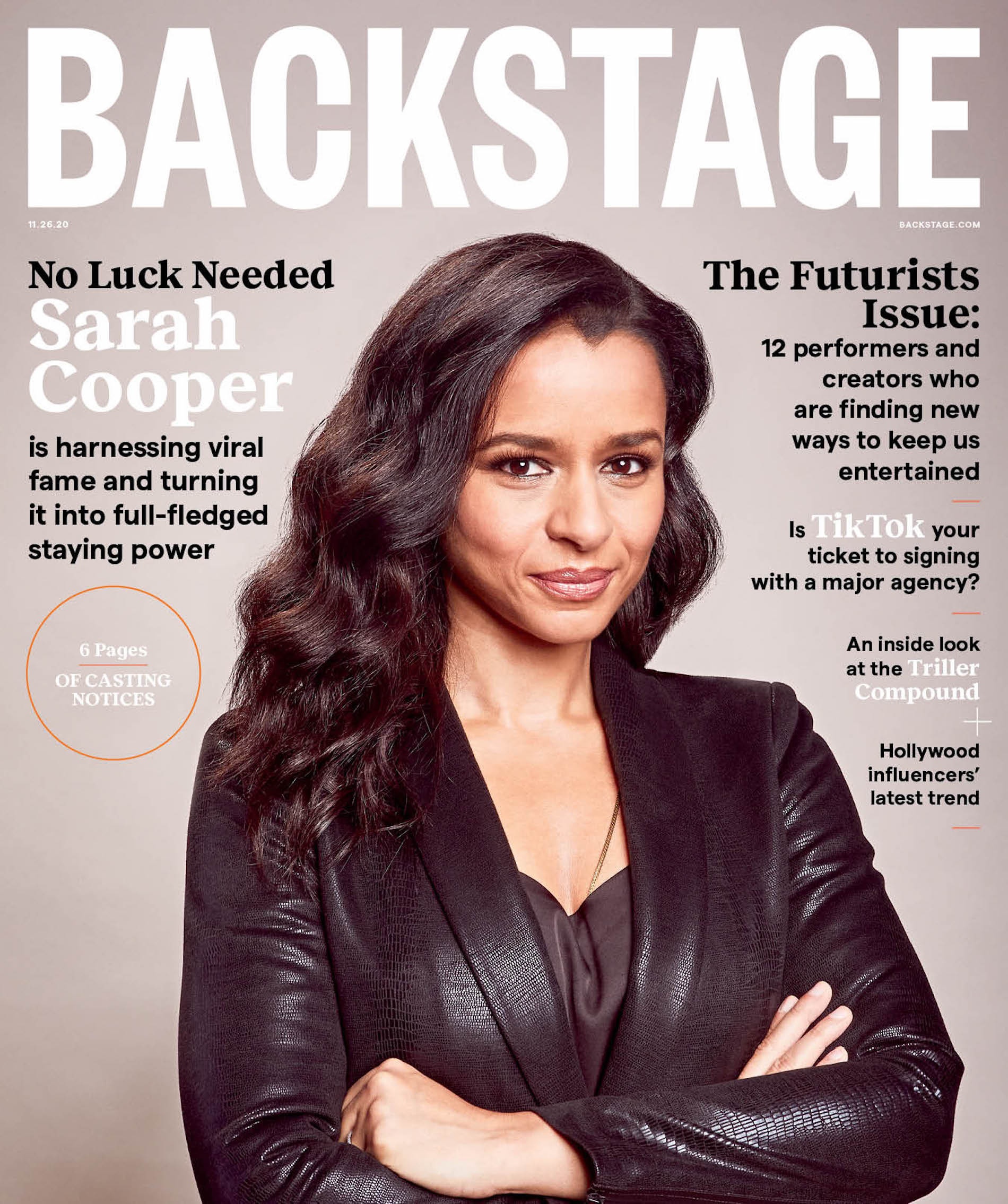 Sarah Cooper (Nov. 25)
In what has been an unforgiving year for just about everyone else, Cooper’s meteoric rise to stardom allowed her to break into the comedy sphere in a way she’d been attempting for years. Though unconventional, she’s thrilled this is the way her journey turned out. “I’m happy that this is what did it, because this is the stuff I’ve been talking about forever. To ‘make it’ doing what you want to do and what you actually care about is so important, and it took me so long to realize that I need to stop doing what I think other people want me to do, and I need to do what I want to do,” she says. “And calling men out on their bullshit has been my thing.” Read the full story here.
Max Harwood (Dec. 2)
For our emerging talent spotlight, Richard E. Grant interviews Harwood about his soon-to-be breakout role in the 2021 film adaptation of the West End musical hit “Everybody’s Talking About Jamie.” Harwood exhibited wisdom beyond his years, advising fellow young actors, “Within acting or performing or being a dancer or a writer or a creative person, don’t try and morph yourself into someone else, because those things are for that person. What is for you will come to you. You need to be uniquely and authentically yourself so the things that are meant for you drop in your lap.” Read the full story here.
Looking for remote work? Backstage has got you covered! Click here for auditions you can do from home!