Ever wonder what Spike Lee’s philosophy is for running a film set? What about how Greta Gerwig gets the best performances out of her actors? Or Janicza Bravo’s tips for becoming a filmmaker? It’s all right here.
“Nobody is going to just come and give you money unless you’ve proven yourself, especially if you’re doing something that is unconventional or unorthodox and outside the way the industry thinks. All I know is this: The reason I’ve gotten attention from this industry is that I just kept making films until they paid attention.” —Sean Baker (“The Florida Project,” “Red Rocket”)
“Art is creating something and presenting it so that other people can see it; so, inevitably, you’re always worried [about] whether people would like it or not. But because it is inevitable, I think that people should just be faithful to themselves and try to satisfy themselves and respect their own obsessions.” —Bong Joon-ho (“Parasite”)
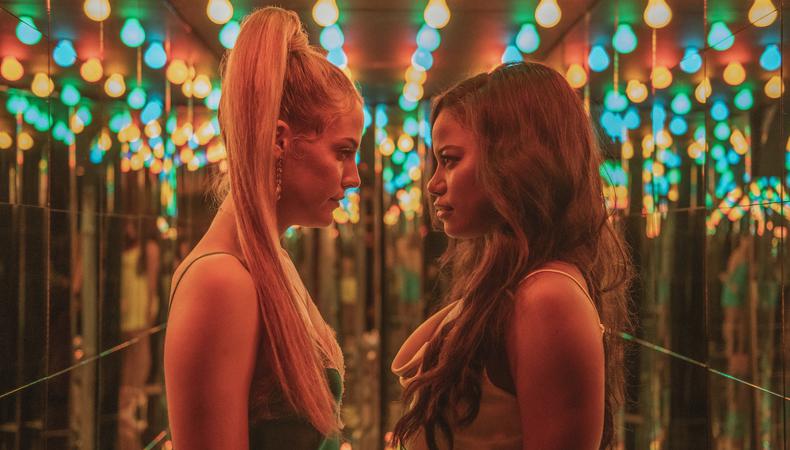
“It’s OK to not know what everything is, it’s OK to not know what everything is called, it’s OK to feel a little lost, and it’s OK to ask questions. Even if you feel you are in an environment that doesn’t support or cater to that, it’s OK.” —Janicza Bravo (“Zola”)
“The first thing I would say to an aspiring artist is: Let this moment be the last time they ever use the word ‘aspire.’ If you wrote today, you are a writer. The noun comes from the verb. It’s not up to a producer or casting person to tell you what you are.” —Steven Chbosky (“Dear Evan Hansen”)
“In my late teens and early 20s, I thought terrorizing actors emotionally was a really good idea. As horribly corny as it sounds, getting there through love and support is the best way to do it. Otherwise, you’re just going to damage each other…. Sometimes we do have to suffer, but it’s different than traumatizing people. If you’re suffering and it’s self-imposed to better the work, that’s a privilege. Sometimes it’s not about it being comfortable, but it needs to be the actor’s choice.” —Robert Eggers (“The Lighthouse,” “The Witch”)
“If you have reverence for the art form, your fear of failure could come from not wanting to muck up something you love. But I think there’s a time when the fear of not ever having tried is bigger than the fear of failure. And that’s when you get to work, because you realize you have fears on both sides; which one would you rather live with? You’ll make a bad movie or give a bad performance or write a bad song or make a bad painting. Because if you’re doing it, you’ll get some bad ones. That’s just the price of admission!” —Greta Gerwig (“Little Women,” “Lady Bird”)
“When you do something that strives for universality, it’s always better to find the universal within the specific instead of trying to make something generic.” —Luca Guadagnino (“We Are Who We Are,” “Call Me by Your Name”)
“I approach [running a set] as if I’m a coach—football, basketball, baseball manager—to try to put people in the best position so they can succeed. What the best teams have is the fusion of the seasoned, grizzled veterans, and you gotta have youth. I love that mixture, because it plays against [itself and] gives me what I need: that friction, that tug with the different dynamics going against each other and with each other. Another thing to maybe help you understand my process: A lot of it is just the vibe. It’s the vibe; it’s the energy. Are we on the same frequency? And if you’re not on my frequency, can we find the right [one] together?” —Spike Lee (“Da 5 Bloods,” “BlacKkKlansman”)
“I wish I could go back and tell my younger self that having a successful creative life is about growth, experimentation, learning from your mistakes, and constantly evolving.” —Sam Levinson (“Malcolm & Marie,” “Euphoria”)
“[Before filming], we’re just improvising, doing weird experiential games together so that we’re all melted down and there’s a lot of intimacy. When I [get] everyone together, we start the morning with a 9 a.m. dance party in my little office, with me dancing as weirdly as I can. We’re all kind of embarrassed and wiggly in front of each other. It sounds simple, but it’s actually really super important.” —Mike Mills (“C’mon C’mon,” “20th Century Women”)
“It took years of imitating and doing garbage as a young person until I stumbled upon something that spoke to me in an ineffable way. All of a sudden, I found the way I want to speak, and I’m still figuring it out. First, you need the language, but a bigger part is knowing what you are into, what makes you feel, and trying to figure out the cinematic equivalent of it. What are those little moments in film that speak to you that might not even be what the movie is about? And you know what? Live life and follow your interests, and don’t do things just because you have to. Don’t be a careerist about it.” —Josh Safdie (“Uncut Gems”)
“I try not to over-explain anything about the script, because I don’t really know much more than what’s written there. The actors bring their own stuff and thoughts, and most of the time, I don’t want to know what they are. It allows me to have more distance and observe what they’re doing without having the knowledge of what they have in their minds, so I can see clearly how that feels to me.” —Yorgos Lanthimos (“The Favourite,” “The Lobster”)
This story originally appeared in the Nov. 4 issue of Backstage Magazine. Subscribe here.
Ready to get started with Backstage? Become a subscriber here!