When you sit down with the writers behind Olivia Wilde’s “The Invite,” a film about a dinner party gone horribly, hilariously wrong, there’s only one place to start: What is their No. 1 dinner party rule?
For Rashida Jones, the answer was easy: “Maybe don’t start the night with an invitation for group sex.” Instead, she advises, “Work toward it.” Her writing partner and longtime friend Will McCormack offers a slightly more traditional response: “If you have flan, definitely bring flan.” (Jamón, maybe a close second.)
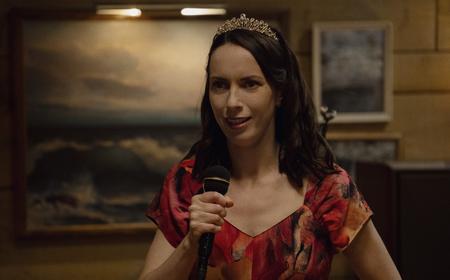
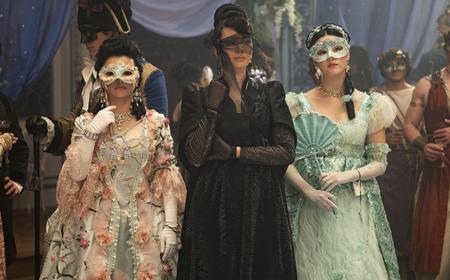
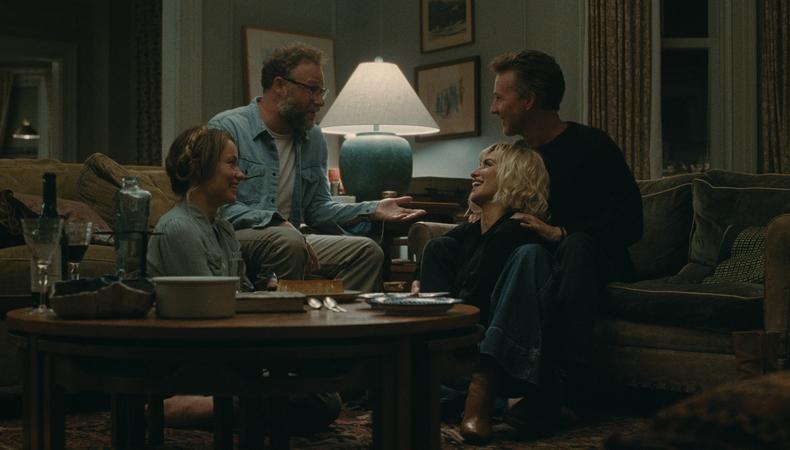
We recently caught up with the actors-turned-screenwriters to discuss their witty, anxiety-inducing film that puts dinner etiquette and relationship dynamics front and center. Adapted by Jones and McCormack from Cesc Gay’s Spanish film “The People Upstairs,” the sex comedy has been generating Oscar buzz since its June debut. Wilde not only directs but also stars alongside Seth Rogen, Penélope Cruz, and Edward Norton. But one of the film’s sharpest assets is its script. “The Invite” is packed with cringy yet deeply relatable laugh-out-loud moments, walking the tightrope between dark humor and relationship drama.
Here we dive into how Jones and McCormack wrote such a bold script and their advice for actors who want to get into writing.
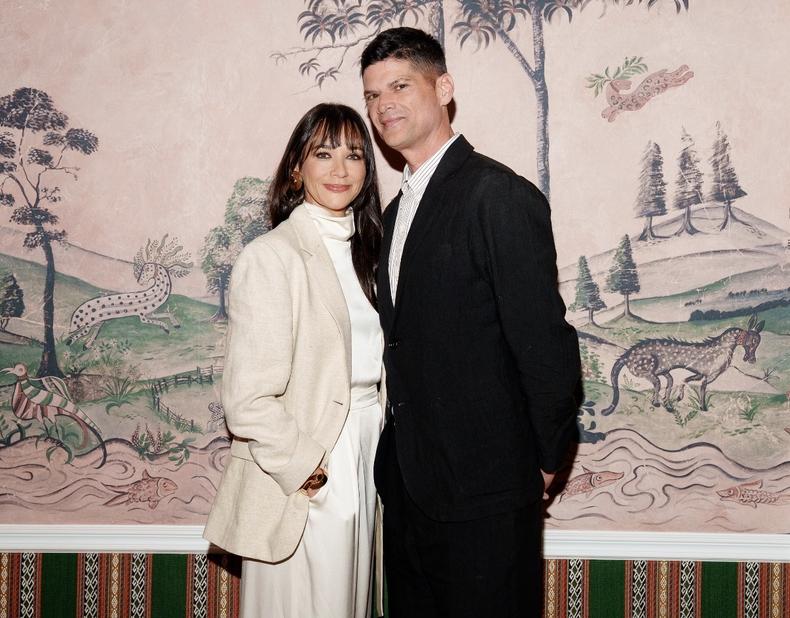
Rashida Jones and Will McCormack Courtesy Michelle Kammerman
How did you keep “The Invite” so funny while still making it feel so real?
RJ: Cesc Gay wrote a great play and a great movie, so that balance is really baked into the source material and the premise of the film.
I think the reason Will and I write together is that we share a love for how fast life can shift from funny to sad and painful, and then right back to funny—all in the same breath and the same scene. For us, the whole reason we write is to challenge ourselves to make movies and TV shows feel like real life, where you can laugh the hardest when you're in the most pain. There is no comedy without the pathos of being alive and trying to live and communicate with one another. They feel inexorably tied together.
What’s your go-to writing move for when you hit a scene and just aren’t sure what should happen next?
WM: We always love to read everything out loud. Rashida is such an incredible actress, and I’ve done a little bit of acting in my day, so we’re always excited to hear the material aloud. For us, a good rule of screenwriting is that when we surprise ourselves and get a little lost, that’s exactly where we want to be. The best element of both life and storytelling is surprise—so when we don’t know what’s going to happen next, we know we’re on the right track.
What’s the key to writing great dialogue?
WM: The one thing I always tell young people is that it’s so fun to write dialogue because dialogue is not often what you would say—it’s what you wish you had said. When you leave a meeting, or you’re thinking about an ex, or a conversation with your parent, or a fight, it’s like, “Oh, I should have said that.” And that’s why screenwriting is fun, because you get to say that. It’s the heightened, stylized, more beautiful, poetic version of who we actually want to be and can be in our storytelling.
RJ: Remember that most people don’t say what they actually mean. So that’s the fun of dialogue—you’re putting words to the emotion and then the resistance to the emotion, most of the time. Which makes it so fun when somebody’s really, really honest in the scene, because usually they’re masking with words, and it’s fun to bury that intention in dialogue.
As both actors and writers, how do you feel about actors delivering your dialogue differently from what’s in your heads?
RJ: It’s got to work coming out of the person’s mouth. I think because both of us come from acting, for us, the reinvention of the dialogue when an actor says it is such a huge part of the writing process. I’ve done many, many things where I’ve gotten the opportunity to improvise. The beautiful thing about making a film is having this medley of all of these different opinions, points of view, levels of experience, modes of communication, and improv, plus this thing that you've written—the structure that you’ve written. The dance of those things is kind of what makes for a beautiful movie.
What was it like working with Olivia Wilde?
RJ: She’s so talented. She’s such a great director, and she really stepped into that part. I think that’s not something I could ever do—I have two brains with that stuff. She really was able to protect the process of filming, you know? Once she was in it, she was in it, and I respect that a lot because it’s a very different process than getting a script to a place where it’s ready to shoot. And she did an amazing job in both roles.
WC: Yeah, it’s a remarkable and rare feat to do that. To deliver that performance—just that performance alone would be stunning. But to do that while directing the film, and these actors are giants, right? Edward Norton and Penélope Cruz and Seth Rogen. I mean, these are four powerful actors. To orchestrate that while giving that performance is truly impressive.
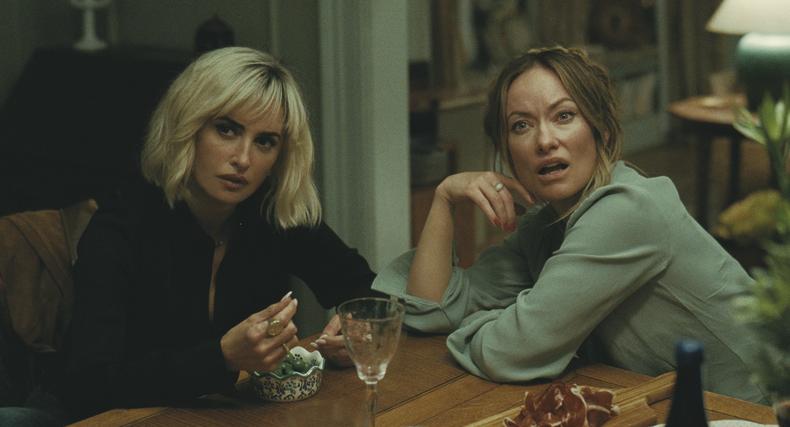
You’ve mentioned that the cast contributed some of their own relationship dynamics to the script. Can you share anything that was brought up during the rehearsal workshop?
WM: Javier Bardem has a bad back. We know that. This is true. But, yeah, it was pretty fun to be in a room. We’re all around the same age, too, and have lived life—people have partners, and children, and parents dying. It was so fun to sit in the rehearsal room, and people were really open. I think that’s one of the strengths of the film, is that it does feel very lived-in and authentic, and I think so much of that came from the rehearsal process. You never get that on a movie. You're literally meeting people during your rehearsal before you shoot. You’re like, “Hey, how are you?” So it was such a gift and so rare, and hopefully we get to do that again one day. Probably not, but I’ll never forget it. It was really fun to just be in the room with people and be honest about our lives and how hard it is to be in relationships.
Rashida, you’ve mentioned that Bill Hader gave you a trick that completely changed how you approach receiving feedback and executive notes on your scripts. How did you apply that advice while developing “The Invite”?
RJ: It’s basically to take the note and not the solve.
Like, if more than one party is having a problem with a certain area of the script, you should know that there’s a problem with that area of the script. But in terms of how to solve it, it might not work to come from the outside. Again, we had these formidable talents—four very distinct voices with so much experience and so much skill and talent. Really, our job was to hear the feedback and take the things that would improve the storytelling, both emotionally and comically, and be discerning about that. Not everything was going to be sound enough emotionally to be funny enough, and not everything was going to be emotional but fun—it had to also be funny. It had to be funny enough to make it. So the whole time we were listening to the producers, the director, the actors, we just had to run it through this filter, which is kind of your job as the writer: to keep an eye on the voice of the whole piece and make sure that it lands and the turns are where they need to be and the emotionality sticks, and that what you’re left with when you leave is primary.
Like, great to have a gut laugh, but if you don’t have the gut punch, we haven’t done our job. So I think that was our metric.
If you had to swap roles with anyone in the cast for just one scene, whose lines would you have the most fun delivering?
RJ: Oh, definitely Penélope’s, because we talked a lot about perimenopause. We're both riding that stallion. And we had the pleasure of working with Esther Perel, who's just this incredible sage in the category of relationships. There were so many things that Pina said that came directly from her and Dr. Mary Claire [Haver], who’s really, really good on perimenopause. It’s just so wonderful that it gets to be Penélope Cruz and she gets to deliver that information to an audience as they’re laughing and sitting there, forced to hear that information. I would never be able to do it as deftly and as brilliantly as Penélope, but it would be fun.
WM: It changes every time I watch the movie because everyone is so brilliant in their own way. But I have to say, Edward. I mean, last time I watched the movie, just Edward’s love of rugs and his radical honesty and his heartbreaking backstory. I think I would love to step into that role and deliver those lines.
What advice would you give to an actor who wants to transition into writing?
WM: Do it.
RJ: Really, the only thing that makes you a writer is you sit down and write. Both of us wanted to be writers for so long, and we just didn’t do it because we didn’t feel worthy. And then you just do it.
WM: Also, actors make the best writers. You know why? Because it’s the same thing. Writing is acting, but typing. You’re using your whole instrument. You’re using your body. Actors know how to get into the interior of a scene and feel it emotionally. Just write it down. I think actors make the best writers.
RJ: Also, don’t underestimate how much experience you have from just having read so many plays, movies, and TV shows. That was our education as writers. Starting in our mid-30s, we had already read so much material that we sort of knew what kind of writers we wanted to be.
WM: I would also say write the story that you’re afraid to tell because that's the one that people need to hear,
RJ: And be honest about it, like don’t try to write it like anybody else.
WM: Yeah.
RJ: We have a lot of advice.
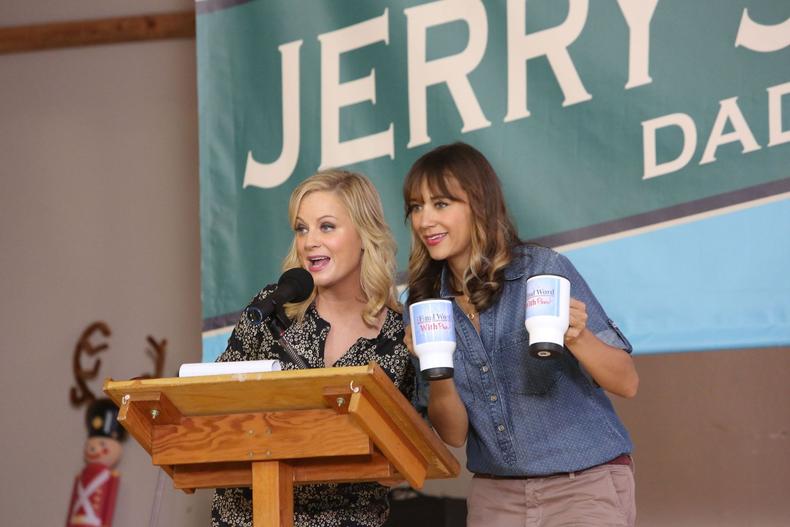
“Parks and Recreation” Courtesy MovieStillsDB
Lastly, as a “Parks and Rec” fan, Rashida, is there any chance we’d see you return as Ann Perkins or return as a writer?
Just tell them to call me. I’m ready. In any way. In any way I can be of service.
This interview has been edited for clarity and length.