There is now a version of getting cast that starts with strangers on the internet nominating you for a role you haven’t heard about yet. Just ask Beatrice Kitsos, who posted publicly asking to audition for the character Liz Buxbaum after readers of Lynn Painter’s “Better Than the Movies” spent weeks putting her name forward; she’s now playing Liz for Netflix’s film adaptation. Here’s how the online book community rewired page-to-screen casting—and what you need to know to audition for it.
JUMP TO
BookTok is the corner of TikTok where book lovers talk about what they’re reading. It’s one node in a larger online book community (OBC), which includes Goodreads, StoryGraph, Fable, YouTube’s BookTube, and Instagram’s Bookstagram.
The most popular BookTok genres tend to be those that produce big emotions: romance, romantasy, and YA. BookTok videos can be an impassioned book recommendation, an impression of a favorite fae princess, a teary-eyed review of a heart-wrenching romance, a hot take about who the lead really should have ended up with, or a dream fancast for the latest buzzy novel. These are usually accompanied by a relevant hashtag like #BookTok, #BookCommunity, #BookWorm, #BookRec, or #BookReview.
Due to its enthusiastic fanbase, BookTok has produced a notable number of adaptations. In fact, nearly half of the original drama series premiering across the major streamers from January 2024 to June 2025 were book adaptations, according to the Publishers Association.
This corner of the internet also runs on a different clock than the rest of publishing. It’s less bound to the new-release cycle, which means some titles can surface years after publication. Although Taylor Jenkins Reid’s “The Seven Husbands of Evelyn Hugo” came out in 2017, the book only became a viral sensation in 2021, when BookTok started posting about its sob-worthy ending. Since then, Netflix optioned the rights for the novel’s film adaptation, with Anna Kendrick signing on as director.

“Off Campus” Credit: Sabrina Lantos/HBO Max
Bookcasting, or fancasting, is the practice of readers assigning actors to characters before anyone has done so officially. With the advent of BookTok, fancasting now exerts real pressure on real casting decisions. There are two primary formats that impact casting:
- The fancast video: A creator assigns real actors to characters, often as a photo carousel or green-screen monologue. Search #acotarfancast, the recurring Fancast February series, or any of the dream-cast videos for Lynn Painter’s and Emily Henry’s books—and you’ll find thousands of them.
- The casting-reaction video: Good, bad, and everything in between, casting reactions start getting posted almost immediately after an official announcement drops.
Consider the cycle: The “Off Campus” (2026) cast was announced a decade after readers started fancasting Elle Kennedy’s characters in her book series of the same name. The reaction on BookTok was rough, ranging from complaints about hair color to commentary on the age gap between the co-leads. Still, the controversy seemed to settle when the showrunner and cast defended the changes and choices made in adapting the story, and the first season would soon become one of Prime Video’s most-viewed series debuts of all time.
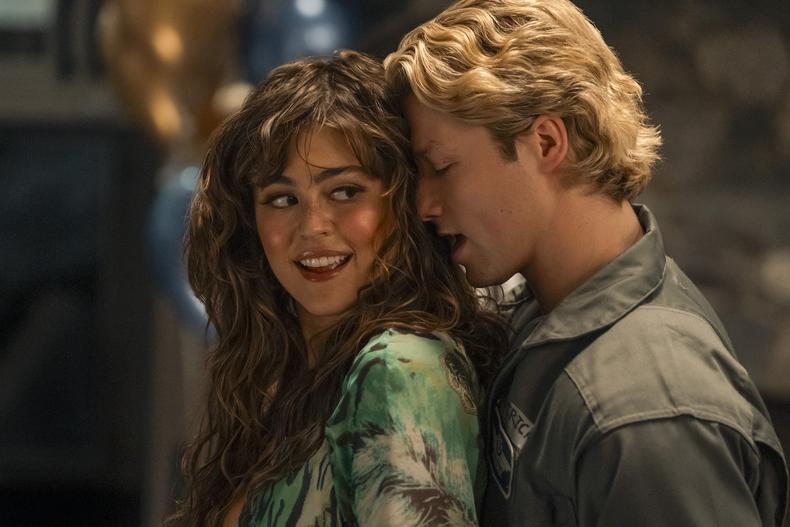
“Better Than the Movies” ran a similar play when Netflix went with David Iacono to co-star opposite Kitsos, and readers split on the decision. Some had been campaigning for Iacono well before the adaptation was announced, while others couldn’t get past his being recognizable as Cam from the TV series “The Summer I Turned Pretty.”
Meanwhile, “Heated Rivalry” is running the escalation in the other direction by pairing its largely unknown lead duo of Connor Storrie and Hudson Williams from Season 1 with established names like Emily Hampshire and Justice Smith in Season 2. And Alex Cooper, whose Unwell Productions is behind “Icebreaker” and “Deep End” at Netflix and “You Deserve to Know” at Hulu, is building a slate directly out of that demand signal.
For actors, the takeaway isn’t so much that you should campaign for a role on TikTok. Rather, it’s that these projects arrive with an audience that already has a fully formed picture of the character—and casting knows it. Unlike traditional casting, where you’re auditioning into a blank space, BookTok casting means you’re auditioning for a character that thousands of people have already argued about.
That raises the stakes for what these productions actually test: the chemistry between you and someone you may have only just met.
 The 5 Best Recent Book-to-TV Adaptations + What Actors Can Learn From Them
1. Start with casting calls.
Many of these projects are posted on our romance and romantic comedy casting call databases. Filter by union status and location, and set alerts—adaptation casting moves fast once a book is optioned. You can also look through TikTok’s Open Casting Calls Book Series and Book to Screen Adaptations Casting Calls pages.
2. Put yourself out there.
You truly never know where the right CD might spot you. “I do a lot of work with [young actors], so I meet a lot of people,” says Catherine Willis, the casting director on Netflix’s “A Good Girl’s Guide to Murder,” based on the 2019 novel by Holly Jackson. “It’s everywhere—from showcases, drama schools, weekend schools, suggestions. People write to me. I go to workshops. I watch what people put online, who record their own stuff. I also go to a lot of theater.”
3. Get involved.
Read the book. Audition rooms are full of people who have read it, and the author is sometimes sitting in one of the chairs. Then dive into fancast videos for your character, comment threads under casting announcements, and arguments readers have about who this person really is. That’s free research into what the audience will measure you against, and it costs you an afternoon in a Fable club or a Goodreads thread.
4. Check out unrepped access options.
This genre hires unknowns more readily than most, since a fresh face carries less baggage than the character readers have already imagined. That said, “open to unrepped” varies project by project, and streamer-level productions often have their own funnels. Our guides to auditioning for Netflix, “Off Campus,” and “Heated Rivalry” cover the specific paths in.
5. Bring the sizzle to your self-tape.
Act as though you’ve already been invited to a chemistry read when you record your self-tape. Slate cleanly, keep a tight frame, and have a reader who can actually act. If you’re asked for a second tape with a specific partner, that’s the chemistry read starting early.
6. Know how to play the trope in an audition.
Tropes are a set of expectations the audience brings into the room with you, and knowing which one you’re playing tells you where the tension lives. Here’s what each asks for on tape.
- Enemies to lovers: You don’t want to play hostility here; it often reads as loud. What the trope needs is attention. Your character can’t stop watching this person, so play the antagonism as the symptom, not the source. Give the camera one moment where the mask slips and you don’t quite recover.
- Grumpy/sunshine: Whichever half you’re reading, the other half has to visibly land on you. The grumpy read works when you can show the effort of staying closed, and the sunshine version works when the warmth is a choice rather than a temperament.
- Fake dating: This trope requires two performances at once: the one for the fictional audience inside the scene and the one that leaks through when nobody’s watching. Try to make that seam visible but not obvious.
- Forced proximity: This one is almost entirely physical, so stillness and the power of the microexpression are your friends. Self-tape framing matters more here than in any other trope—get closer than feels comfortable to highlight the tension.
- Second chance: Your character’s history should live in your body, so take the time to develop a comprehensive character backstory. Decide specifically what happened, how long ago it took place, and how it affects your character today.
7. Nail the chemistry read.
A chemistry read is a different test than a callback with a scene partner, with different criteria—and BookTok adaptations lean on it extensively when casting.
- Preparation is key. Study rom-com monologues for tone and practice duet acting for scene partner craftwork before your read.
- You’ll be paired, and the pairing is the point. In a standard callback, you’re evaluated against the other people reading your role. In a chemistry read, you’re evaluated as half of a unit. Two strong individual auditions can lose to two adequate ones who spark. That is not a knock on anyone’s technique. It’s the job.
- Expect to be rotated. These sessions are frequently structured as a grid—three possible leads against three possible counterparts, run in combinations. When casting directors were looking for their leads for “Off Campus,” they put 28 actors in a room together, who were then “picked and chosen and put together in different groups and situations,” said Ella Bright, who plays introverted singer Hannah opposite Belmont Cameli’s gregarious hockey star Garrett. The scenes with others "felt really great and the scenes were really fun, but when [Cameli] came in it felt so genuine,” she explained. “The energy did shift." Staying loose across all scenes and setups is a skill worth practicing.
- Listen and react. Chemistry is a two-way street. If you’re only thinking about your own lines and actions, you aren’t present with your scene partner, and the relationship won’t feel grounded or lived in.
- Adjustments are information, not correction. If a CD stops you and reframes the relationship—“You’ve known each other for years.” “She just insulted your work.”—that’s them testing range in the pairing, not telling you the first read failed.
- Always exude confidence. “Never be frightened. If you are going into an audition with a director or producers and you start off by fluffing, just say sorry, take a beat, and start again,” says Suzanne Smith, casting director of “Outlander,” based on the romantic fantasy series by author Diana Gabaldon. “Obviously, it’s difficult if it’s in the middle of something or at the end. But if it’s the beginning, I just say calm yourself. It’s nervous for us! We go in for jobs, too, and it’s just as nerve-racking.”
8. Know what you can ask for.
Many of these adaptations are intimacy-coordinated, and that protection applies to you whether it’s your first role or your 15th. Before you sign, you can ask what the intimacy coordinator’s involvement will be, when choreography gets set, and what the nudity rider covers. None of these requests make you difficult; they’re part of the standard process for roles involving intimate material. “I felt so safe. It just really felt like a stunt, you know? You rehearse a stunt so that nobody gets hurt, it looks good, it looks really real, but no one gets injured, and it’s very much like that,” says actor Phoebe Dynevor of working with an intimacy coordinator on “Bridgerton,” based on the historical romance series by author Julia Quinn.
“You’re rehearsing it so that everyone feels comfortable and that there’s no one who can ever get crossed because you’re very specific with what you’re doing. And also, it just makes everyone feel comfortable. Not just the actress, but the actor and the crew members. It just makes for a safer space, and therefore you can let loose a bit more and feel freer within that role that you’re playing. It was so helpful. I’ve done intimate scenes without a coordinator in the past, and it’s a very, very different experience.”
so that no one’s boundaries are crossed because you
9. Don’t close the book.
Set alerts on the databases listed here, bookmark this page, and watch the trades—the backlist clock means a book optioned three years ago can start hiring next month. When a rejection lands, read it correctly: In a chemistry read, you can give the strongest individual audition in the room and still lose to a pairing, which is a chemistry problem rather than a verdict on your work.
“If you don’t get this part, maybe you’ll get a different part in the show or the movie; or in two years I’ll be like, ‘Kim, who was the person we auditioned for that?’ We do this all the time,” says Justine Baddeley Arteta, casting director for “Daisy Jones & the Six,” based on the 2019 novel by Taylor Jenkins Reid. “Just bring your talent. You know, in ‘Daisy,’ one of the artists who auditioned for one of the main parts ended up as the daughter of Cami and Billy. Seychelle Gabriel—she’s a very, very good musician, and everybody remembered her. People remember you.”
“Off Campus” Credit: Liane Hentscher/Prime
- “The Love Hypothesis,” Prime Video (premieres Sept. 23): Lili Reinhart Knows You Want ‘The Love Hypothesis’ Release Date
- “Off Campus” Season 2, Prime Video (in production): How to Get Cast on Prime Video’s ‘Off Campus’, Find ‘Off Campus’ Casting Calls + Auditions
- “Heated Rivalry” Season 2, Crave/HBO Max (casting; premieres spring 2027): How to Get Cast on HBO Max’s ‘Heated Rivalry’, Love ‘Heated Rivalry’? Apply to These Steamy Gigs
- “The Summer I Turned Pretty,” Prime Video (casting; returning leads confirmed): How to Get Cast on ‘The Summer I Turned Pretty’, Ready for ‘The Summer I Turned Pretty’ Movie? Apply to These Gigs
- “Fourth Wing,” Prime Video (series ordered May 2026; leads casting): ‘Fourth Wing’ TV Series Casting News + Updates
- “A Court of Thorns and Roses,” no studio attached (rights back with Sarah J. Maas): Find ‘A Court of Thorns and Roses’ Casting Calls
- “Quicksilver,” Netflix (in development): Netflix’s ‘Quicksilver’ Movie: News + Updates