“In the Envelope: The Actor’s Podcast” features in-depth conversations with today’s most noteworthy actors and creators. Join host and Awards Editor Jack Smart for this guide on how to live the creative life from those who are doing it every day.
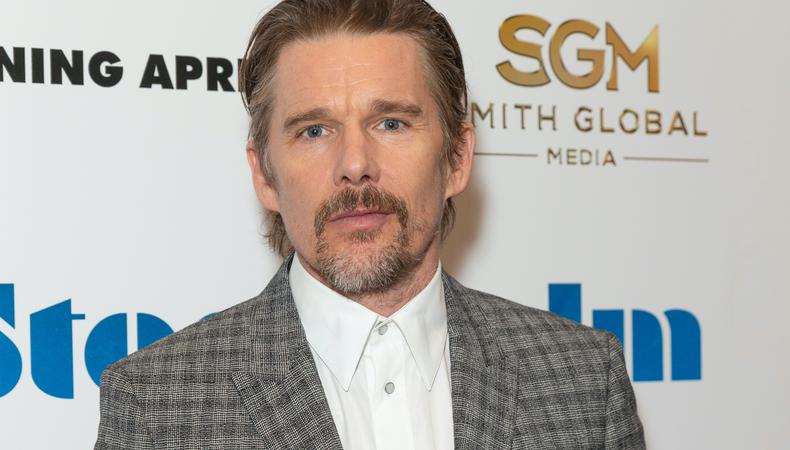
While it’s been said that failure is a better teacher than success, no one puts it as distinctly as Ethan Hawke. “Success mostly just teaches you how to be an asshole,” he tells Backstage. “Failure’s where the money lives.”
Hawke’s “In the Envelope” interview is chock-full of such philosophical advice, despite the fact that espousing tips for fellow storytellers makes him feel like a “blowhard.” Actors, writers, directors, and everyone in between can learn from his thoughts on studying the masters, staying in the moment, and creating art from an honest and compelling place.
“Your gut is so much smarter than your brain,” he explains. “It takes a lot of experience to start letting your subconscious work. There’s a lot of crap you have to work through to let your instincts fly.”
Born in Texas and raised in New York and New Jersey, Hawke has garnered that necessary experience across a prolific range of film and theater projects since his teenaged breakout roles in “Explorers” and “Dead Poets Society.” The multihyphenate artist and activist has appeared before or behind the camera in “Reality Bites,” “Gattaca,” “Hamlet,” “The Hottest State,” Blumhouse Productions horror films, “First Reformed,” “Blaze,” and 2020’s “Tesla,” to name a few.
One of the few artists to be Academy Award–nominated for both acting (for “Training Day” and “Boyhood”) and writing (for “Before Sunset” and “Before Midnight,” two of many collaborations with fellow filmmaker Richard Linklater), Hawke is also a Tony Award–nominated New York theater veteran whose latest credit is the New Group’s webcam-centered production of “Waiting for Godot.”
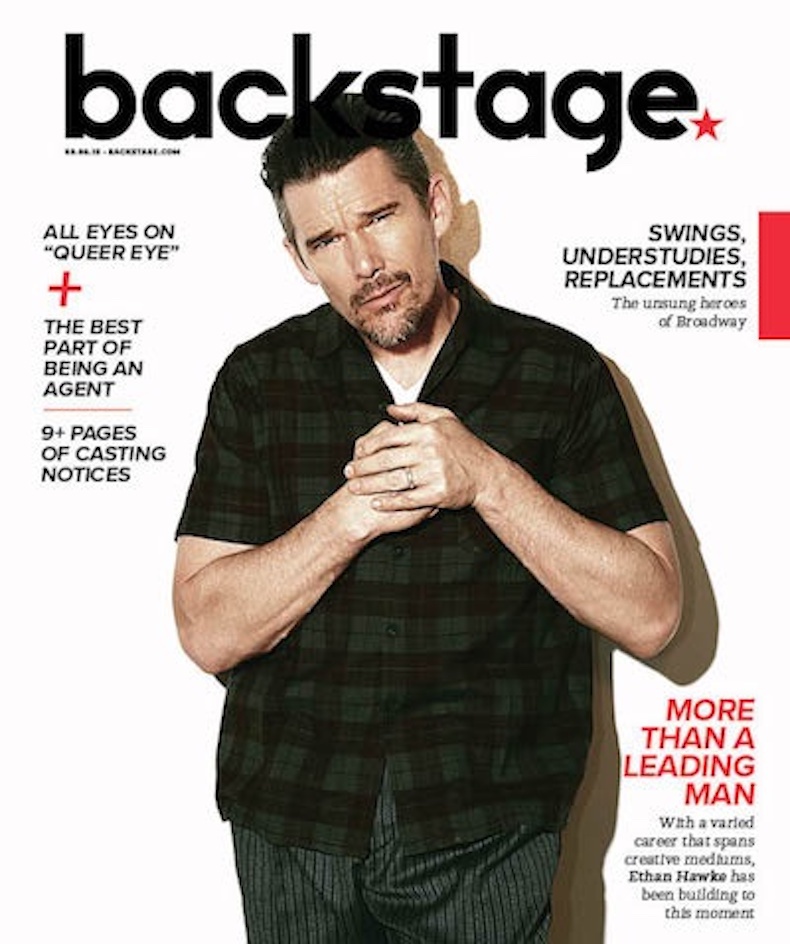 Ethan Hawke Reveals the ‘Shamanistic Process’ of His Performances
 And on Showtime’s acclaimed limited series “The Good Lord Bird,” Hawke produced, co-adapted, and earned a SAG nomination as John Brown. “It wasn’t just another part for me,” he says of the religious abolitionist and Civil War instigator. “It felt like it took a lifetime to be ready for a part as challenging as this.
“So I didn’t want to let it go,” he adds, wondering why actors don’t have a prescribed method for shedding characters emotionally and psychologically. “I think for people who love acting, we often do a tremendous amount of work inviting characters into our imagination. We expend ridiculous amounts of energy trying to be more believable as a certain character: What do they have in their pockets? What do they dream about? What’s their favorite color? Trying to make these characters vivid for people. But we don’t have much teaching or knowledge about how to let go, you know? And how to let these feelings pass through you and not stay trapped in you and make them of service to your larger life.”
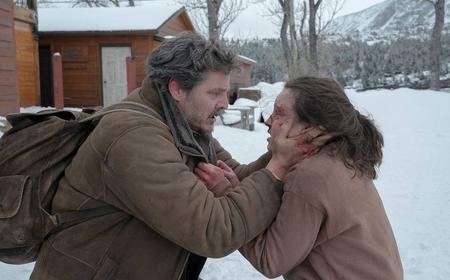
Achieving a great performance, for Hawke, involves figuring out “how to stop acting.” A semi-improvised moment opposite a horse in “The Good Lord Bird” illustrates the idea; to remain reacting in the moment, Hawke instinctively tries to connect with scene partners—even literally. “If it’s right for the scene at all, I often find touching somebody really helps,” he advises. “You’re best off to slow down and connect with people, to find them, to really take them in. Get your mind off yourself. Usually, that’s the big key.”
And the more holistically an artist can approach their craft—studying techniques, diction, “having an aptitude for language,” as Hawke says—the better prepared they are for any type of role in the biz. “More essential to that is most of us are only as good as our opportunities. And when the opportunities aren’t there, you have to search for ways to articulate your love, to find a way to make your imagination manifest.... It’s a very dangerous profession that way, because sometimes the opportunities aren’t there. And so our life’s journey as actors is being ready for when they come.”
As for human beings in general, Hawke’s advice is evergreen: “Good things happen—you’re a better friend, you’re a better citizen, you’re a better artist, you’re a better lover—if you treat yourself with respect. It just starts there. Because if you can’t do that, you start tripping over all that and you can’t do anything else.” Listen to his unedited interview at any of the podcast platforms below, and be sure to stick around for Backstage casting insider Christine McKenna-Tirella’s update from the frontlines of the biz.
Listen now on:
Looking for remote work? Backstage has got you covered! Click here for auditions you can do from home!